QNSP — Quantum-Native Security Platform
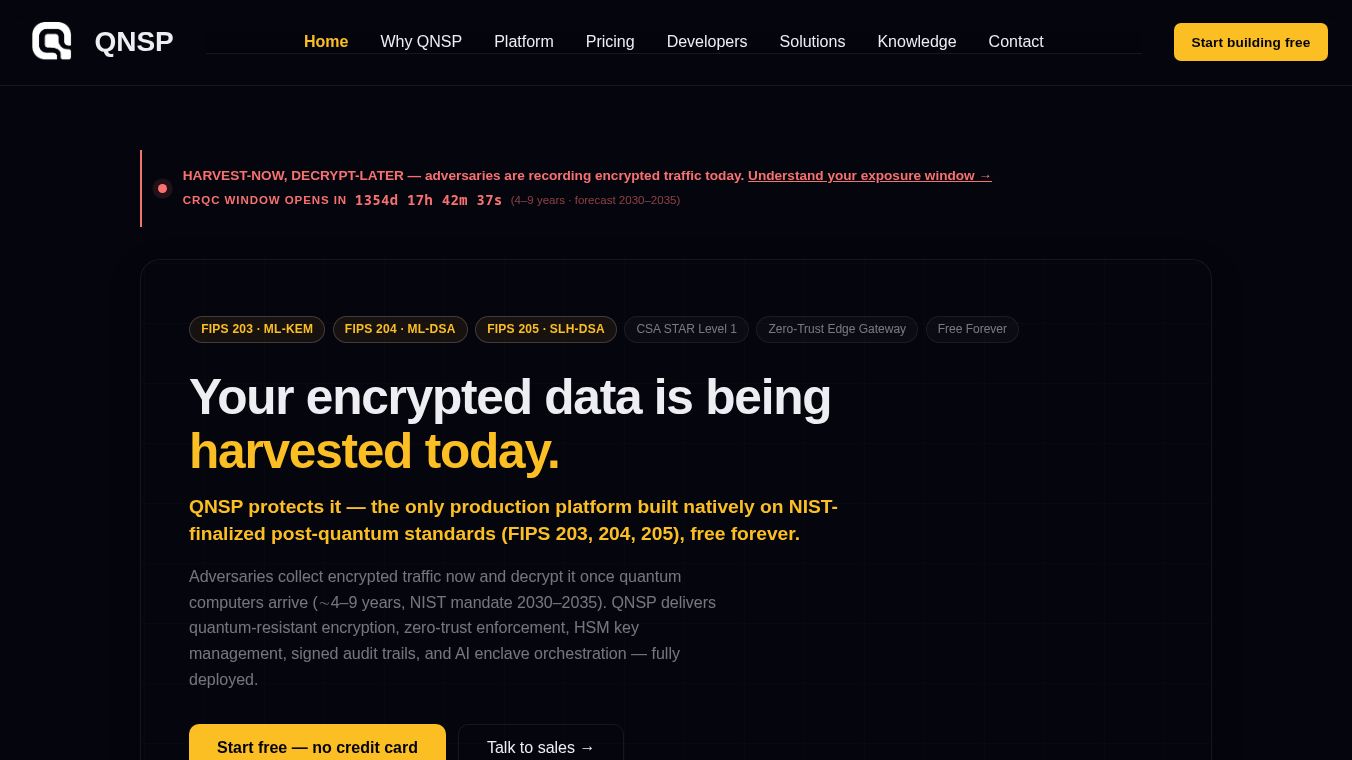





QNSP, which stands for Quantum-Native Security Platform, is a new security solution designed to protect data in the age of quantum computing. It works by using quantum mechanics principles to secure information, offering a more advanced level of protection than traditional security methods. This platform aims to address the future threats posed by quantum computers, which could potentially break current encryption standards. QNSP provides a way to safeguard sensitive data against these emerging risks.
Benefits
QNSP offers enhanced security by leveraging quantum technology. This means it can provide protection that is resistant to attacks from both current and future quantum computers. It helps ensure the long-term confidentiality and integrity of data, giving users peace of mind that their information remains secure even as computing power advances.
Use Cases
This platform is ideal for organizations that handle highly sensitive data and need to ensure its security for many years to come. This includes government agencies, financial institutions, and healthcare providers. QNSP can be used to protect critical infrastructure, secure communications, and safeguard intellectual property from advanced cyber threats.
Additional Information
QNSP is developed by CUI Labs, a company focused on advancing quantum technologies. CUI Labs has been working on innovative solutions in the quantum space, and QNSP represents a significant step in applying these advancements to cybersecurity.
This content is either user submitted or generated using AI technology (including, but not limited to, Google Gemini API, Llama, Grok, and Mistral), based on automated research and analysis of public data sources from search engines like DuckDuckGo, Google Search, and SearXNG, and directly from the tool's own website and with minimal to no human editing/review. THEJO AI is not affiliated with or endorsed by the AI tools or services mentioned. This is provided for informational and reference purposes only, is not an endorsement or official advice, and may contain inaccuracies or biases. Please verify details with original sources.
Comments
Please log in to post a comment.