Plyxo: Self-hosted CRO+SEO+LLM tool
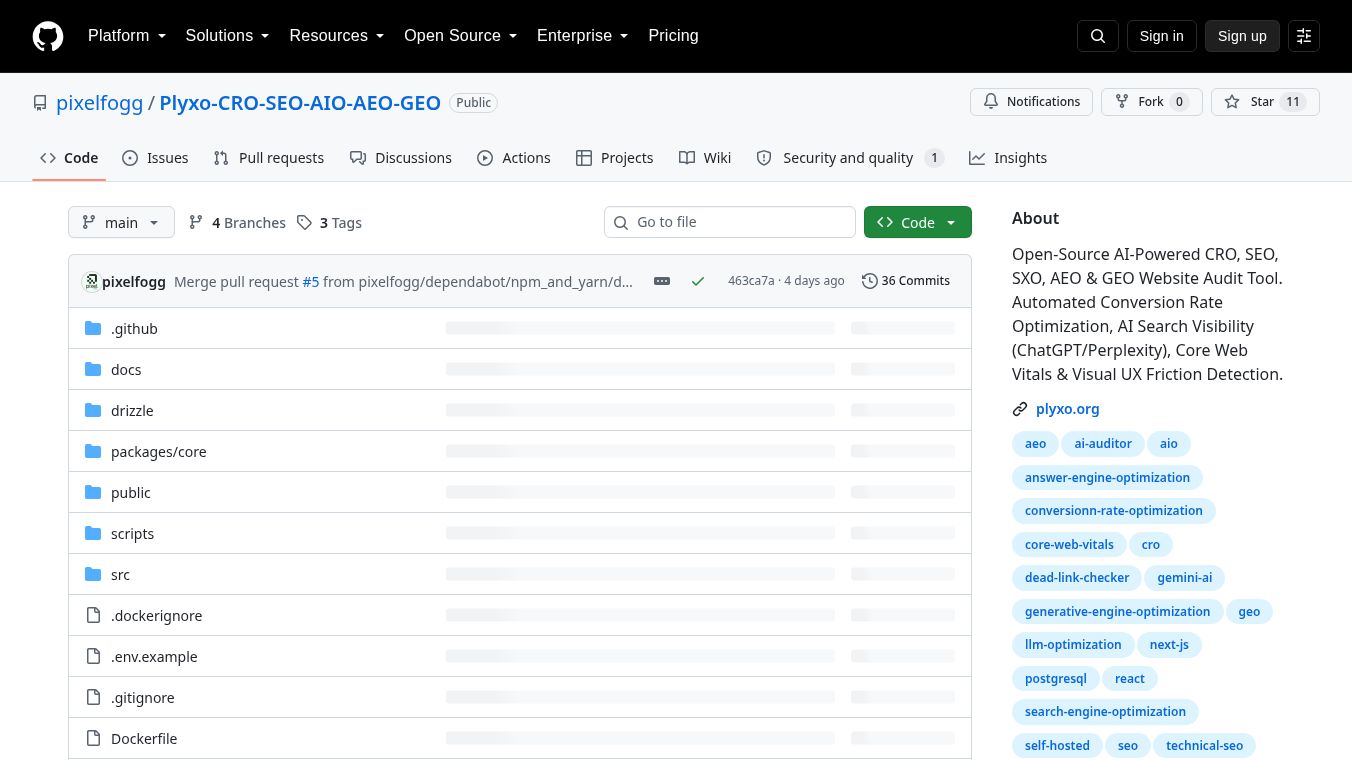





Plyxo: The Autonomous Open-Source AI Intelligence Platform for Digital Growth
Research context and background
Plyxo is a next-generation, autonomous AI thinking partner designed for digital growth, conversion optimization, and technical SEO. Unlike traditional analytics tools that merely report metrics or legacy crawlers that output raw spreadsheets, Plyxo acts as an active diagnostic and remediation engine. It is a 100% free, open-source, self-hosted platform that requires no authentication friction and offers unlimited property scans.
Benefits
Plyxo integrates a comprehensive suite of skills to provide actionable insights rather than just data. Its primary functions include visual conversion rate optimization, generative engine optimization, and a complete Claude-SEO skills suite. The tool performs visual inspections of digital properties to identify friction points that hinder user conversion. It generates high-resolution screenshots with visual overlays marking specific UI elements causing issues like misaligned call-to-action buttons or accessibility problems. The platform also calculates the projected monthly revenue loss associated with these friction hotspots. For every issue detected, Plyxo provides production-ready code snippets to fix the problem immediately.
Plyxo pioneers optimization for AI-driven search engines by benchmarking how frequently and authoritatively major large language models cite your content. It evaluates citation readiness across ChatGPT Search, Perplexity AI, Google Gemini, and Anthropic Claude. The platform analyzes named entities, semantic relationships, and structured factual claims to improve Knowledge Graph binding. It also assesses whether content is structured to lead with concise, high-entropy answers optimized for large language model snippet extraction.
The tool natively embeds a specialized skill set for deep technical and semantic auditing. It evaluates crawlability, robots.txt rules, dynamic sitemaps, canonical URLs, HTTP status codes, and redirection hops. It includes real-time telemetry for Core Web Vitals via Google PageSpeed Insights. The platform analyzes content volume, readability, lexical diversity, and verifies author bio attribution and editorial transparency. It deeply parses and validates JSON-LD syntax against Schema.org standards for Articles, Products, FAQs, Breadcrumbs, and Local Businesses. The tool classifies search intent into four buckets and detects keyword cannibalization. It rapidly scans internal and external links to identify dead links, circular redirects, and SSL failures using secure crawlers.
Use Cases
Plyxo is designed for growth engineers, SEO architects, and founders who want to optimize their digital properties with precision, privacy, and zero cost. It is ideal for teams looking to move from passive analytics to active, AI-driven optimization. The tool helps businesses identify and fix visual issues that prevent users from converting into customers. It assists content creators in optimizing their articles to be cited by AI search engines. Technical teams can use it to audit their websites for crawlability, structured data, and performance issues. Marketing teams can leverage its competitive intelligence features to automate side-by-side comparisons between their domain and competitors to highlight high-intent keyword gaps and topical opportunities.
Pricing
Plyxo is a 100% free, open-source platform. It requires no subscription fees or hidden costs. Users can deploy it locally on their own machines.
Vibes
Plyxo represents a shift from passive analytics to active, AI-driven optimization. The platform is continuously updated, with contributions welcome from the open-source community. It is praised for its ability to combine visual CRO, deep technical SEO auditing, and forward-looking GEO strategies into one unified tool.
Additional Information
Plyxo is built on a robust, modern technology stack designed for privacy and performance. The frontend uses Next.js 16 with React 19 Server Actions. The language is TypeScript 5.0 in strict mode. Styling is handled by Tailwind CSS v4, Lucide Icons, Radix UI Primitives, and Framer Motion. The database is a local PostgreSQL instance with Drizzle ORM, ensuring data isolation. The AI engine uses Google Gemini 2.0 Flash/Pro with multi-key failover for resilience. Scraping is handled by Browserless.io, Puppeteer, Microlink API, and Cheerio. Security and privacy features include 100% self-hosting so all data, audit history, and telemetry remain on the user's local machine. Strict IP and subnet sanitization prevents Server-Side Request Forgery during crawling operations. Automated setup provisions a dedicated database to prevent interference with existing production databases. Installation requires Node.js version 18.18.0 or higher and PostgreSQL. Users must clone the repository from GitHub, set environment variables for the database connection and Google Gemini API keys, run the automated setup script to provision the database and apply migrations, and then start the development server to access the Claude Editorial Workspace.
This content is either user submitted or generated using AI technology (including, but not limited to, Google Gemini API, Llama, Grok, and Mistral), based on automated research and analysis of public data sources from search engines like DuckDuckGo, Google Search, and SearXNG, and directly from the tool's own website and with minimal to no human editing/review. THEJO AI is not affiliated with or endorsed by the AI tools or services mentioned. This is provided for informational and reference purposes only, is not an endorsement or official advice, and may contain inaccuracies or biases. Please verify details with original sources.




Comments
Please log in to post a comment.