Pedestrian Detection
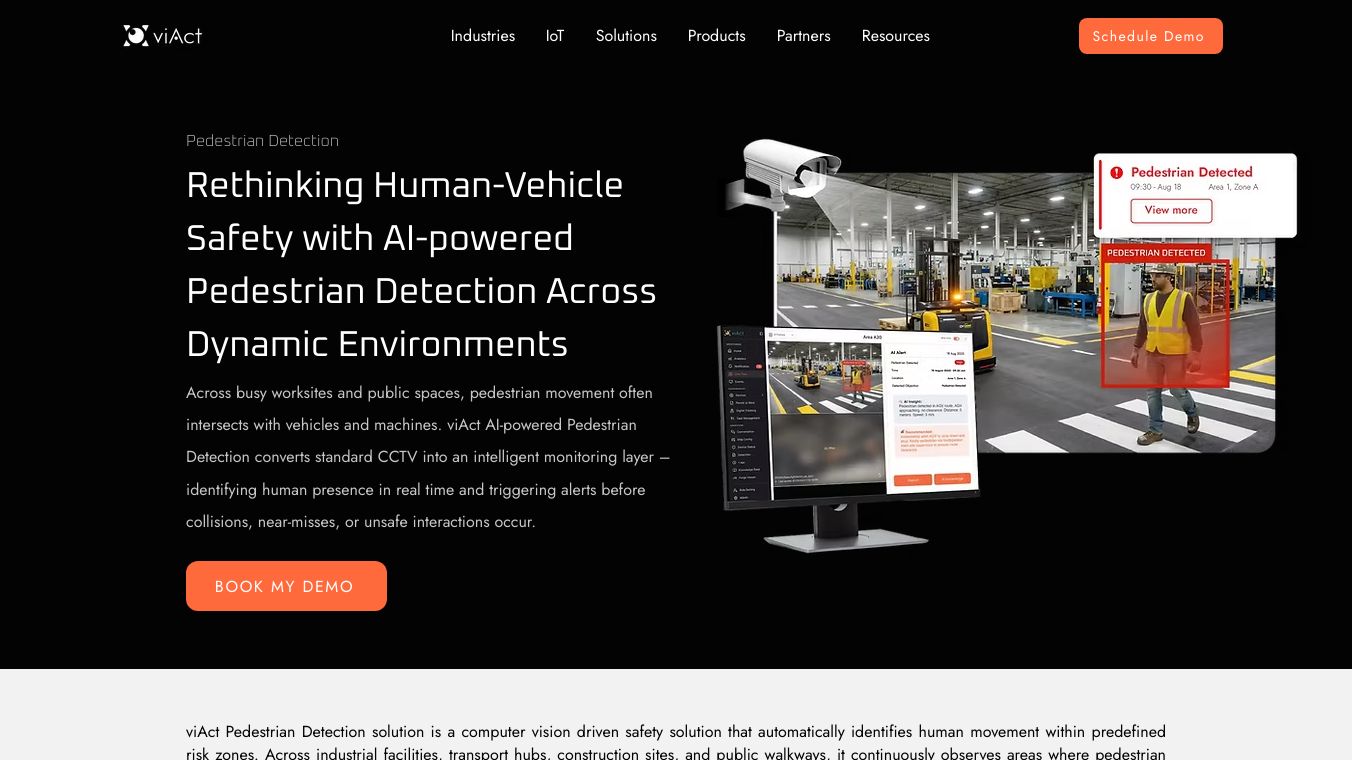





viAct AI-powered Pedestrian Detection turns regular CCTV cameras into smart safety tools. It can spot people in real-time, helping to prevent accidents and dangerous situations in busy places. This technology uses computer vision to watch for people in specific areas within places like factories, train stations, construction sites, and public paths. It keeps a constant eye on what's happening.
The system works with your current CCTV or IP cameras. It finds people who are too close to moving vehicles, machinery, or areas they shouldn't be in. By understanding what's happening live, it can warn about dangers so people can take action quickly. This system provides continuous monitoring, keeps records of events, and can connect with other safety systems. This makes sites more visible, cuts down on accidents between people and vehicles, and helps manage safety using data.
Keeping people safe in busy environments is hard because routes change, visibility can be poor, and people move unpredictously. Common safety problems include workers crossing paths with vehicles without being seen, people going into closed-off areas, bad lighting or weather making it hard to see, drivers not seeing people in blind spots, people not sticking to safe paths, too many people in one area, slow warnings, and people being distracted by phones. AI-powered Pedestrian Detection solves these issues by constantly watching instead of just checking sometimes, sending instant alerts for quick fixes.
Pedestrian detection is especially important in places with tight spaces, crowded areas, entry and exit points, and busy zones. This includes:
- Factories, Warehouses, and Shipping Centers:Watching for people going off paths or appearing unexpectedly near forklifts, machines, and trucks.
- Public Areas and Cities:Tracking how people move and how close they are to vehicles in squares, shopping areas, and streets to help everyone move around more safely.
- Construction Sites:Constantly monitoring people near active work areas, where things are being lifted, and vehicle paths, even when the site is always changing.
- Airports, Subways, and Train Stations:Making sure people are seen on platforms, in service areas, and near trains in busy places where many people are moving.
- Ports and Cargo Terminals:Providing constant views in open areas and docks, spotting people near loading zones and equipment.
The system is easy to set up. You choose the 'Pedestrian Detection' tool from viAct's viHUB, connect your cameras using their internet address without needing new equipment, and turn on the AI. The AI watches and analyzes who is present, how they are moving, and their surroundings. It identifies people in wrong areas, studies how they move, and detects when they are too close to vehicles or machines. When a risk is found, it sends immediate alerts through sounds or notifications on screens or phones. Every event is recorded for later review.
One factory in Ireland had ongoing problems with pedestrian safety in busy areas. After using viAct Pedestrian Detection, they saw a 58% drop in near misses between people and vehicles in just a few weeks. This also meant less need for manual monitoring and better safety oversight. The system is much better than old methods. It reduced incidents where pedestrians were at risk by about 60%, helped understand how people move, provided instant alerts for dangers, gave clear video records for looking at incidents, encouraged safer actions through constant detection, provided data to show safety efforts were made, and combined pedestrian safety information with overall safety performance.
This content is either user submitted or generated using AI technology (including, but not limited to, Google Gemini API, Llama, Grok, and Mistral), based on automated research and analysis of public data sources from search engines like DuckDuckGo, Google Search, and SearXNG, and directly from the tool's own website and with minimal to no human editing/review. THEJO AI is not affiliated with or endorsed by the AI tools or services mentioned. This is provided for informational and reference purposes only, is not an endorsement or official advice, and may contain inaccuracies or biases. Please verify details with original sources.

 No Info
Comments
Please log in to post a comment.