FlowCore
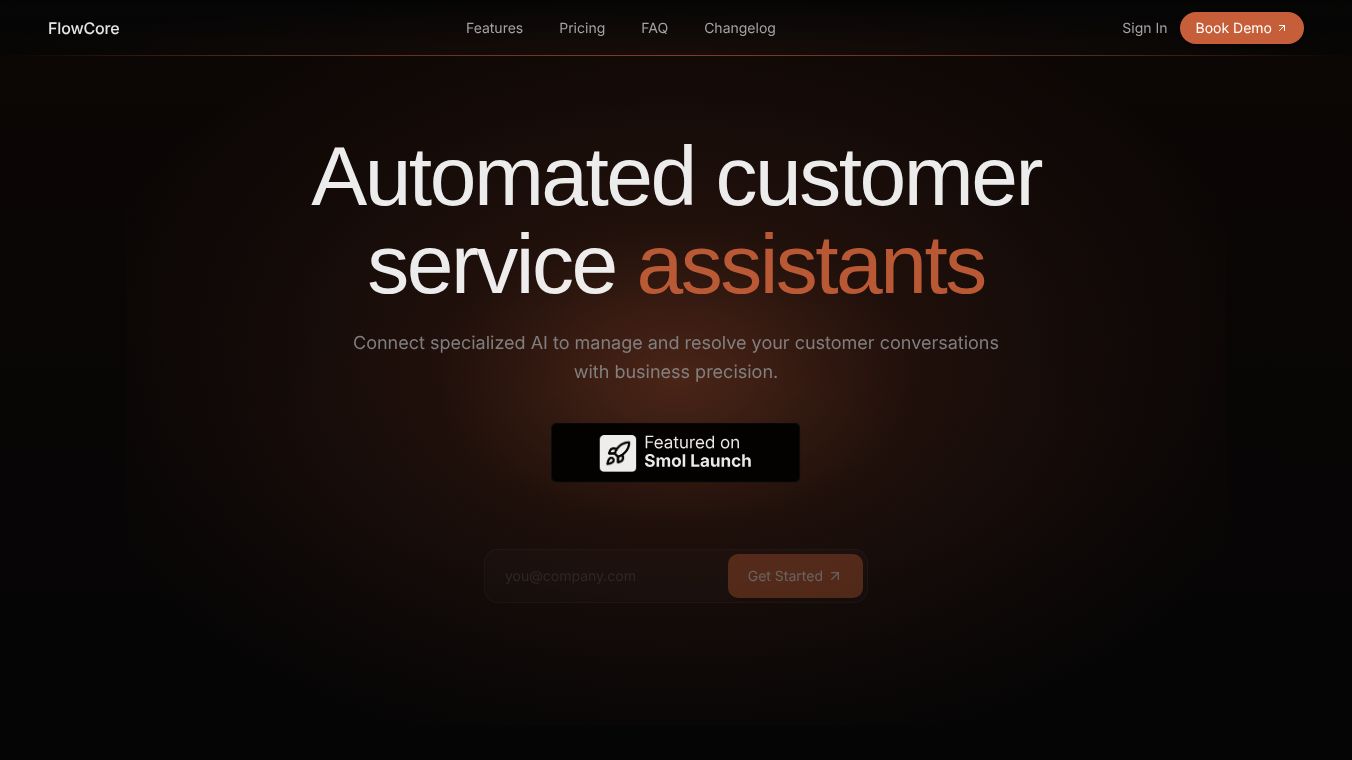





FlowCore: Event-First Data Platform for AI Developers
Introduction
FlowCore is a specialized data platform built for AI developers and modern software teams. It solves a common and frustrating problem: losing data when debugging or training models. Instead of overwriting old information, FlowCore uses an event-first architecture. This means it captures every single change as an immutable event. This creates a complete history that acts as a single source of truth for any AI application. The platform is designed to handle massive loads, processing over 10 million events per second while maintaining 99.9% availability.
Benefits
FlowCore offers several key advantages that make it stand out from traditional databases. First, it preserves every event forever. This ensures that no data is ever lost, which is critical for debugging and analysis. Every change is recorded with a timestamp, creating a reliable timeline of system states. Second, the platform supports infinite replay. Users can stream events from any specific moment in the past. This allows teams to reproduce bugs instantly without touching live environments. It also lets them test new features using historical data safely. Third, FlowCore handles storage automatically. It manages hot and cold storage, scaling, and optimization without needing developer intervention. This lets teams focus on building applications rather than managing complex infrastructure. Finally, it offers enterprise-grade security with GDPR compliance and detailed audit trails.
Use Cases
FlowCore is designed for a variety of critical applications in modern software development. One major use case is AI model training. Developers can feed consistent and structured event data to AI models. This ensures that training data is accurate and free from corruption or missing information. Another use case is real-time analytics. The platform can process millions of events per second to support live dashboards and monitoring systems. It guarantees that events are delivered in the correct order, making analytics both timely and accurate. FlowCore also supports microservices architecture. Services can replay events to rebuild their state and recover from failures. This enhances fault tolerance and system reliability. Additionally, it is ideal for data synchronization. It keeps multiple systems in sync across different environments, databases, and cloud providers by ensuring eventual consistency.
Pricing
FlowCore offers flexible pricing options to suit different needs. Usage-based plans are available and start at $400 per month. Higher tiers are also available for teams with larger requirements. For organizations that prefer full control, self-hosted licenses are an option. Usage-based pricing is also accessible through AWS Marketplace. For specific performance benchmarks and service level agreements, users are encouraged to contact the team directly.
Vibes
While specific customer testimonials are not detailed in the available information, the platform has generated interest in the developer community for its unique approach. The emphasis on an event-first architecture and the ability to replay time have been highlighted as standout features. The developer-first approach, including simple APIs and comprehensive CLI tools, suggests a product designed to be user-friendly for technical teams. The focus on eliminating data loss and simplifying debugging resonates with the pain points of AI developers and data engineers.
Additional Information
FlowCore was built by developers for developers. It features a simple command-line interface that allows for quick setup. Teams can install the CLI, initialize a data core, and start streaming events in just a few minutes. No data migration is required to get started. The platform supports a wide range of integrations, including relational databases, graph databases, time-series databases, vector databases, and various data warehouses. It also supports communication channels like email, SMS, and webhooks. Deployment options include fully managed services or self-hosted instances on Kubernetes with Bring Your Own Infrastructure support.
This content is either user submitted or generated using AI technology (including, but not limited to, Google Gemini API, Llama, Grok, and Mistral), based on automated research and analysis of public data sources from search engines like DuckDuckGo, Google Search, and SearXNG, and directly from the tool's own website and with minimal to no human editing/review. THEJO AI is not affiliated with or endorsed by the AI tools or services mentioned. This is provided for informational and reference purposes only, is not an endorsement or official advice, and may contain inaccuracies or biases. Please verify details with original sources.

Comments
Please log in to post a comment.