Elpis
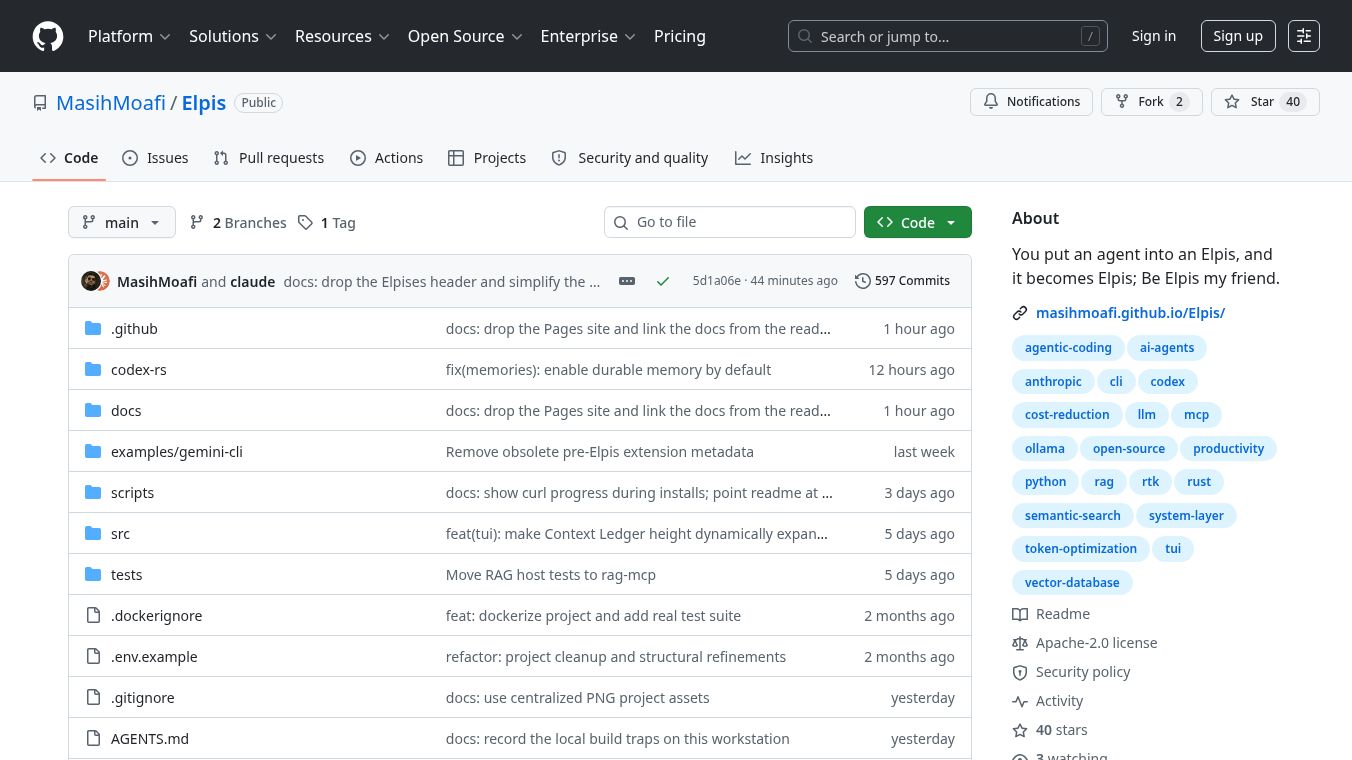





Elpis: A Terminal Environment for Coding Agents
Introduction
Elpis is a specialized tool built for developers who use coding agents to write and manage code. It runs directly in the terminal, which is the command line interface most programmers use. The main goal of Elpis is to keep the workspace clean and efficient. When a coding agent works inside Elpis, it has access to only the information it needs right now. This prevents the system from getting overwhelmed by old or irrelevant data. The design philosophy is simple: the agent becomes part of the environment, and the environment stays focused on the current task.
Benefits
Elpis offers several key advantages over traditional coding tools. First, it saves a lot of memory space. Standard coding sessions often fill up with long histories of commands and errors. Elpis solves this by keeping only the active work in memory and storing the rest on the disk. Tests show that Elpis can keep 93% of its context free, while older methods like Codex only keep 73%. This means the tool can handle longer and more complex tasks without slowing down.
Second, Elpis makes it easy to see what is happening. Users can run a simple command to view exactly which files are being used and why. This transparency turns context selection into a clear, intentional choice rather than a confusing side effect. Third, the tool ensures work continues smoothly. If a user switches models or restarts the session, their goals and progress are saved. They do not need to start over or explain the project again. Finally, Elpis prioritizes privacy. It does not send data to analytics services by default, and users control which AI providers they use.
Use Cases
Elpis is designed for developers who rely on AI agents to automate coding tasks. It is particularly useful for long-term projects where the conversation history grows very large. For example, a developer working on a complex software feature can use Elpis to let an agent search through code and fix bugs. The tool filters out unnecessary search results, so the agent focuses on the relevant parts of the codebase. It is also ideal for teams that need to swap different AI agents to work on the same project. Because Elpis manages the context, each new agent can pick up where the last one left off without confusion. Additionally, users who care about data security can use Elpis because all their data stays on their local machine in plain text files.
Pricing
Elpis is currently available as open-source software under the Apache-2.0 license. This means developers can download, use, and modify the code for free. There are no subscription fees or hidden costs associated with the core tool. Users are responsible for their own API keys for services like OpenAI or Anthropic, but the tool itself does not charge for access.
Vibes
As an open-source project hosted on GitHub, Elpis has not yet gathered a large number of public reviews or testimonials. The community response is primarily found in the code repository and documentation. Early feedback from developers suggests that the tool is highly effective at managing context during long coding sessions. The creators have shared performance data showing significant improvements in efficiency compared to standard methods. While there are no formal user ratings yet, the technical foundation and clear documentation indicate a strong start for a developer-focused tool.
Additional Information
Elpis was created by Masih Moafi. The project is built on top of OpenAI's Codex CLI, which is also open source. This foundation provides the terminal interface and security features, while Elpis adds layers for memory, context management, and privacy. The roadmap for the project includes plans to support more operating systems like macOS and Windows. Future updates will also add features for coordinating multiple agents and improving how the tool handles voice input. The source code is available for anyone to inspect, and the project encourages community contributions to help build the tool further.
This content is either user submitted or generated using AI technology (including, but not limited to, Google Gemini API, Llama, Grok, and Mistral), based on automated research and analysis of public data sources from search engines like DuckDuckGo, Google Search, and SearXNG, and directly from the tool's own website and with minimal to no human editing/review. THEJO AI is not affiliated with or endorsed by the AI tools or services mentioned. This is provided for informational and reference purposes only, is not an endorsement or official advice, and may contain inaccuracies or biases. Please verify details with original sources.

Comments
Please log in to post a comment.