ClaudeWatermark
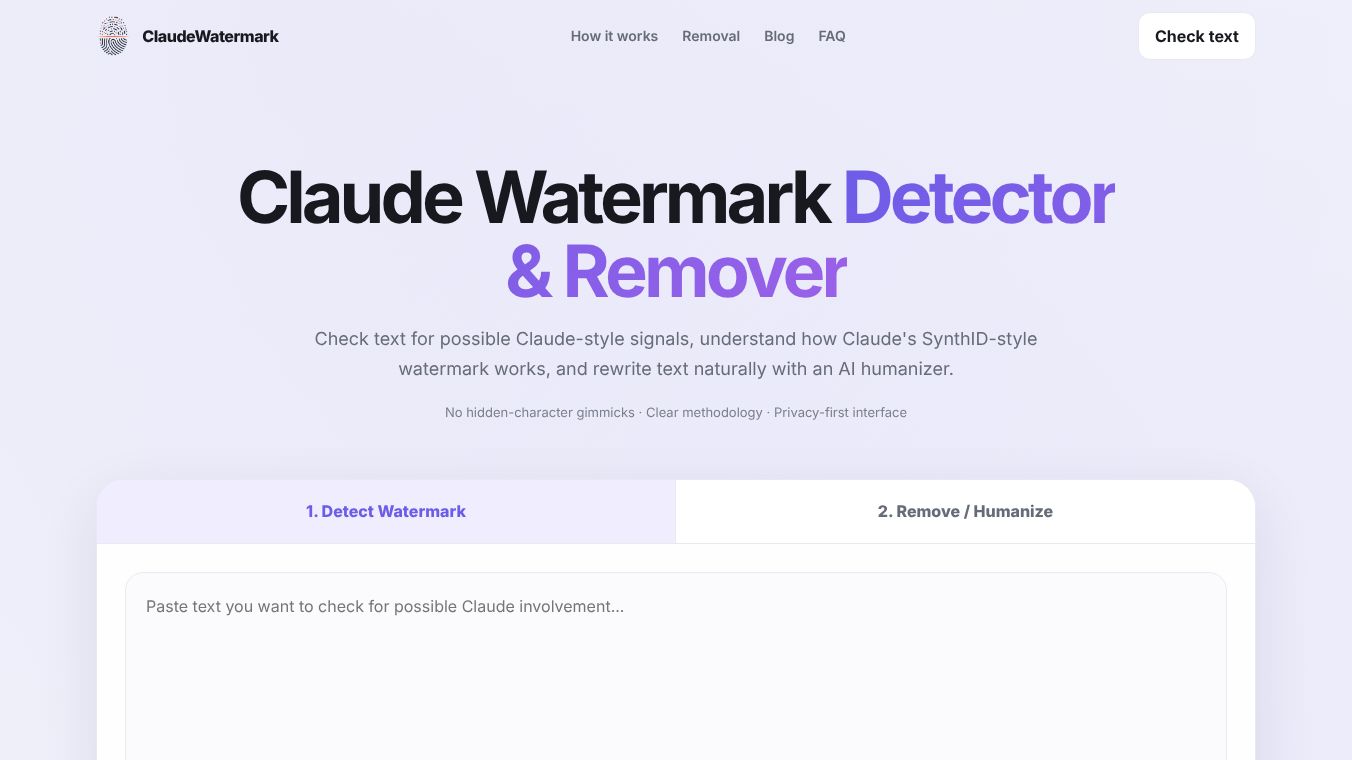





What is ClaudeWatermark
ClaudeWatermark is a new feature built into the latest versions of the Claude AI model. It works by adding a hidden pattern to the text it generates. This pattern is invisible to human readers but can be detected by a special tool using a specific key. The main goal of this feature is to help people know if a piece of text was written by Claude. This change is part of a global effort to follow new laws, such as the EU AI Act, which require AI companies to mark their content.
Benefits
The biggest benefit of ClaudeWatermark is transparency. It gives users a way to verify the origin of text without changing how the text looks or feels. Unlike old methods that might make AI writing sound robotic or repetitive, this watermark keeps the writing natural and high quality. It does not add extra costs to using the model because it does not require more tokens. It also protects user privacy because the watermark cannot be used to find out who created the text or which account was used. The feature is designed to be fair, ensuring the AI does not force unusual word choices just to hide the pattern.
Use Cases
This feature is useful in many situations where knowing the source of text matters. For example, journalists and fact-checkers can use the detection tool to see if an article was written by Claude. Educators can check student essays to understand if AI was used in the writing process. Companies can verify the origin of content posted on social media or websites. It is also helpful for legal and compliance teams who need to ensure they are following regulations about AI-generated content. The watermark works best on longer texts where there are many word choices available. It is less effective on very short sentences or on code where exact words are required for the program to work.
Pricing
There is no extra cost for users to generate watermarked text. The feature does not increase the price of using the Claude model. Additionally, there are no extra charges for using the detection API that will be available soon to check if text was written by Claude.
Vibes
Public reaction to this feature has been generally positive because it focuses on safety and compliance rather than trying to hide AI use. The announcement highlighted that the method does not degrade the quality of the writing. Users appreciate that the watermark is invisible and does not interfere with the natural flow of conversation. Some experts note that while the watermark provides a strong signal of AI involvement, it is not a perfect tool for catching every single instance of AI use, especially in heavily edited human text.
Additional Information
Anthropic, the company behind Claude, is rolling out this feature to comply with the EU AI Act, which took effect in August 2026. The company is also working to add this capability to older models that were launched before the new law. To support research in this area, Anthropic has launched a $5 million grant program for independent studies on how AI affects user wellbeing. The company has also appointed a new Chief Global Affairs Officer to help manage these international regulatory efforts.
This content is either user submitted or generated using AI technology (including, but not limited to, Google Gemini API, Llama, Grok, and Mistral), based on automated research and analysis of public data sources from search engines like DuckDuckGo, Google Search, and SearXNG, and directly from the tool's own website and with minimal to no human editing/review. THEJO AI is not affiliated with or endorsed by the AI tools or services mentioned. This is provided for informational and reference purposes only, is not an endorsement or official advice, and may contain inaccuracies or biases. Please verify details with original sources.

Comments
Please log in to post a comment.