AI SEO Playbook
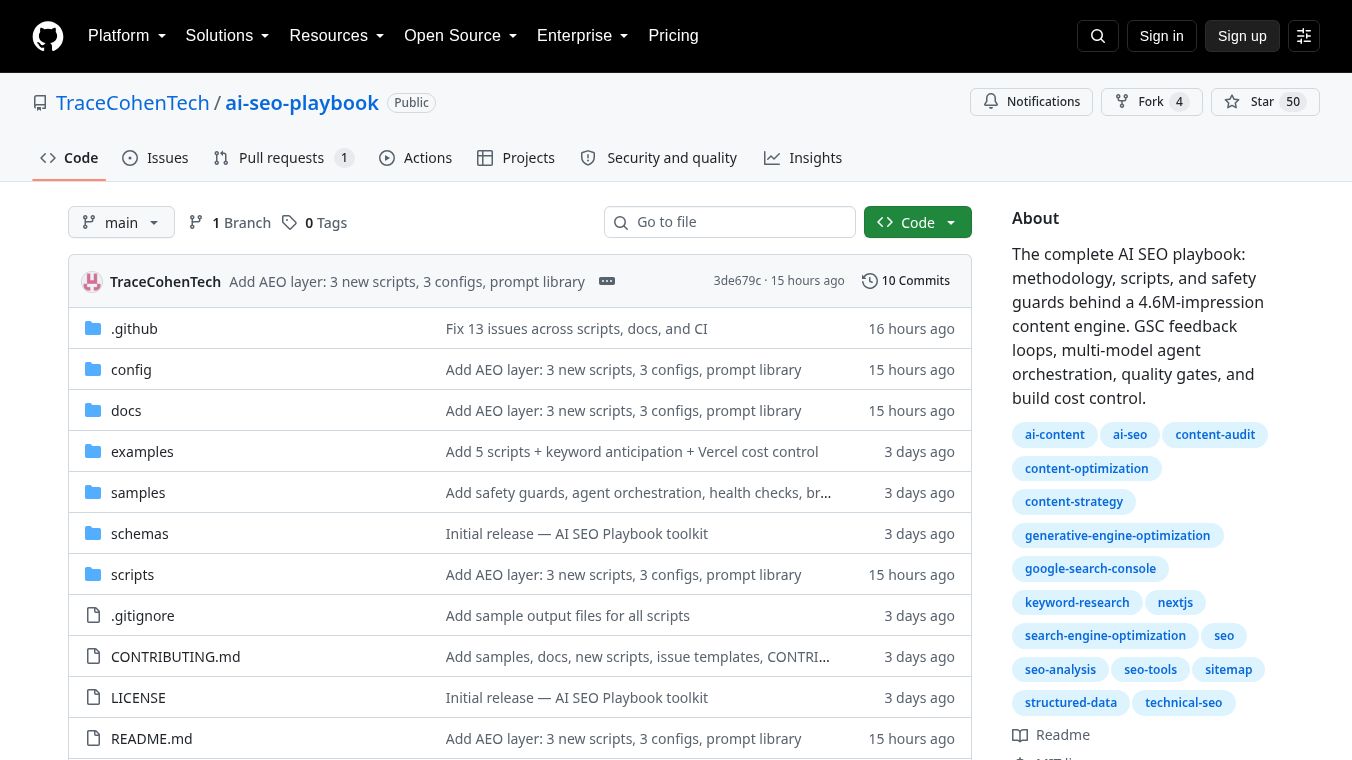





The AI SEO Playbook: Building a Self-Improving Content Engine
Overview
The AI SEO Playbook is a complete guide and toolkit for building an AI-powered content engine that ranks well on search engines. It is not just a collection of theories or static instructions. Instead, it offers an operational framework that helped a website grow its monthly impressions from 604,000 to 4.62 million in just three months. The core idea is to create a continuous feedback loop that uses data from Google Search Console to automatically find problems and make improvements. This cycle repeats every week, making the content engine smarter over time.
Benefits
The main advantage of this playbook is its ability to automate complex SEO tasks. It uses a closed-loop system where data feeds into diagnostic scripts, which then tell AI agents what fixes are needed. These agents apply strict quality checks before making any changes. This ensures that the content engine gets better at ranking without constant manual intervention.
Key benefits include:*Automated Diagnostics:A suite of 17 Node.js scripts automatically analyzes performance data to find issues like low click-through rates, duplicate content, or missing pages.*Smart Content Rotation:The system uses five different content formats, such as deep explainers, news analysis, and ranked lists, to keep content fresh and target different user needs.*Quality Control:Before any content is published, it must pass through nine strict publish gates. These checks ensure the content is high quality, fact-checked, and free of phrases that signal AI-generated spam to search engines.*Proactive Growth:The toolkit helps users anticipate keyword trends before they spike, ensuring the site is ready when demand increases.*Safety and Stability:Built-in safety layers prevent accidental errors, control build costs, and monitor system health automatically.
Use Cases
This playbook is designed for anyone looking to scale their content operations using AI while maintaining high search rankings. It is particularly useful for:*SEO Teams:Organizations that need to manage large volumes of content and want to automate routine optimization tasks.*Content Creators:Writers who want to ensure their AI-assisted content passes quality gates and avoids AI detection filters.*Technical Managers:Developers who need to set up automated workflows using GitHub Actions and Google Cloud APIs.
The system can be used to:* Identify pages that are ranking well but getting few clicks and rewrite their titles for better performance.* Find and fix content that targets the same keywords, consolidating authority to improve rankings.* Discover new search queries where the site has no dedicated page and create content to fill that gap.* Regularly update high-traffic pages to keep them relevant and visible.* Submit new URLs to Google for near-instant crawling using the Indexing API.
Pricing
The AI SEO Playbook is available as an open-source project on GitHub. Users can clone the repository and use the toolkit at no cost. However, users will need their own Google Cloud service account with access to the Search Console API to run the diagnostics and automation features.
Vibes
The results from using this playbook have been impressive. One user reported a massive increase in visibility, with monthly impressions jumping from 604,000 to 4.62 million. Daily clicks also rose significantly, peaking at 854 per day. The average search position improved from 12 to 7.5. The team was able to purge over 500 AI template phrases and fix 21 content cannibalization clusters. While overall click-through rates dropped slightly due to the sheer volume of impressions, the human-intent click rates for specific formats like ranked lists and question-led posts saw significant improvements.
Additional Information
The AI SEO Playbook was developed by TraceCohenTech. It is hosted on GitHub under the repository name ai-seo-playbook. The project relies on a robust configuration structure with various JSON files that define rules for content formats, quality gates, and anti-AI detection. It also includes specific schema examples for different types of web pages to help with structured data optimization. The implementation strategy suggests setting up automated weekly reports using GitHub Actions, which run every Sunday to generate performance summaries and trigger optimizations.
This content is either user submitted or generated using AI technology (including, but not limited to, Google Gemini API, Llama, Grok, and Mistral), based on automated research and analysis of public data sources from search engines like DuckDuckGo, Google Search, and SearXNG, and directly from the tool's own website and with minimal to no human editing/review. THEJO AI is not affiliated with or endorsed by the AI tools or services mentioned. This is provided for informational and reference purposes only, is not an endorsement or official advice, and may contain inaccuracies or biases. Please verify details with original sources.




Comments
Please log in to post a comment.