VoicePicker





How to Choose an AI Voice Tool in 2026
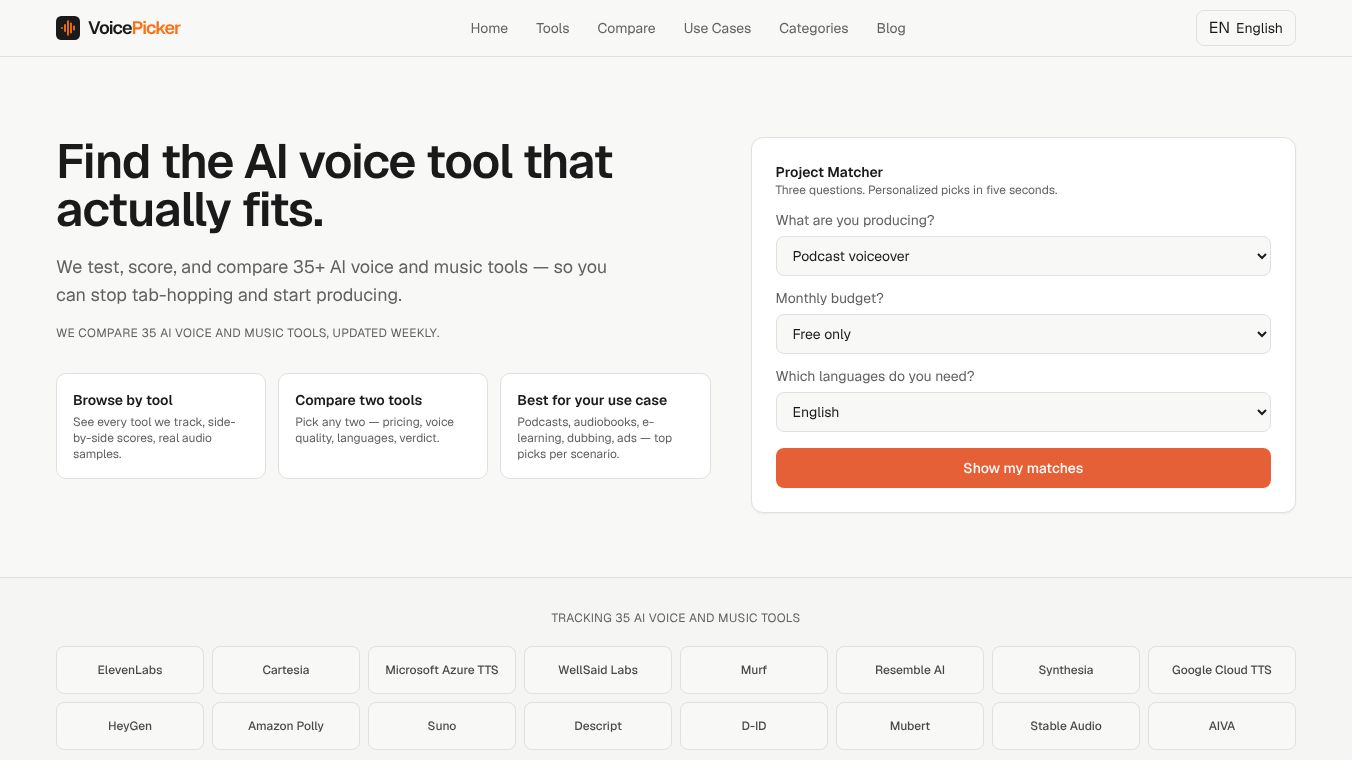
The AI voice market in 2026 has evolved significantly over the past eighteen months. At the top tier, quality has converged among leaders like ElevenLabs, Play.ht, and Microsoft Azure. In blind tests, the output from these providers is indistinguishable from human speech for most listeners. Consequently, the primary factor for differentiation is no longer raw quality, but rather fit: how well a specific tool aligns with your unique use case, language requirements, and budget.
Benefits
Different projects require different vocal characteristics. A single tool rarely excels at every scenario, and this segmentation is a feature of the market, not a flaw.
- Podcast Voiceovers:Demand long-form consistency and natural pauses.
- E-learning Narration:Requires clear pronunciation of technical terms and effortless multilingual support.
- Game Characters:Need a wide emotional range and licensing terms robust enough to survive publisher reviews.
When evaluating pricing, look beyond the monthly subscription fee and calculate the cost per minute of usable output. For example, a $5/month free tier that produces 30 minutes of audio may be more valuable than a $49/month plan that produces 60 minutes if your project only requires 10 minutes a week. Tools vary dramatically in how aggressively their free tiers shrink over time. Always check the last updated date on pricing reviews to ensure the data reflects current reality.
Use Cases
If your content is exclusively in English, almost every major tool qualifies. However, if you need to ship in languages like Turkish, Polish, or Vietnamese, the shortlist narrows significantly.
- Top Multilingual Providers:ElevenLabs, Microsoft Azure, and Google Cloud TTS.
- Critical Distinction:Pay attention to the difference between supported (the model produces audio) and native quality (the output is good enough to ship without re-recording).
To help users navigate this landscape, tools are evaluated based on four editorial sub-scores:1.Voice Quality:Graded on production projects.2.Value:Cost-effectiveness relative to output.3.UI:User interface usability.4.Maturity:Stability and feature completeness.
These scores are updated weekly or when a tool ships a meaningful update. There is no paid placement or ranking by bid; the goal is to provide an unbiased comparison so users can stop tab-hopping and start producing.
Pricing
Free tiers are subject to change. What is generous in 2026 may shrink in 2027. Always verify the last updated date and the tool's official pricing page before committing to a project. For commercial work, however, expect to pay between $20 and $100 per month as volume grows.
Vibes
Are the reviews paid? No. While the platform may earn affiliate commissions when users sign up via provided links, this does not influence which tools are ranked highest or the content of the reviews. All affiliate links are disclosed per FTC and EU rules.
Can I trust a tool's free tier as a long-term plan? Sometimes. Free tiers are subject to change. What is generous in 2026 may shrink in 2027. Always verify the last updated date and the tool's official pricing page before committing to a project.
Which tool has the best voice quality? On the current scoring rubric, ElevenLabs leads for English studio-grade output, with Play.ht and WellSaid Labs close behind. For the widest language matrix, ElevenLabs and Microsoft Azure TTS are the top choices.
Are there good free AI voice tools? Yes. Open-source options like Coqui, along with the free tiers of ElevenLabs, Play.ht, and NaturalReader, cover most hobby projects. For commercial work, however, expect to pay between $20 and $100 per month as volume grows.
Additional Information
Understanding Key Concepts
Text-to-Speech (TTS) vs. Voice Cloning
- Text-to-Speech (TTS):Generates speech from text using pre-made, standard voices.
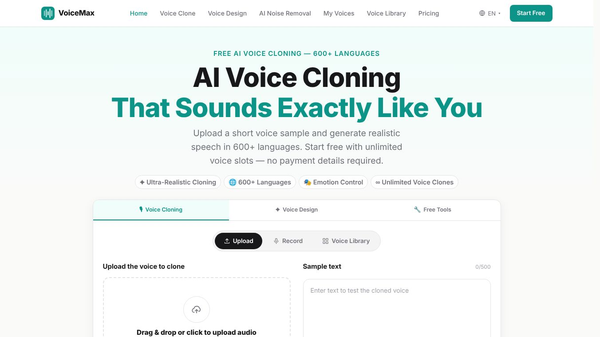
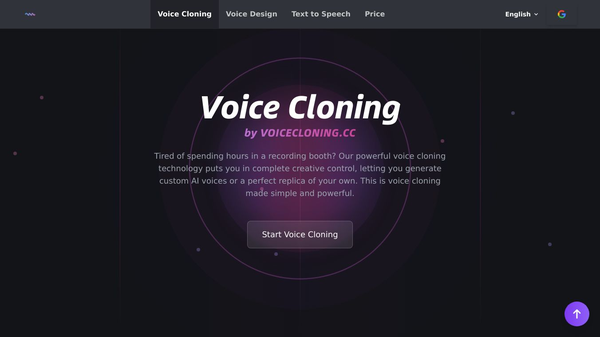
- Voice Cloning:Generates speech in a specific person's voice, usually derived from a short sample. Cloning is more powerful but also more regulated; most reputable tools require explicit consent.
Legal Considerations
- Your Own Voice:In most jurisdictions, you own your voice, so cloning your own voice is generally permissible.
- Others' Voices:Cloning someone else's voice without consent is increasingly regulated. Compliance with frameworks like the EU AI Act and various US state laws is mandatory.
This content is either user submitted or generated using AI technology (including, but not limited to, Google Gemini API, Llama, Grok, and Mistral), based on automated research and analysis of public data sources from search engines like DuckDuckGo, Google Search, and SearXNG, and directly from the tool's own website and with minimal to no human editing/review. THEJO AI is not affiliated with or endorsed by the AI tools or services mentioned. This is provided for informational and reference purposes only, is not an endorsement or official advice, and may contain inaccuracies or biases. Please verify details with original sources.

Comments
Please log in to post a comment.