VibeDict
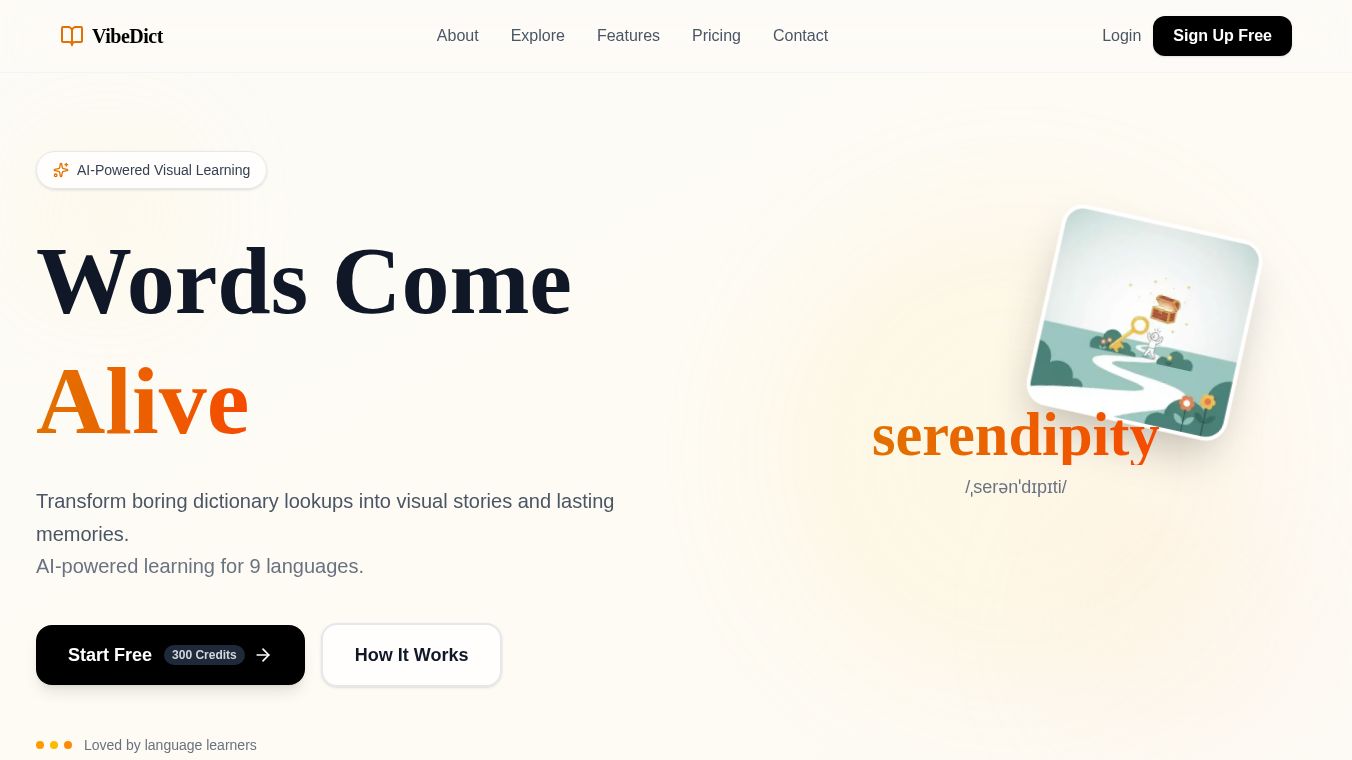





VibeDict is an AI-powered learning tool that makes learning new words more fun and easier to remember. It goes beyond a regular dictionary by creating visual stories and helping users build lasting memories for words in nine different languages. VibeDict helps people understand not just what a word means, but also how to use it, its cultural background, and its overall feeling or "vibe."
Benefits
VibeDict uses AI to create unique pictures for each word. This taps into the power of visual memory, which is known to be much stronger than just reading text. It helps users see and recall words better. The platform offers complete understanding of words, including their meanings, cultural connections, and subtle differences. It also provides examples of how words are used in real life, spoken by professionals, so learners can naturally pick up pronunciation and proper usage. An AI assistant acts like a personal language tutor, giving quick, customized answers to questions about word use, meanings, and culture. Users can save words they look up and track their learning progress through categories like New, Learning, and Mastered. VibeDict also lets users pick several words and have the AI create a memorable story from them, which helps lock vocabulary into memory through context and emotion. It uses a science-based memory system with flashcards that use spaced repetition and AI-generated visuals to turn vocabulary into long-term memories.
This content is either user submitted or generated using AI technology (including, but not limited to, Google Gemini API, Llama, Grok, and Mistral), based on automated research and analysis of public data sources from search engines like DuckDuckGo, Google Search, and SearXNG, and directly from the tool's own website and with minimal to no human editing/review. THEJO AI is not affiliated with or endorsed by the AI tools or services mentioned. This is provided for informational and reference purposes only, is not an endorsement or official advice, and may contain inaccuracies or biases. Please verify details with original sources.
 No Info
Comments
Please log in to post a comment.