Tyndale
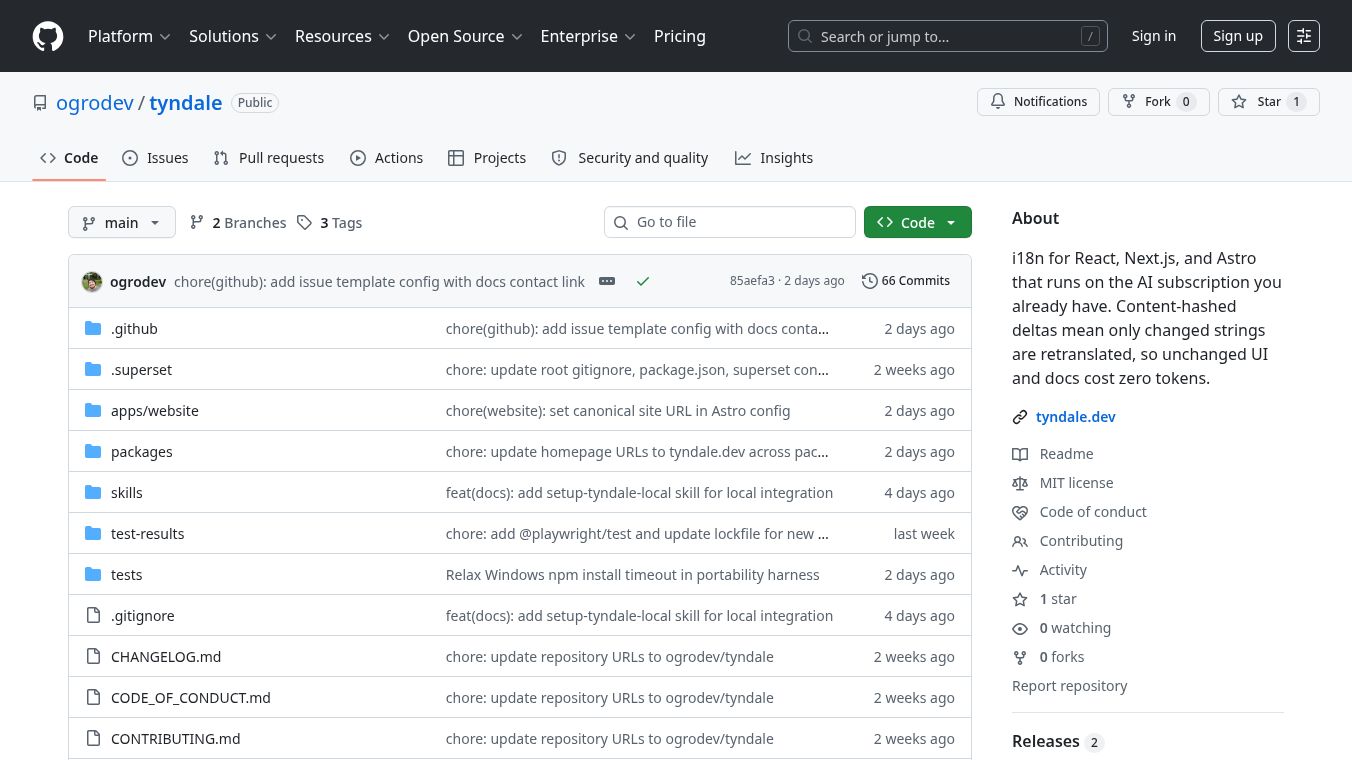





Tyndale: AI-Powered Internationalization for React, Next.js, and Astro
Tyndale is an open-source tool that helps developers make their websites available in multiple languages. It is designed specifically for React, Next.js, and Astro applications. The tool uses existing AI subscriptions like Claude or ChatGPT to translate user interfaces and documentation. It does not require separate API keys or per-word billing. Instead, it uses content hashing to identify only changed strings. This means unchanged content costs zero tokens, making it highly efficient for developers who already pay for AI services.
Benefits
Tyndale solves the problem of handling changes efficiently in internationalization setups. Traditional workflows often involve re-reading locale files and comparing them to the source, which burns thousands of tokens on work the tool should already know how to do. Tyndale avoids this by fingerprinting every translatable string using a content hash. When you run the translate command, it compares hashes against a manifest and sends only new and changed entries to the model. It also removes stale ones. Unchanged strings cost zero tokens because the tool knows they have not changed. State is stored in a JSON file so a fresh clone skips work that was already done. This saves money and time for developers.
Use Cases
Tyndale is useful for any developer building websites with React, Next.js, or Astro who wants to support multiple languages. It can be used to translate user interfaces in applications. It can also be used to translate documentation written in MDX or Markdown for frameworks like Starlight, Docusaurus, VitePress, MkDocs, and Nextra. Developers can use the CLI to initialize their projects and sign in to their AI provider using OAuth. They can mark translatable UI strings using runtime components. The tool handles variables, plurals, numbers, currency, and dates automatically. It is also CI-friendly, meaning it works well with automated testing pipelines.
Pricing
Tyndale is free and open-source. It does not charge any fees for its core functionality. Developers only pay for the AI subscriptions they already use, such as Claude or ChatGPT. There are no additional costs for using Tyndale itself.
Vibes
Tyndale is praised for its efficiency and ease of use. Developers appreciate that it reuses existing AI subscriptions without requiring new API keys. The ability to translate only changed strings is a major advantage because it reduces token usage significantly. Users find the integration process straightforward, especially when using coding agents to set it up automatically. The tool is seen as a modern solution for internationalization that fits well with current AI workflows.
Additional Information
Tyndale is built using Bun workspaces. The project includes a CLI for managing translations, a runtime for components and hooks, and specific helpers for Next.js. It supports various documentation frameworks out of the box. The team has published packages for easy installation via npm. The project is maintained by ogrodev on GitHub. It is designed to be flexible and adaptable to different project needs.
This content is either user submitted or generated using AI technology (including, but not limited to, Google Gemini API, Llama, Grok, and Mistral), based on automated research and analysis of public data sources from search engines like DuckDuckGo, Google Search, and SearXNG, and directly from the tool's own website and with minimal to no human editing/review. THEJO AI is not affiliated with or endorsed by the AI tools or services mentioned. This is provided for informational and reference purposes only, is not an endorsement or official advice, and may contain inaccuracies or biases. Please verify details with original sources.
Other Interesting AI Tools
 No Info
Comments
Please log in to post a comment.