Tailgrids 3.0
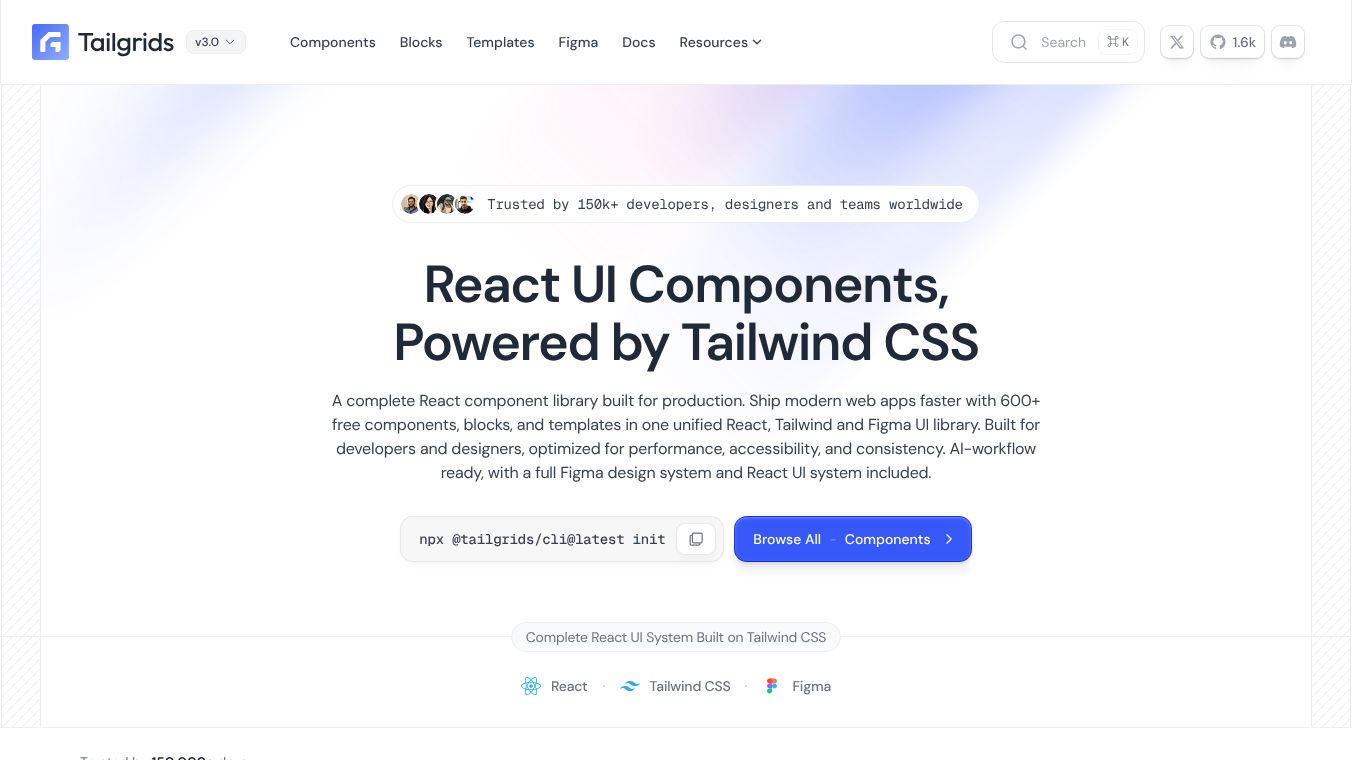





What is TailGrids 3.0?
TailGrids 3.0 is a completely rebuilt version of a popular library for building user interfaces. It is designed specifically for developers who use React and Tailwind CSS. This new version replaces the old system with a smarter, faster, and more flexible way to create web pages. Instead of just giving you pre-made buttons and cards, it provides a full system that helps you design, build, and manage your projects more efficiently.
Benefits
TailGrids 3.0 offers several major advantages for modern software teams.
- Faster Development:A new command-line tool lets you install and add components with simple text commands. This removes the need to copy and paste code manually.
- Better Performance:The components are built to be lightweight. They use a technique called tree-shaking to remove unused code, which makes your website load faster.
- Total Design Control:You have full access to design tokens. This means you can easily change colors, fonts, spacing, and border sizes to match your brand without breaking the layout.
- One Package:All the tools are contained in a single installation file. This makes updates easier and keeps your project organized.
- Open Source:The core documentation and guides are free for everyone to use. Developers can read the code, learn from it, and even contribute improvements back to the project.
- Visual Consistency:The library includes a powerful plugin system that ensures your design looks the same across every part of your application.
Use Cases
This tool is perfect for teams building modern web applications.
- Building Dashboards:You can use the included templates to quickly create data-heavy dashboards for SaaS products or internal tools.
- Marketing Websites:The library provides ready-to-use blocks for landing pages, hero sections, and contact forms that look professional out of the box.
- Cross-Team Collaboration:Because the documentation is interactive and searchable, multiple developers can work on the same project without confusion.
- Design and Code Sync:Teams can use the Figma design system to ensure what they see in their design software matches exactly what the code produces.
- Learning and Contributing:Beginners can use the open-source guides to learn React and Tailwind CSS, while experts can contribute new features to the library.
Pricing
TailGrids 3.0 offers a flexible pricing model to suit different needs.
- Free Version:The core components and documentation are completely free. This version is open source and welcomes community contributions.
- Pro Version:For teams needing advanced features, there is a Pro tier. This includes access to specialized blocks for complex applications like dashboards and marketing sites. Users can test these demos live before buying. The Pro version also unlocks the full source code for React and Tailwind so you can customize everything.
Vibes
The community response to TailGrids 3.0 has been very positive.
Developers appreciate the shift from a static library to an intelligent system. Many users note that the new command-line tool saves hours of work by automating setup and configuration. The focus on design tokens has been a huge win for teams that need to maintain consistent branding across multiple projects.
The open-source nature of the project has also sparked excitement. Developers love that they can review the code and see how the components are built. The new documentation portal with live previews has made it much easier to find the right component for a specific job.
Some users are particularly excited about the future roadmap. The plan to integrate AI tools suggests that this library will become even smarter in the coming months, potentially generating components automatically based on design tokens.
Additional Information
TailGrids 3.0 is built on a solid foundation of modern development practices.
- TypeScript First:The entire library is written in TypeScript, which helps catch errors before they reach production.
- Quality Assurance:The project uses tools like ESLint, Prettier, and Storybook to ensure code quality and prevent regressions.
- Future AI Integration:The roadmap includes plans for AI workflows. This means future versions might be able to generate React components automatically or sync designs with local AI models.
- Figma Integration:The library provides over 500 ready-to-use widgets in Figma with more than 2,800 component variants. This allows designers to work visually before handing off to developers.
- Templates:There are over eight modern templates included that feature complete multi-page structures and scalable file architectures.
TailGrids 3.0 represents the next step in how developers build user interfaces. It combines speed, flexibility, and intelligence to help teams ship better products faster.
This content is either user submitted or generated using AI technology (including, but not limited to, Google Gemini API, Llama, Grok, and Mistral), based on automated research and analysis of public data sources from search engines like DuckDuckGo, Google Search, and SearXNG, and directly from the tool's own website and with minimal to no human editing/review. THEJO AI is not affiliated with or endorsed by the AI tools or services mentioned. This is provided for informational and reference purposes only, is not an endorsement or official advice, and may contain inaccuracies or biases. Please verify details with original sources.



Comments
Please log in to post a comment.