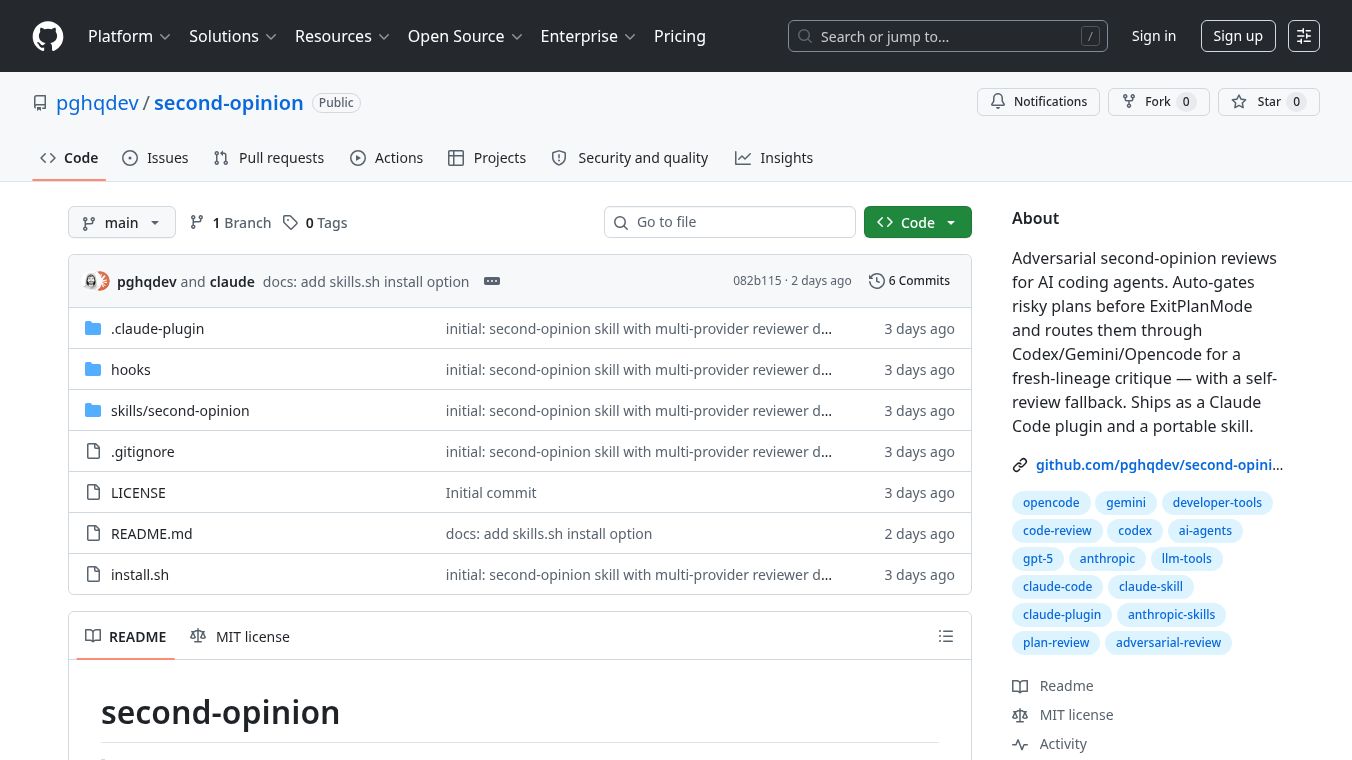





Second Opinion is an application designed to help diagnose car issues using advanced Large Language Models (LLMs). It acts like a digital assistant that can understand car problems and provide potential diagnostic insights.
Benefits
This application offers a flexible and maintainable way to get diagnostic help for cars. Because it uses LLMs, it can understand complex descriptions of car problems. It's built with a modular design, meaning it can be easily updated or changed. Users can also choose different LLM providers, like OpenAI or Anthropic, to get the best results for their needs.
Use Cases
Second Opinion can be used by car owners who are experiencing problems with their vehicles. If your car is making a strange noise or not running right, you can describe the issue to the application. It will then use its LLM capabilities to help figure out what might be wrong. It's also useful for mechanics or technicians who want a quick second opinion on a diagnosis.
Additional Information
The application is built using Python and has a clear architecture. It uses tools like Milvus Vector Database for data management and can be configured to work with different LLM services by setting environment variables. The development process includes testing to ensure the diagnostic functions work correctly. The initial version, or Minimum Viable Product, focuses on setting up the user interface, allowing users to input car issues, and providing diagnostic results.
This content is either user submitted or generated using AI technology (including, but not limited to, Google Gemini API, Llama, Grok, and Mistral), based on automated research and analysis of public data sources from search engines like DuckDuckGo, Google Search, and SearXNG, and directly from the tool's own website and with minimal to no human editing/review. THEJO AI is not affiliated with or endorsed by the AI tools or services mentioned. This is provided for informational and reference purposes only, is not an endorsement or official advice, and may contain inaccuracies or biases. Please verify details with original sources.

Comments
Please log in to post a comment.