PluagAI





PlugAI: AI-Powered CLI Tool for Open-Source Library Recommendations
Research Context and Background
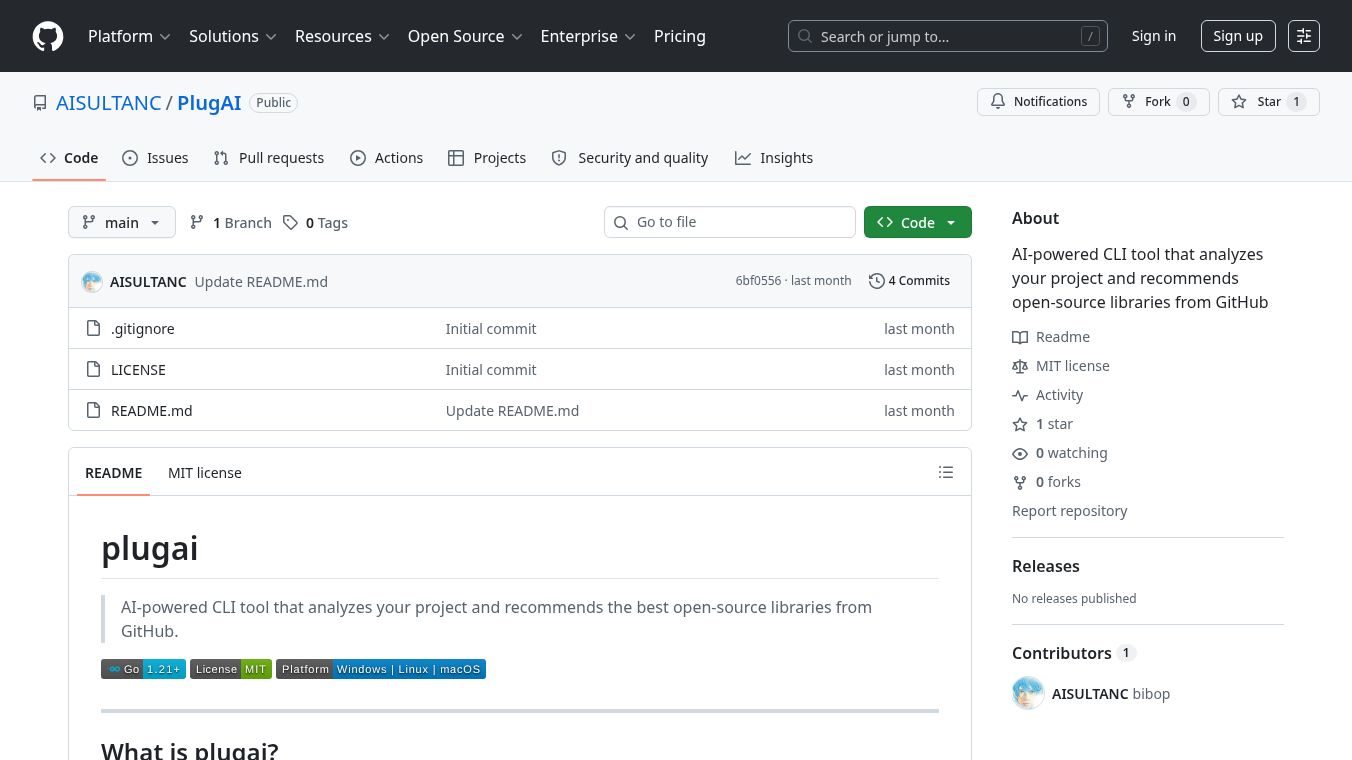
PlugAI is an open-source command-line tool designed to help developers find the best open-source libraries for their software projects. It uses artificial intelligence to analyze a project's existing code and technology stack. The tool then suggests missing libraries that are popular on GitHub and relevant to the specific type of software being built. It is built by the team at AISULTANC and is available on GitHub under the MIT License.
Benefits
PlugAI offers several key advantages for developers who want to improve their projects efficiently.
- Smart Recommendations: Instead of guessing which libraries to use, PlugAI analyzes your code and suggests tools that fit your specific needs. It identifies gaps in your project, such as missing logging or testing utilities.
- Multi-Language Support: The tool works with many popular programming languages including Go, Node.js, Python, Rust, Java, PHP, and Ruby. It automatically detects the language by reading standard dependency files.
- Flexible AI Integration: Developers can choose which AI model to use for analysis. PlugAI supports options like GitHub Copilot, Anthropic Claude, OpenAI GPT-4, Groq, and even local models like Ollama. This allows users to pick the AI that fits their budget and privacy needs.
- Real-Time Data: The tool fetches live data from GitHub to show current star counts for recommended libraries. This helps developers prioritize tools that are actively maintained and widely adopted by the community.
- Interactive Interface: PlugAI provides a text-based user interface that works in standard terminal windows on Windows and Linux. Users can navigate suggestions using arrow keys and copy installation commands directly.
- Remote Analysis: Developers can analyze any public GitHub repository without needing to clone it to their local machine. This is useful for auditing open-source projects or understanding codebases remotely.
Use Cases
PlugAI is designed for developers who want to streamline their dependency management process.
- Project Setup: When starting a new software project, a developer can run PlugAI to get a list of essential libraries they might have forgotten to include. This ensures the project has proper logging, configuration management, and testing tools from the start.
- Code Auditing: Senior developers can use the tool to review existing codebases. It can identify outdated libraries or suggest more modern alternatives that are better maintained.
- Remote Reviews: Team leads can analyze public repositories to understand the technology stack of other projects without downloading the entire codebase. This is helpful for due diligence or learning from other open-source initiatives.
- Integration into Workflows: Because PlugAI supports JSON output, it can be integrated into automated build pipelines or CI/CD systems. This allows for programmatic checks on library recommendations during the software development lifecycle.
Pricing
PlugAI is completely free to use. It is an open-source project released under the MIT License. The tool itself does not charge any fees. However, if you choose to use cloud-based AI models like OpenAI or Anthropic, you will need to provide your own API keys. These keys are billed by the AI provider, not by PlugAI. Users who prefer free options can use local models like Ollama or the free tier of GitHub Copilot.
Vibes
As a new open-source tool, PlugAI has not yet accumulated a large volume of public reviews or testimonials. The project is hosted on GitHub and is in the early stages of adoption. The developers behind it aim to build a community around the tool by providing a reliable way to manage dependencies. Early feedback from the developer community will likely focus on the accuracy of the AI suggestions and the ease of use of the terminal interface.
Additional Information
PlugAI is an open-source project maintained by the team at AISULTANC. The source code is available on GitHub at the repository aisultan/plugai. The project is built using Go and requires Go version 1.21 or higher to compile. It is licensed under the MIT License, which allows users to freely use, modify, and distribute the software. The tool is designed to be lightweight and fast, making it suitable for use in various development environments.
This content is either user submitted or generated using AI technology (including, but not limited to, Google Gemini API, Llama, Grok, and Mistral), based on automated research and analysis of public data sources from search engines like DuckDuckGo, Google Search, and SearXNG, and directly from the tool's own website and with minimal to no human editing/review. THEJO AI is not affiliated with or endorsed by the AI tools or services mentioned. This is provided for informational and reference purposes only, is not an endorsement or official advice, and may contain inaccuracies or biases. Please verify details with original sources.

Comments
Please log in to post a comment.