Packet28
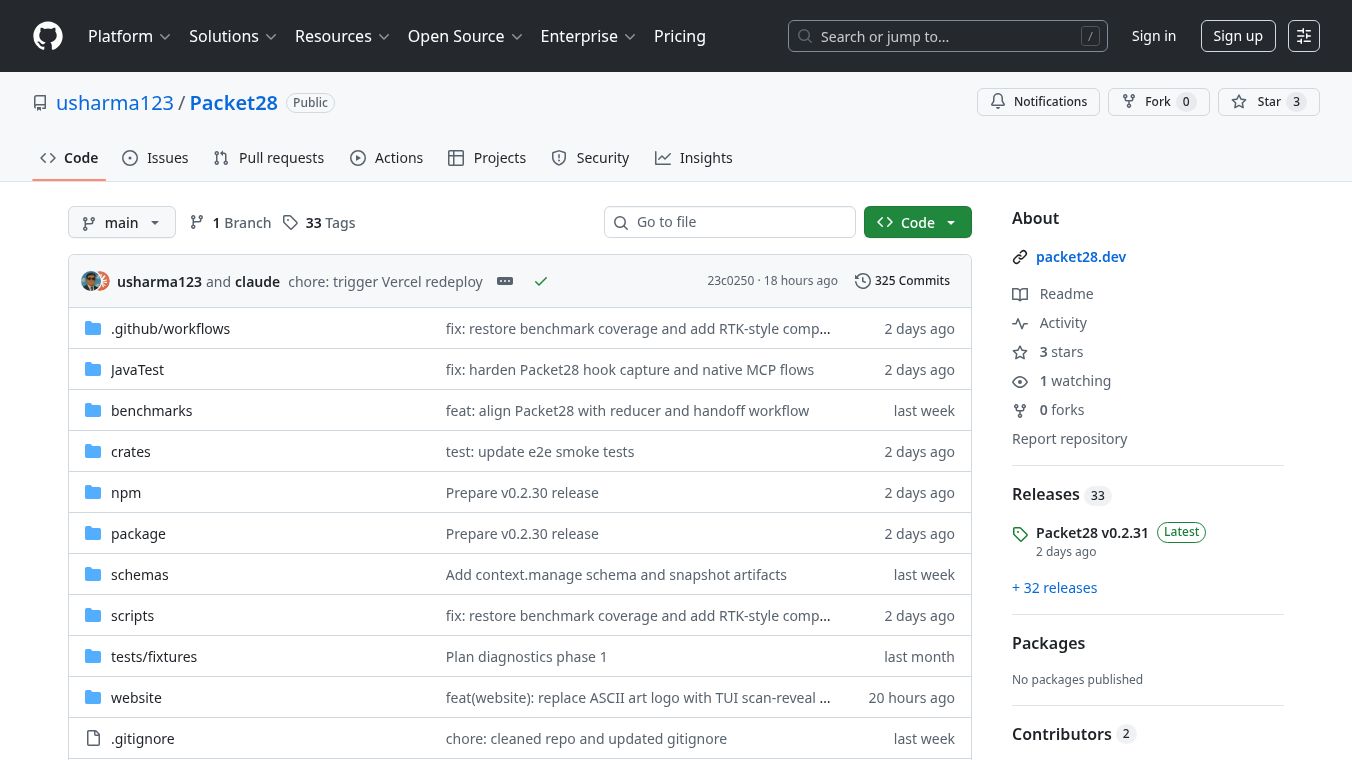





Packet28 is a system designed to help artificial intelligence or AI agents work more efficiently with development information. Think of it as a smart organizer for the complex data that software developers deal with every day.
Benefits
Packet28 makes AI agents much better at understanding and using development data. It takes messy information like code changes, error messages, and test results and turns them into neat, easy-to-understand packages. This means AI agents can get to the important tasks faster without wasting time sorting through lots of raw data. It also helps manage how much information the AI can process at once, making sure it focuses on what matters most.
Use Cases
This system is useful for AI agents that need to analyze code, fix bugs, or improve software. For example, if an AI agent is asked to find out why a specific part of a program isn't working correctly, Packet28 can quickly gather and organize all the relevant information. This includes things like code differences, error logs, and test failures. It helps the AI understand the problem without getting lost in too much detail. Packet28 can also be used in continuous integration systems, which are tools that help automate software testing and building.
Vibes
Packet28 is designed to make AI agents more effective by providing them with structured and relevant data, reducing the time and resources needed for complex analysis.
Additional Information
The Packet28 system is built using Rust and is organized into four main layers: Shared Contracts, Reducers, Context Runtime, and CLI, Daemon, and Agent Surface. It includes various tools for processing different types of development artifacts like coverage reports, code differences, and error logs. The system manages data persistence, indexing, and recall, allowing AI agents to access past information efficiently. Installation can be done by building from source or through an npm package. The project is structured into 24 crates and 6 binaries, with a significant amount of code dedicated to its functionality and testing.
This content is either user submitted or generated using AI technology (including, but not limited to, Google Gemini API, Llama, Grok, and Mistral), based on automated research and analysis of public data sources from search engines like DuckDuckGo, Google Search, and SearXNG, and directly from the tool's own website and with minimal to no human editing/review. THEJO AI is not affiliated with or endorsed by the AI tools or services mentioned. This is provided for informational and reference purposes only, is not an endorsement or official advice, and may contain inaccuracies or biases. Please verify details with original sources.

Comments
Please log in to post a comment.