Loreguard
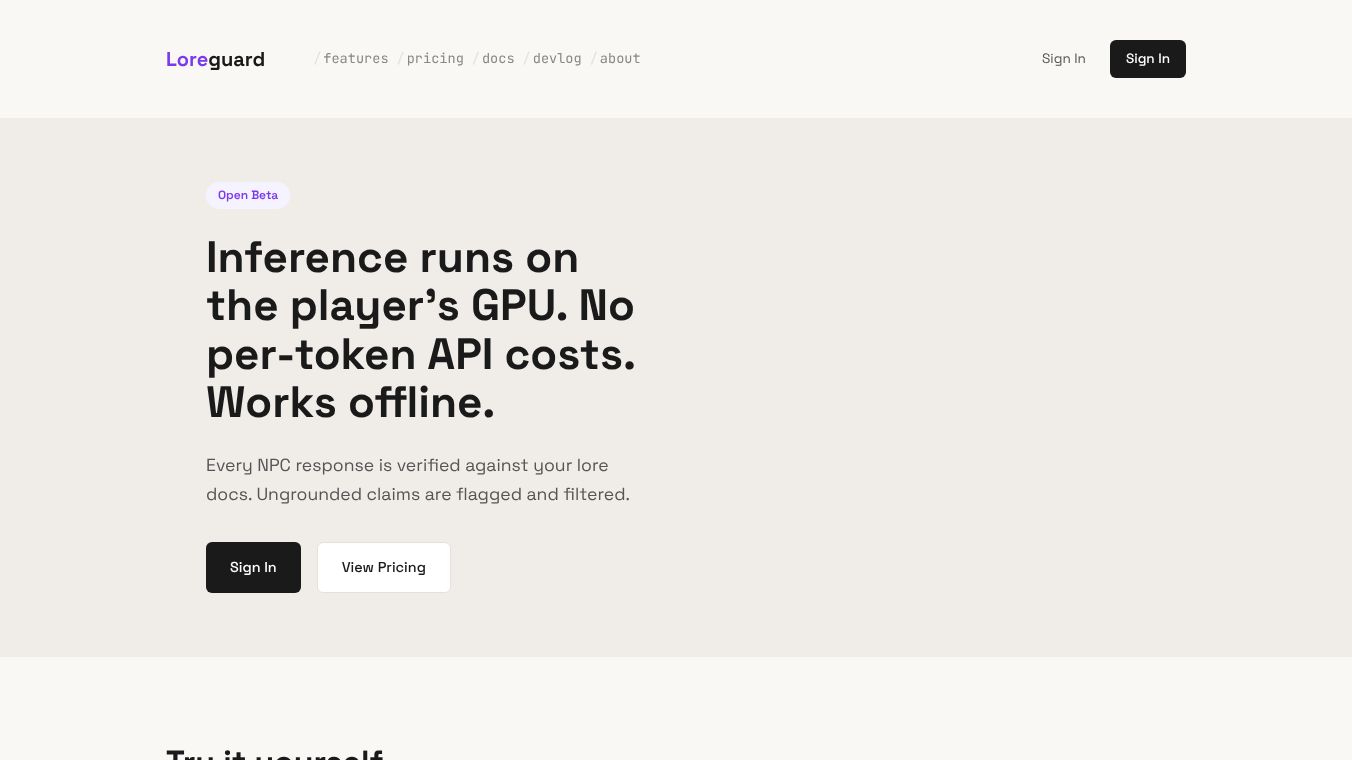





Loreguard is a system designed to make non-player characters or NPCs in video games more interactive and intelligent. It uses advanced technology to allow NPCs to talk and react based on game specific information, all while running directly on a player's computer. This means players can have more engaging conversations with game characters without worrying about extra costs or needing an internet connection for the core features.
Benefits
Loreguard makes game characters smarter by letting them access and use information you provide, like game bibles or character details. This ensures that everything an NPC says is based on the game's own story and rules, preventing them from saying things that don't make sense. It also means the system can work even when you are offline because the main processing happens on your own computer's graphics card. The system can also filter out information that isn't true or doesn't fit the game's world, making interactions more reliable. NPCs can remember past conversations, helping to build a more realistic relationship with the player over time.
Use Cases
This system is useful for game developers who want to create deeper player experiences. It can be used in various game engines like Unity, Godot, and Unreal. Players can upload their own game documents, and NPCs will use this information to respond. This is great for role playing games where story and character knowledge are important. It also allows for new gameplay mechanics, such as social engineering or interrogation, where players need to build trust with NPCs to unlock hidden information. For example, an NPC might reveal a secret hideout location only after the player has gained a certain level of trust.
Vibes
The system is currently in an open beta phase, allowing users to test its capabilities. It runs inference on the player's GPU, requiring at least 6GB of VRAM, similar to what's found in graphics cards like the RTX 2060 or better.
Additional Information
Loreguard offers flexibility with both cloud-based and bundled solutions. Both options ensure that the demanding processing tasks are handled by the player's GPU. The system uses a thorough verification process for every NPC response. This includes retrieving relevant information, generating a grounded response, checking it for accuracy with Natural Language Inference, verifying trust levels, and applying a safety filter before the response is shown to the player. NPCs also have persistent memory, allowing them to recall previous interactions and learn about the player, which helps in developing evolving relationships throughout the game.
This content is either user submitted or generated using AI technology (including, but not limited to, Google Gemini API, Llama, Grok, and Mistral), based on automated research and analysis of public data sources from search engines like DuckDuckGo, Google Search, and SearXNG, and directly from the tool's own website and with minimal to no human editing/review. THEJO AI is not affiliated with or endorsed by the AI tools or services mentioned. This is provided for informational and reference purposes only, is not an endorsement or official advice, and may contain inaccuracies or biases. Please verify details with original sources.





Comments
Please log in to post a comment.