LLM Visibility





Generative Engine Optimization (GEO): The New Paradigm for Search Visibility
Research context and background
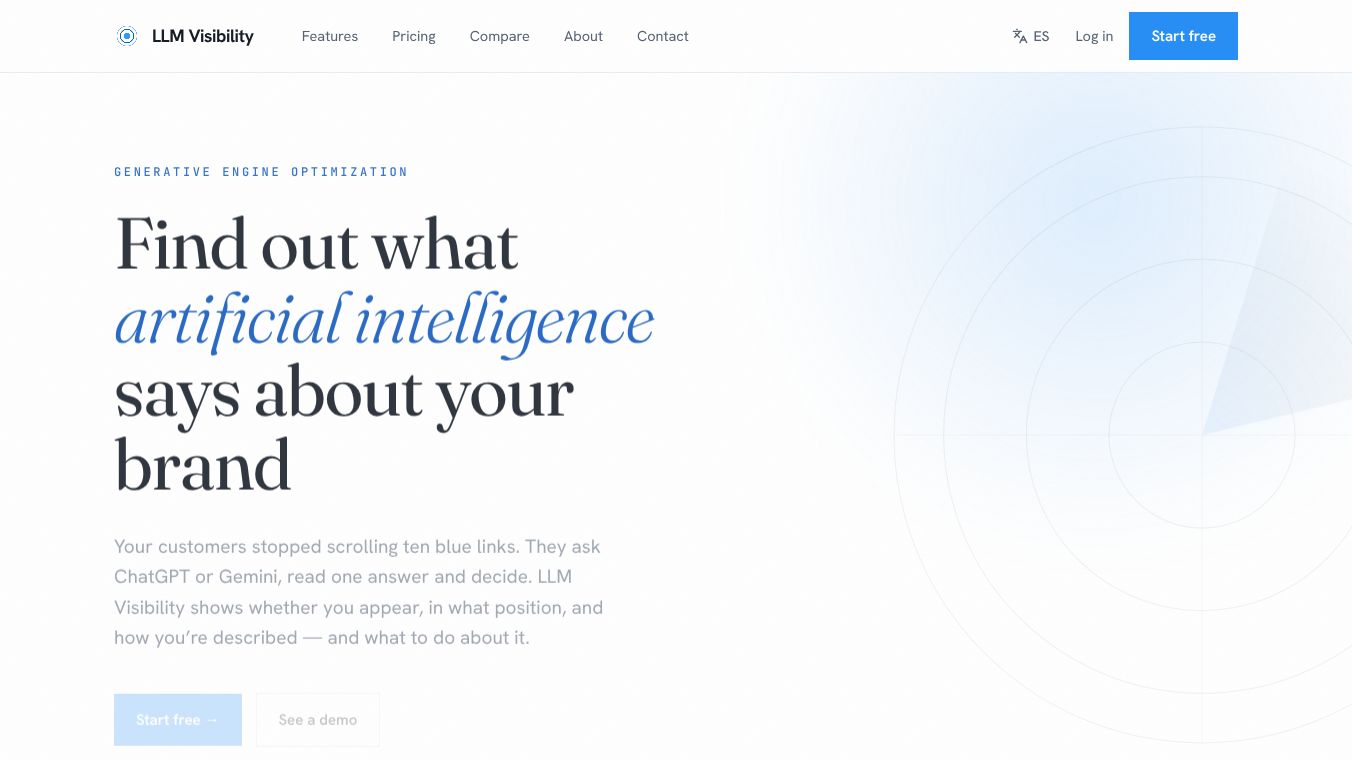
The way people find information online has changed completely. In the past, users would scroll through a list of blue links to find answers. Today, that conversation happens inside large language models like ChatGPT and Gemini. Users ask a question and read one synthesized answer before making a decision. If an AI model does not mention your brand, you effectively do not exist in that conversation. Traditional tools like Google Search Console are no longer enough because they cannot tell you if an AI is recommending a competitor or describing your pricing. This new field is called Generative Engine Optimization or GEO. It is the strategic process of ensuring your brand appears, ranks highly, and is described positively within AI-generated responses.
Benefits
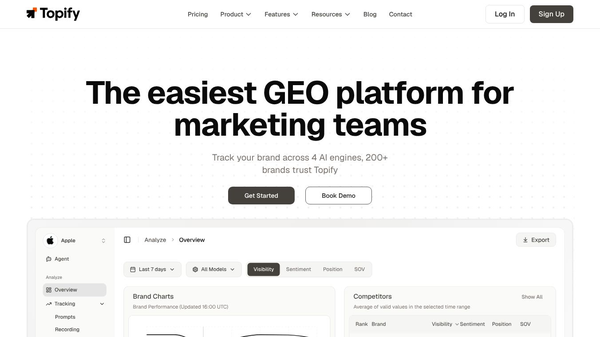
LLM Visibility offers several key advantages for businesses trying to succeed in this new digital landscape. First, it provides a clear AI Visibility Score. This is a single number that combines how often your brand appears and how high up it ranks. Unlike simple percentages, this score rewards brands that appear first and frequently. Second, it tracks Brand Presence. This metric tells you the percentage of answers that mention your brand, answering the critical question of whether you exist in the AI conversation at all. Third, it measures Share of Voice. This shows your mention share relative to your competitors without double-counting mentions per answer. Finally, it analyzes Sentiment. This is a score from zero to one hundred that indicates how the model describes your brand. It goes beyond just seeing if you are mentioned to evaluate if the tone is positive, negative, or neutral.
Use Cases
LLM Visibility is designed for brands that want to ensure they are the primary recommendations users receive when they ask for solutions. The process starts by selecting the real buying queries that customers ask or by generating prompts using AI. Next, the tool runs these prompts across multiple models like ChatGPT and Gemini in the specific country and language relevant to the target audience. The system then analyzes the results using a dual-layer approach. The first layer detects brand mentions word for word. The second layer extracts nuanced data such as sentiment, ranking position, and source citations. Finally, users can take action by reviewing metrics per model, prompt, and time period. The tool provides the exact sentence behind every data point to help inform strategy. This is especially useful for brands that want to target trusted sources. By cross-referencing cited domains with high-authority outlets, businesses can place content where it is most likely to be discovered by AI crawlers.
Pricing
Pricing details are not available in the provided information.
Vibes
Public reception and specific reviews are not available in the provided information.
Additional Information
Funding, partnerships, and notable achievements are not available in the provided information.
This content is either user submitted or generated using AI technology (including, but not limited to, Google Gemini API, Llama, Grok, and Mistral), based on automated research and analysis of public data sources from search engines like DuckDuckGo, Google Search, and SearXNG, and directly from the tool's own website and with minimal to no human editing/review. THEJO AI is not affiliated with or endorsed by the AI tools or services mentioned. This is provided for informational and reference purposes only, is not an endorsement or official advice, and may contain inaccuracies or biases. Please verify details with original sources.

Comments
Please log in to post a comment.