Influencely
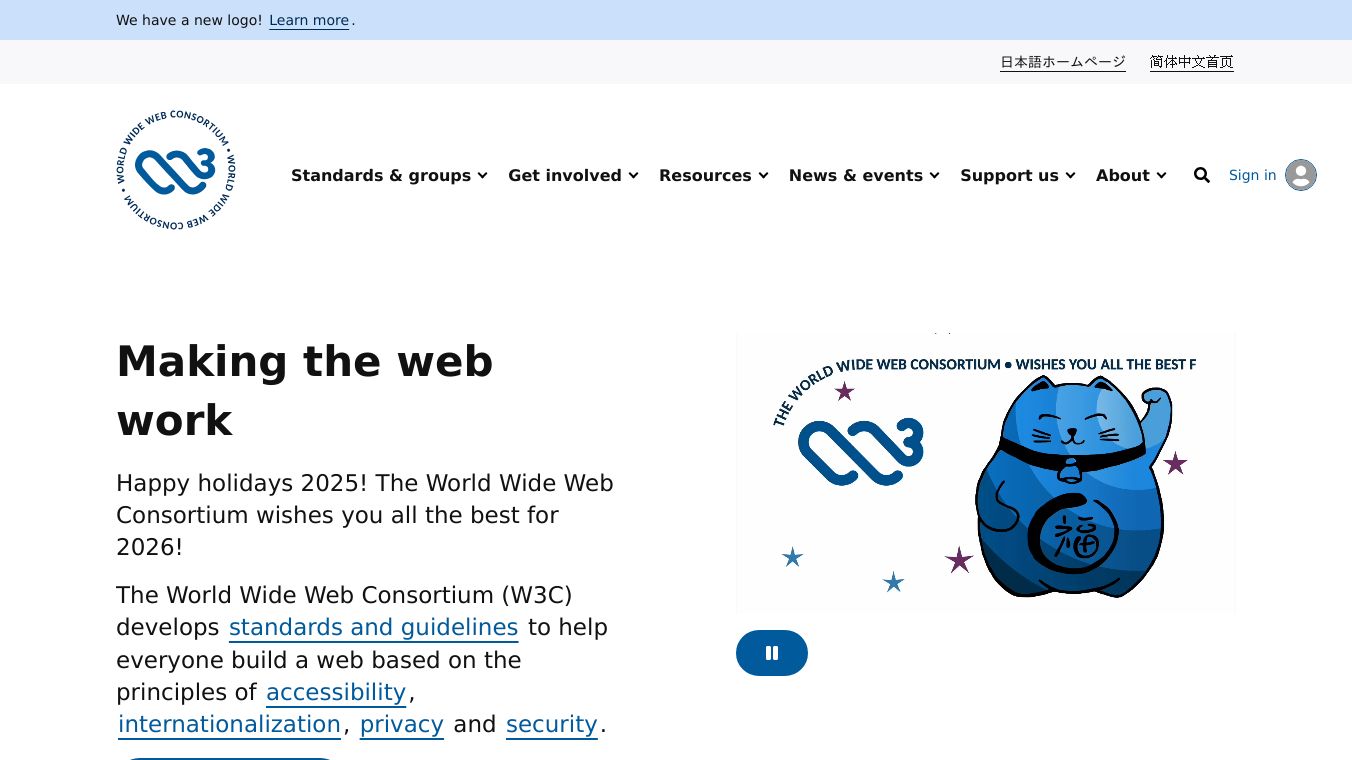





What is the World Wide Web Consortium (W3C)?
The World Wide Web Consortium (W3C) is an international community dedicated to developing open standards that ensure the long-term growth and accessibility of the Web. Led by Web inventor Tim Berners-Lee and CEO Jeffrey Jaffe, W3C brings together over 475 Member organizations to create standards that keep the Web open, interoperable, and accessible to everyone.
Benefits
W3C's work is crucial for maintaining the Web's integrity and functionality. By developing standards for web technologies like HTML, CSS, and JavaScript, W3C ensures that web content is consistent and reliable across different platforms and devices. Additionally, W3C provides guidelines for web accessibility and privacy, making the Web a more inclusive and secure space for all users.
Use Cases
W3C's standards and resources are essential for web developers, designers, and organizations worldwide. Developers use W3C's tutorials, validation services, and software libraries to create high-quality, standards-compliant web content. Designers rely on W3C's guidelines to ensure their work is accessible and user-friendly. Organizations benefit from W3C's standards, which help them build websites that are compatible with various browsers and devices, ultimately reaching a wider audience.
Additional Information
W3C's work is supported by various programs and initiatives, including the Web Accessibility Initiative (WAI), the Web of Things (WoT) Interest Group, and the Web Platform Incubator Community Group (WICG). These initiatives focus on specific aspects of web development, such as accessibility, the Internet of Things, and emerging web technologies. Through these programs, W3C continues to drive innovation and ensure the Web's continued growth and success.
This content is either user submitted or generated using AI technology (including, but not limited to, Google Gemini API, Llama, Grok, and Mistral), based on automated research and analysis of public data sources from search engines like DuckDuckGo, Google Search, and SearXNG, and directly from the tool's own website and with minimal to no human editing/review. THEJO AI is not affiliated with or endorsed by the AI tools or services mentioned. This is provided for informational and reference purposes only, is not an endorsement or official advice, and may contain inaccuracies or biases. Please verify details with original sources.
 No Info
Comments
Please log in to post a comment.