GPT Image 2
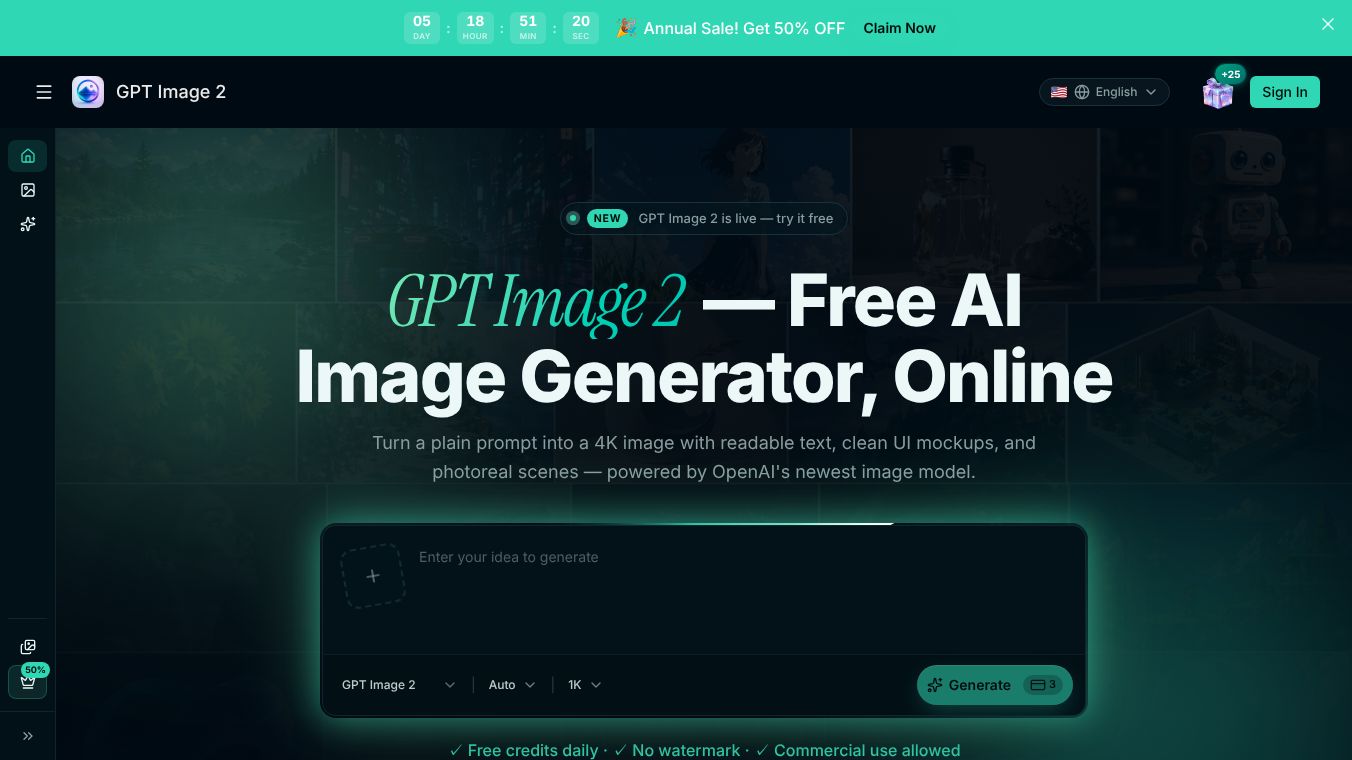





GPT Image 2: OpenAI's New Native Image Generation Model
Overview
OpenAI has launched GPT Image 2, a significant upgrade to its native image generation capabilities. Unlike previous iterations or external tools like DALL-E 3, GPT Image 2 is built directly into the OpenAI API and ChatGPT architecture. It officially launched on April 21, 2026, in the API and Codex under the model ID gpt-image-2, and became available to all ChatGPT users as ChatGPT Images 2.0 on April 22, 2026.
The model represents a genuine step forward, characterized by its ability to reason before generating, rendering text far more reliably (including non-Latin scripts), outputting at higher resolutions, and producing convincing photorealism and UI screenshots.
The Road to GPT Image 2
OpenAI has rapidly iterated on its image generation technology over the past year, shipping four distinct models:* gpt-image-1 (April 2025): The first native GPT image model, offering a clear improvement over DALL-E 3 in layout and instruction following.* gpt-image-1-mini (October 2025): A smaller, faster, and more cost-effective variant.* gpt-image-1.5 (December 2025): An incremental quality bump.* gpt-image-2 (April 2026): The current flagship model, introducing reasoning capabilities, higher resolution, and superior text rendering.
Each release targeted specific weaknesses in text accuracy, instruction following, and photorealism, with GPT Image 2 marking the largest leap in the series.
Key Features and Improvements
1. Reasoning Before Generation
The most significant architectural change in GPT Image 2 is the introduction of a reasoning pass prior to image creation. Instead of mapping a prompt directly to pixels, the model first analyzes the request to understand layout, text content, and object relationships. This process drives substantial gains in instruction following and detail retention, ensuring multi-part prompts are executed more accurately.
2. Reliable Text Rendering
Text rendering has historically been a major failure mode for AI image models, often resulting in garbled or misspelled signs, labels, and code snippets. GPT Image 2 addresses this by:* Accurately rendering multi-word labels, signs, and banners.* Maintaining consistent fonts across the image.* Correctly displaying text in UI components like buttons, menus, and headers.* Supporting non-Latin scripts with high accuracy, a capability where earlier models struggled.
This improvement transforms AI image generation from a tool for backgrounds and illustrations into a viable solution for content where text is the primary focus, such as marketing graphics and product mockups.
3. Higher Resolution and Batch Output
- Resolution: GPT Image 2 generates images at up to 2K resolution, reducing the need for post-generation upscaling in many scenarios.
- Batch Generation: The model can return up to eight coherent images from a single prompt, making it practical for generating variations or small batches in one call.
4. Photorealism and UI Generation
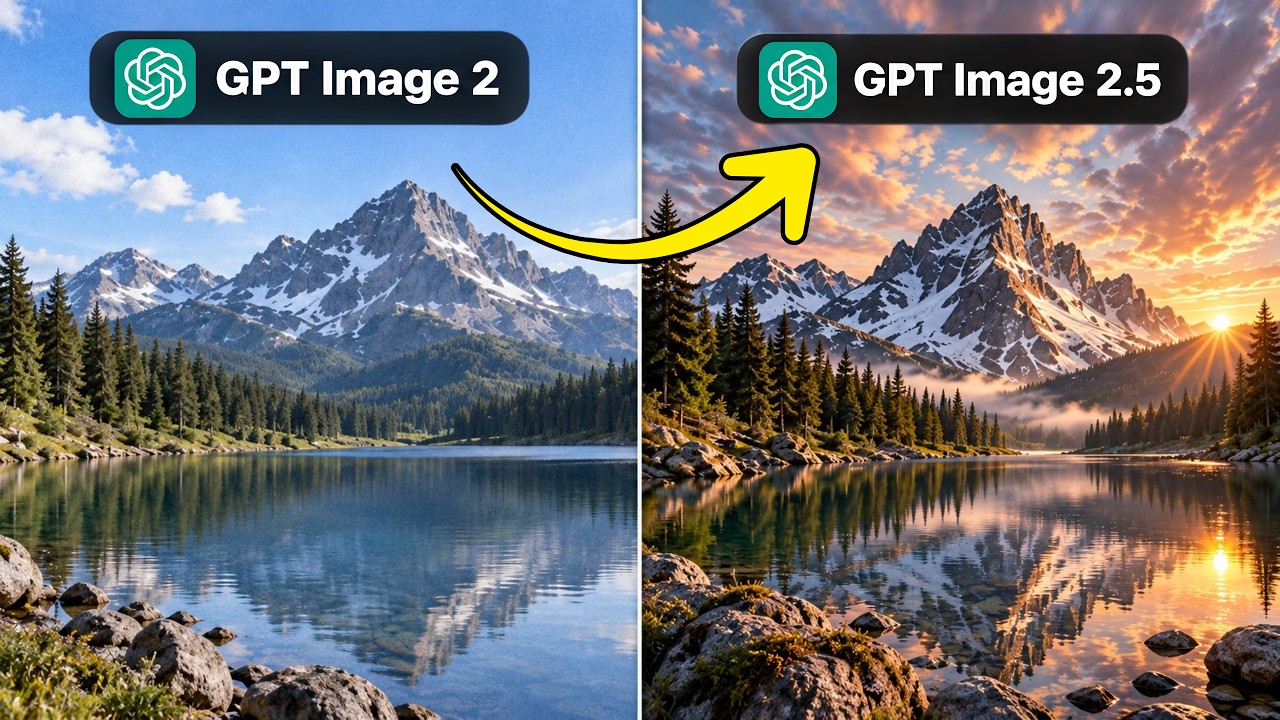
Overall image quality is sharper, with improved rendering of textures, lighting, hands, and faces. The model excels at generating:* UI Screenshots: Plausible browser windows, mobile app screens, dashboards, and data visualizations.* Wireframes: Useful for prototyping without a designer.* Marketing Assets: Illustrative screenshots for documentation and product proposals.
While the outputs are not pixel-perfect recreations of real software, they are coherent enough to clearly communicate intent.
Comparison with Competitors and Previous Models
vs. gpt-image-1
While gpt-image-1 made text in images sometimes usable, GPT Image 2 makes it reliably usable. The improvements in text rendering, resolution, and instruction following represent the largest jump in the model's lineage.
vs. DALL-E 3
DALL-E 3 was a standalone model connected to ChatGPT as an external tool. GPT Image 2 is native to the GPT architecture, allowing it to follow conversational context and instructions more closely. Additionally, GPT Image 2 significantly outperforms DALL-E 3 in text accuracy, including non-Latin scripts.
vs. Midjourney
Midjourney remains the benchmark for artistic quality and aesthetic control, preferred by creative professionals for style. However, GPT Image 2 wins on instruction following, text accuracy, and practical workflow integration. It is better suited for production workflows where text and layout matter, whereas Midjourney is better for purely artistic output.
vs. Stable Diffusion and FLUX
Open-source models like FLUX.1 offer local deployment and fine-tuning but require more setup and prompt engineering. GPT Image 2 is easier to use via plain language and integrates seamlessly with conversational agents.
vs. Adobe Firefly
Adobe Firefly is purpose-built for commercial workflows and brand consistency within the Creative Suite. GPT Image 2 is a more generalist tool, offering broader utility across diverse use cases rather than just brand-specific production.
vs. Google Imagen
Google's Imagen competes directly on photorealism. GPT Image 2's primary edge lies in its text rendering capabilities and the reasoning pass, which are critical for practical, text-heavy applications.
Use Cases for Builders
GPT Image 2 enables new workflows that were previously impractical due to unreliable text:* Marketing Automation: Generating social graphics, ad creatives, and email headers with accurate text at scale.* Document Generation: Creating visual reports, infographics, and illustrated summaries with real data labels.* Product Visualization: Mockup generators that produce accurate labels, packaging, and UI previews.* Content Pipelines: Automating visual content for blogs, newsletters, and social channels.
How to Access GPT Image 2
- API and Codex: Available since April 21, 2026, using the model ID gpt-image-2. Pricing details can be found on OpenAI's pricing page.
- ChatGPT: Available to all plans (free and paid) as ChatGPT Images 2.0 starting April 22, 2026. Users can generate images directly within the interface.
- Third-Party Platforms: Tools built on the OpenAI API automatically support GPT Image 2 by pointing to the new model ID.
Conclusion
GPT Image 2 marks a maturation of AI image generation, shifting the focus from artistic novelty to practical utility. By combining a reasoning engine with high-fidelity text rendering and UI capabilities, it serves as a powerful production tool for developers, marketers, and designers who need images that not only look good but also say the right thing.
Note: This article is based on information available as of the model's launch in April 2026.
This content is either user submitted or generated using AI technology (including, but not limited to, Google Gemini API, Llama, Grok, and Mistral), based on automated research and analysis of public data sources from search engines like DuckDuckGo, Google Search, and SearXNG, and directly from the tool's own website and with minimal to no human editing/review. THEJO AI is not affiliated with or endorsed by the AI tools or services mentioned. This is provided for informational and reference purposes only, is not an endorsement or official advice, and may contain inaccuracies or biases. Please verify details with original sources.



Comments
Please log in to post a comment.