Flowcat





What is Flowcat
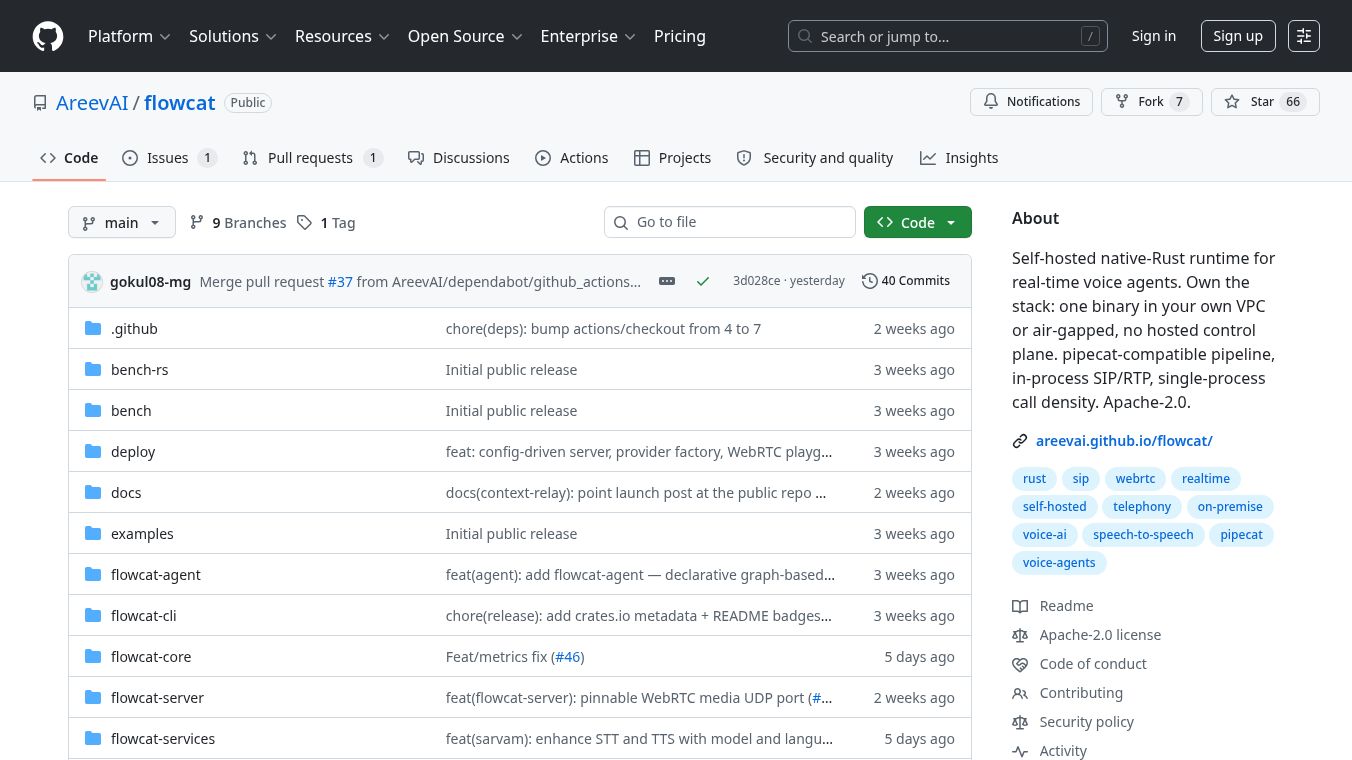
Flowcat is an open-source tool designed to help developers visualize and understand how data moves through their machine learning models. It works by tracing the flow of information from the input layer to the output layer, showing exactly which parts of the model are active during a specific task. This helps teams debug issues and optimize their models without needing deep expertise in complex graph structures.
Benefits
The main advantage of Flowcat is its ability to make complex machine learning processes easy to see. By turning abstract data paths into clear visual maps, it allows developers to spot problems quickly. It also supports different types of models, making it useful for various projects. Since it is open-source, teams can modify the code to fit their specific needs, which saves time and money compared to buying expensive proprietary tools.
Use Cases
Flowcat is ideal for teams building or maintaining machine learning systems. Data scientists can use it to check if their models are using all the data they expect. Engineers can use it to find bottlenecks where data gets stuck or slows down the process. It is also helpful during the testing phase to ensure that changes to the model do not break the data flow. Anyone working with neural networks or deep learning frameworks can benefit from its clear visualizations.
Pricing
Flowcat is completely free to use. It is available as open-source software on GitHub, which means there are no licensing fees or subscription costs. Users can download the code and run it on their own machines or servers without paying anything.
Vibes
As a new open-source project, Flowcat does not have many public reviews yet. However, the community response on GitHub has been positive. Developers appreciate the clear documentation and the straightforward way the tool handles complex data paths. Early users have noted that it simplifies tasks that usually require manual graph analysis.
Additional Information
Flowcat was created by AreevAI and is hosted on GitHub. It is built using Python and relies on popular libraries like PyTorch and TensorFlow. The project is still in its early stages, but it has already gained attention from the machine learning community for its unique approach to visualization. There are no major corporate partnerships yet, but the open-source nature of the project encourages contributions from developers worldwide.
This content is either user submitted or generated using AI technology (including, but not limited to, Google Gemini API, Llama, Grok, and Mistral), based on automated research and analysis of public data sources from search engines like DuckDuckGo, Google Search, and SearXNG, and directly from the tool's own website and with minimal to no human editing/review. THEJO AI is not affiliated with or endorsed by the AI tools or services mentioned. This is provided for informational and reference purposes only, is not an endorsement or official advice, and may contain inaccuracies or biases. Please verify details with original sources.





 No Info
Comments
Please log in to post a comment.