Codong
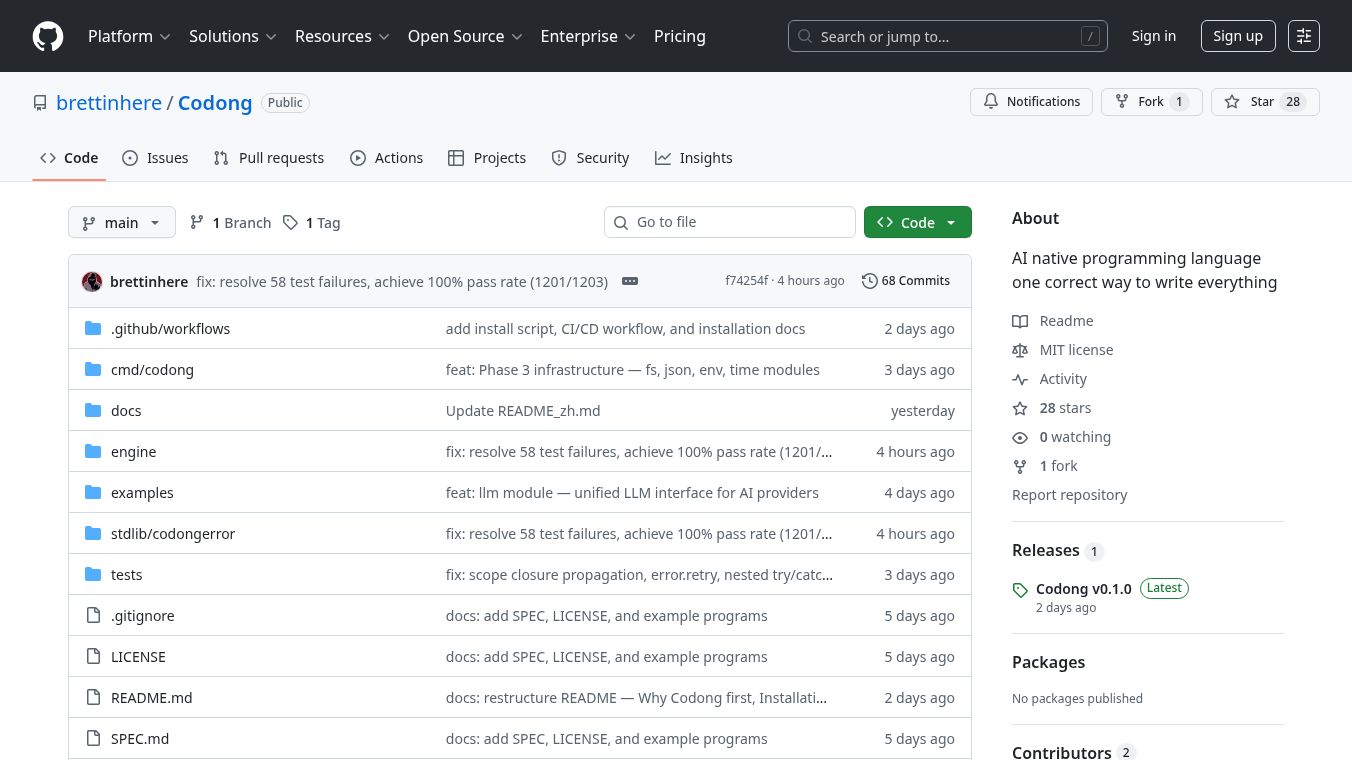





Codong is presented as the world's first AI-native programming language. It is designed so that AI can write code, humans can review it, and machines can run it. The main goal of Codong is to make it easier for AI to create code by solving problems like too many choices that use up resources, errors that are hard for AI to understand, and wasted time figuring out which software packages to use.
Benefits
Codong helps save resources by having only one clear way to do common tasks. For example, it has a single command for making web requests, setting up web servers, connecting to databases, and working with JSON data. This is different from languages like Python, which offer many ways to do the same things. This approach significantly reduces the amount of computer memory and processing power needed. Codong also makes errors easier for AI to fix. Instead of complex text messages, errors are given as structured data that includes a suggestion for a solution. This helps AI agents understand and correct problems much faster. Codong comes with eight built-in tools that handle common tasks for AI, so there is no need to search for and install separate software packages. This saves even more resources and time. Overall, Codong uses much less computer memory and generates code faster than traditional languages like Python or JavaScript. Tests show it uses over 70% fewer resources.
Use Cases
Codong can be used for a variety of tasks, especially those involving AI. It is useful for quickly building applications like APIs that can handle different data requests, manage tags, search for information, and organize content. Developers can install Codong easily and start writing simple programs right away. For those who prefer not to install it, Codong can be used by simply providing its description to an AI, which can then generate Codong code directly. The language is built with eight core modules that cover essential functions such as web development, database interactions, making HTTP requests, working with large language models, file system operations, handling JSON data, managing environment variables, and dealing with time and errors. It also supports running code at the same time using a method similar to Go's goroutines and channels. Additionally, it allows developers to connect existing Go software packages for AI use.
Vibes
Codong is designed to be a small and simple language with only 23 keywords and 6 basic data types. It includes features like easy variable assignment, function definitions, simple ways to put expressions inside text, and built-in tools for working with lists and other data collections. It also has standard ways to control the flow of programs, handle errors gracefully, and use built-in modules for common tasks without needing extra installations. Codong can be compiled into a format that uses the Go toolchain, allowing for scripting, development, and creating standalone programs. It is compatible with many AI models, databases, cloud services, and other technologies. The project is open source and welcomes contributions from the community.
This content is either user submitted or generated using AI technology (including, but not limited to, Google Gemini API, Llama, Grok, and Mistral), based on automated research and analysis of public data sources from search engines like DuckDuckGo, Google Search, and SearXNG, and directly from the tool's own website and with minimal to no human editing/review. THEJO AI is not affiliated with or endorsed by the AI tools or services mentioned. This is provided for informational and reference purposes only, is not an endorsement or official advice, and may contain inaccuracies or biases. Please verify details with original sources.




Comments
Please log in to post a comment.