CANSAT-GCS
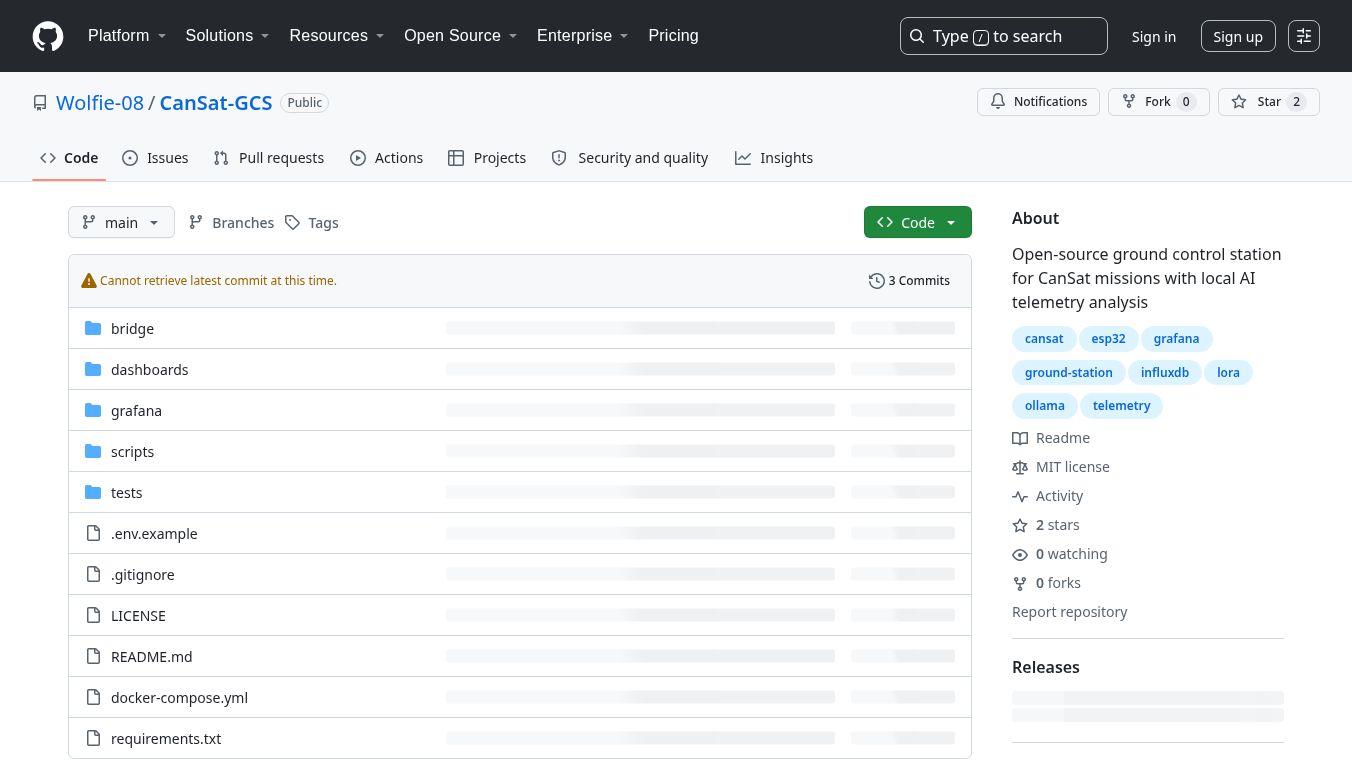





CANSAT-GCS: A Simple Guide to Controlling Your CanSat
Introduction
CANSAT-GCS is a free software tool designed for people who build and fly small satellites called CanSats. A CanSat is a tiny satellite that fits inside a soda can and is dropped from a plane or a drone to collect data during its fall. CANSAT-GCS stands for Ground Control Station. It acts as the brain on the ground that talks to the CanSat in the sky. This program lets users send commands to their device and see the data it sends back in real time. It is built using Python, a popular programming language, and runs on computers with Windows, Mac, or Linux. The project is open source, meaning anyone can look at the code, change it, or share it with others.
Benefits
The main benefit of CANSAT-GCS is that it makes controlling a CanSat easy and accessible. It does not require expensive hardware or complex setups. Users can connect to their CanSat using a simple USB cable or a wireless radio link. The software provides a clear interface where users can see live data like temperature, altitude, and battery life. It also allows them to send specific commands to the CanSat, such as turning on a light or deploying a parachute. Because the code is open source, students and teachers can learn how the software works and customize it for their own needs. This helps in understanding how real satellite systems operate without needing a million-dollar budget.
Use Cases
This tool is perfect for students, teachers, and hobbyists who are learning about aerospace engineering. Schools often use it in science projects where students build their own CanSats to test sensors and learn about data transmission. It is also useful for competitions where teams must launch small satellites and collect data during a drop. Engineers can use it to test new sensors or communication protocols in a safe environment before launching a real mission. The software works well in classrooms, labs, or even at home if you have a computer and a CanSat setup. It helps bridge the gap between theory and practice by letting users interact with a real flying device.
Pricing
CANSAT-GCS is completely free to download and use. There are no hidden costs or subscription fees. The software is hosted on GitHub, a platform where developers share their work for free. Users only need a computer and the necessary hardware to connect to their CanSat. Since the code is open source, anyone can contribute to its development or create their own versions without paying anything.
Vibes
The community around CANSAT-GCS is very supportive and focused on education. Users often share their projects on forums and social media, showing how they modified the software for specific tasks. Teachers praise it for being a great teaching tool that simplifies complex concepts. Students enjoy the hands-on experience of controlling a device in the sky and seeing the data come back instantly. The open-source nature of the project encourages collaboration, with many contributors helping to fix bugs or add new features. Overall, the vibe is one of innovation, learning, and shared knowledge.
Additional Information
CANSAT-GCS is part of a larger movement to make space technology accessible to everyone. It is developed by a group of enthusiasts who want to promote STEM education. The project has gained attention in educational circles and is often recommended for robotics and aerospace clubs. While it does not have major corporate funding, it relies on the support of the open-source community. This grassroots approach ensures that the tool remains free and available to anyone interested in exploring space technology.
This content is either user submitted or generated using AI technology (including, but not limited to, Google Gemini API, Llama, Grok, and Mistral), based on automated research and analysis of public data sources from search engines like DuckDuckGo, Google Search, and SearXNG, and directly from the tool's own website and with minimal to no human editing/review. THEJO AI is not affiliated with or endorsed by the AI tools or services mentioned. This is provided for informational and reference purposes only, is not an endorsement or official advice, and may contain inaccuracies or biases. Please verify details with original sources.
Comments
Please log in to post a comment.