Canonry
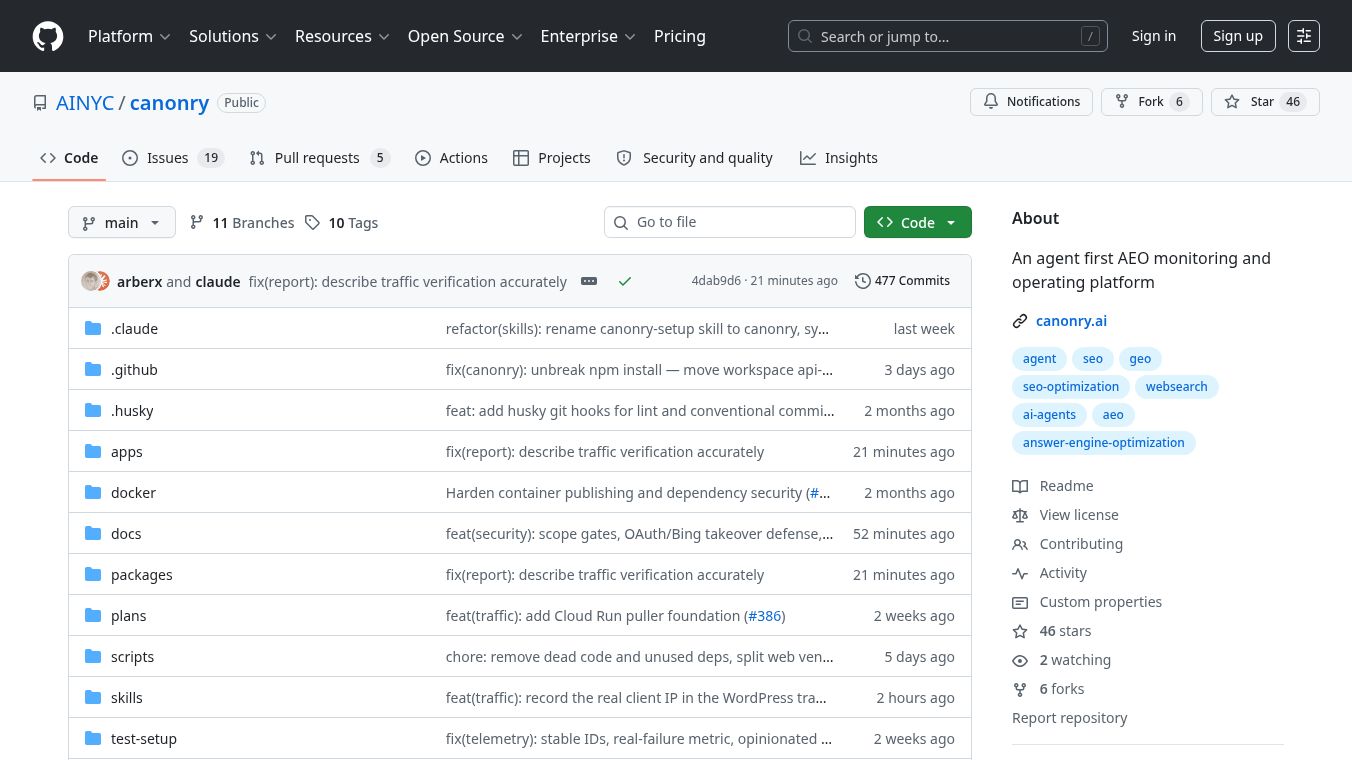





Canonry is an open-source tool designed to help websites get cited by artificial intelligence engines. Instead of just trying to rank high on Google search results, Canonry focuses on Answer Engine Optimization. This means it helps your content appear in the answers given by tools like ChatGPT, Gemini, Claude, and Perplexity. The software runs locally on your computer or server, meaning you keep full control of your data without paying monthly fees to a cloud service. It stores all information in a single file on your machine.
Benefits
Canonry offers several advantages over traditional search engine optimization methods. It provides a unified system that allows coding agents to automatically check if your website is being cited correctly. The tool supports over thirty command line instructions and connects to many different artificial intelligence providers. You do not need to sign up for a cloud account or worry about sharing your data with other users. The software includes a built-in agent named Aero that can help fix problems without needing extra setup. It also monitors server logs to track when AI bots visit your site, giving you clear insights into your digital presence.
Use Cases
This tool is perfect for website owners who want their content to be trusted by AI assistants. Developers can use it to automatically scan their pages and find gaps in how they are structured for AI engines. Marketing teams can use it to ensure their articles are cited in the right places. It works well for sites built on platforms like WordPress or those hosted on Vercel. Users can set up the tool to run regular checks on their domain and receive alerts if their content stops being cited. It is also useful for anyone who wants to understand how their site performs compared to competitors in the eyes of machine learning models.
Pricing
Canonry is free to use because it is open-source software. There are no subscription fees or per-prompt costs. You can install it using standard tools like Homebrew or npm, or run it using Docker containers. All data is stored locally in a SQLite database file, so there are no hidden costs associated with data storage or cloud services.
Vibes
Users who have tried Canonry appreciate its ability to turn complex AI interactions into simple commands. The community around the project values the transparency of having source code available on GitHub. People find the local nature of the tool very appealing because it avoids the privacy concerns often associated with SaaS platforms. The fact that it works with multiple coding agents makes it feel very flexible for different technical workflows.
Additional Information
The project is maintained by a group known as AINYC. The full source code is publicly available on GitHub at github.com/AINYC/canonry. The software is compatible with various local large language models such as Ollama and LM Studio. It integrates with popular analytics tools like Google Analytics 4 and Google Search Console. The team has focused on making the tool self-hosted to give users complete ownership of their data and infrastructure.
This content is either user submitted or generated using AI technology (including, but not limited to, Google Gemini API, Llama, Grok, and Mistral), based on automated research and analysis of public data sources from search engines like DuckDuckGo, Google Search, and SearXNG, and directly from the tool's own website and with minimal to no human editing/review. THEJO AI is not affiliated with or endorsed by the AI tools or services mentioned. This is provided for informational and reference purposes only, is not an endorsement or official advice, and may contain inaccuracies or biases. Please verify details with original sources.
Other Interesting AI Tools

Comments
Please log in to post a comment.