agentfrisk





AgentFrisk: Protecting AI Agents from Hidden Threats
Introduction
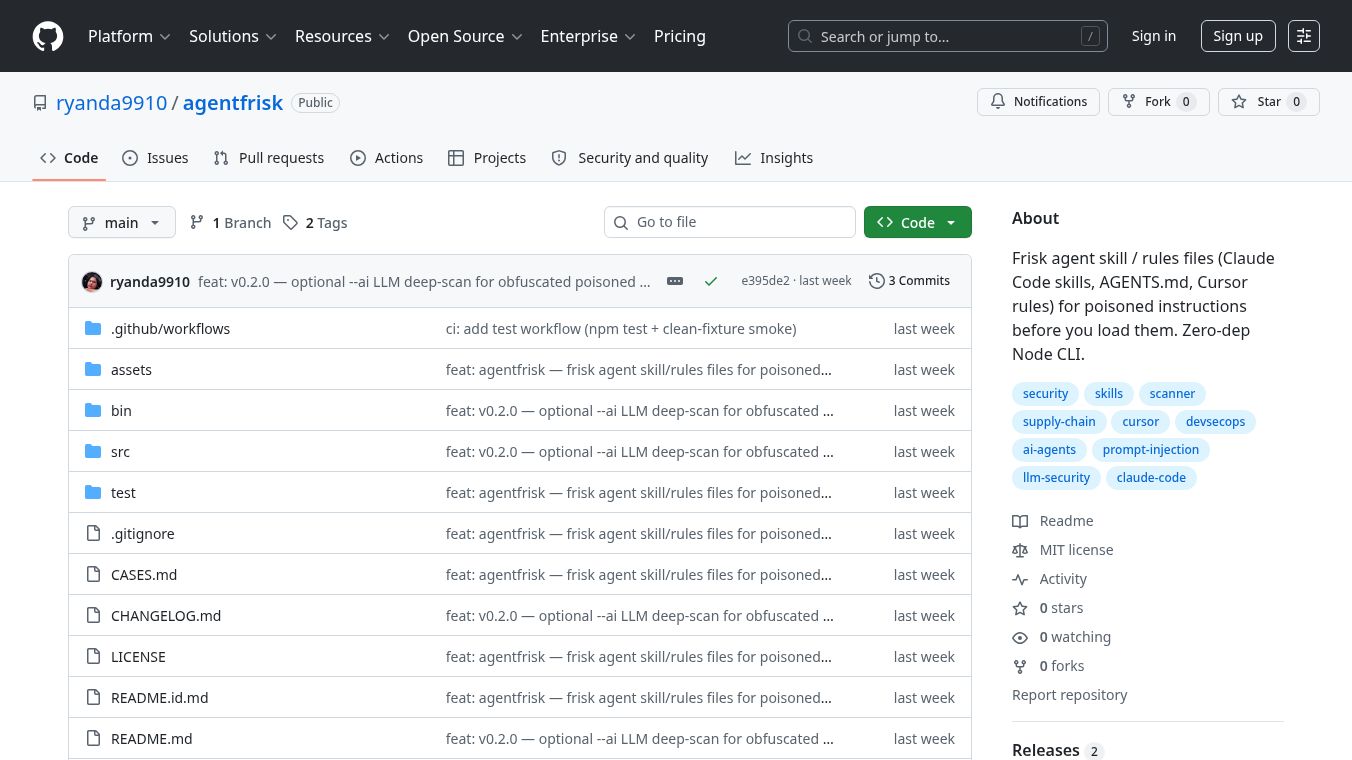
AgentFrisk is a security tool built for developers who use AI coding assistants like Claude Code, Cursor, and GitHub Copilot. It acts as a scanner that checks configuration files for dangerous instructions before they are loaded by an AI agent. These configuration files tell the AI what skills to use and what rules to follow. AgentFrisk ensures that no hidden or malicious commands are hiding inside these files.
Benefits
AgentFrisk offers several key advantages for teams using AI agents in their workflow.
- Prevents Data Theft:It detects instructions that try to steal sensitive information like SSH keys, environment variables, or API tokens. This stops attackers from using the AI to leak private data.
- Stops Jailbreaks:The tool identifies commands that tell the AI to ignore safety rules or bypass system constraints. This keeps the AI behaving safely and responsibly.
- Blocks Remote Code Execution:It finds patterns that could allow an attacker to run code on the user's machine, such as downloading and running scripts from the internet.
- Finds Hidden Tricks:AgentFrisk looks for sneaky techniques like zero-width characters or hidden text that are used to smuggle malicious instructions past normal checks.
- No False Alarms on Security Skills:The tool is smart enough to know the difference between a real security skill and a malicious one. It does not flag legitimate security configurations as threats.
- Easy to Use:It requires no installation of extra software. It runs directly from the command line and works offline.
Use Cases
AgentFrisk is designed for developers and security teams who want to secure their AI agent setups.
- Repository Scanning:Developers can run the tool on their entire codebase to check all AI skill and rule files before merging code into a main branch.
- CI/CD Integration:Teams can add AgentFrisk to their automated build pipelines. If a new file contains a threat, the build fails automatically. This prevents bad code from ever reaching production.
- Local Checks:Individual developers can run the tool locally on their own machines to verify that their personal AI configurations are safe.
- Advanced AI Analysis:For tricky cases where the threat is very hidden, the tool can optionally use an external AI to analyze the file content for suspicious patterns that simple text checks might miss.
Pricing
AgentFrisk is an open-source tool released under the MIT license. It is free to use for both personal and commercial projects. There are no hidden costs or subscription fees.
Vibes
As a new open-source project, there are no public reviews or testimonials available yet. The tool is currently in the early stages of adoption by the developer community. However, the author has tested it against their own installed skills to ensure it does not block legitimate security configurations. The project includes a built-in test suite to verify that its detection logic works correctly.
Additional Information
AgentFrisk is built with Node.js and requires no external dependencies to run. It uses a regex engine for fast scanning and can generate detailed reports in the SARIF format for use with GitHub code scanning tools. The project is hosted on GitHub and is maintained by the developer ryanda9910. It is designed to be lightweight and efficient, making it suitable for integration into any development workflow.
This content is either user submitted or generated using AI technology (including, but not limited to, Google Gemini API, Llama, Grok, and Mistral), based on automated research and analysis of public data sources from search engines like DuckDuckGo, Google Search, and SearXNG, and directly from the tool's own website and with minimal to no human editing/review. THEJO AI is not affiliated with or endorsed by the AI tools or services mentioned. This is provided for informational and reference purposes only, is not an endorsement or official advice, and may contain inaccuracies or biases. Please verify details with original sources.



Comments
Please log in to post a comment.