Agent Nexus
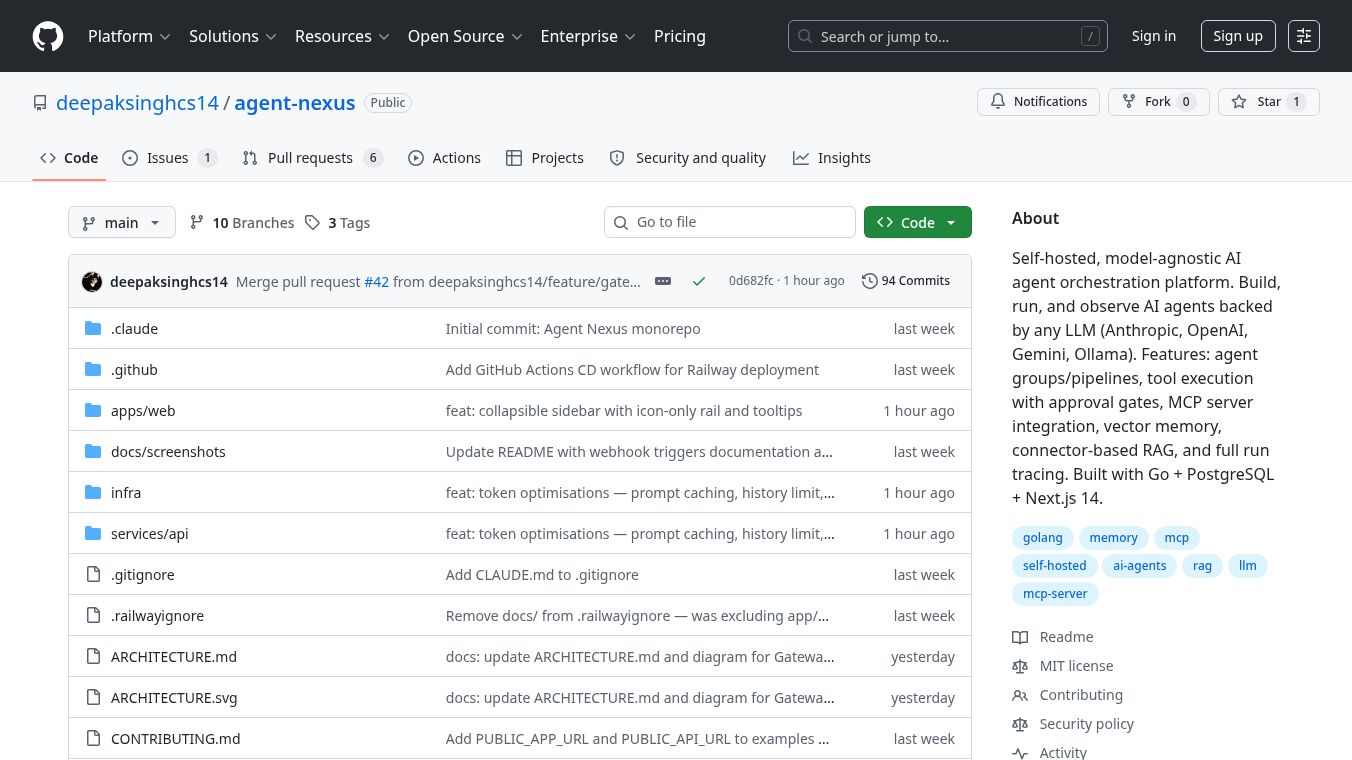





Agent Nexus: A Comprehensive Self-Hosted AI Agent Orchestration Platform
Overview
Agent Nexus is a self-hosted, model-agnostic AI agent orchestration platform designed to empower users to create, manage, and observe AI agents backed by any Large Language Model (LLM). It supports providers such as Anthropic (Claude), OpenAI (GPT), Google (Gemini), and local models via Ollama. The platform emphasizes data sovereignty, allowing users to run everything from their own infrastructure without vendor lock-in or data leaving their servers.
Benefits
Agent Nexus offers several key advantages for developers and organizations looking to build AI solutions. Its model-agnostic architecture allows users to switch between different LLM providers without changing their agent configurations, ensuring flexibility and preventing vendor lock-in. The platform includes a clean, tabbed UI for configuring agent instructions, models, and guardrails, making it easy to set up complex AI behaviors. Users can observe their agents in real-time through an interactive playground that displays every memory retrieval, tool call, and model interaction. The platform also supports multi-agent workflows with visual drag-and-drop editors, enabling users to create complex pipelines and supervisor modes for dynamic task routing. Additionally, Agent Nexus provides robust observability and cost tracking, allowing users to monitor every step of their agent runs and estimate token costs. The platform supports multi-workspace management with role-based access control, ensuring secure collaboration and data isolation. Built-in documentation and a meta-agent assistant help users manage the entire platform efficiently.
Use Cases
Agent Nexus is suitable for a wide range of applications and industries. Developers can use it to build custom AI agents for customer support, data analysis, or content generation. The platform supports multi-agent workflows, making it ideal for complex tasks that require coordination between multiple specialized agents. Organizations can leverage its multi-workspace features to manage different projects or teams securely. The Nexus Gateway feature enables agents to connect to various messaging channels like WhatsApp, Slack, and email, making it perfect for customer engagement and automated communication systems. The platform's risk-based approval gates are useful for sensitive operations that require human oversight before execution. Teams can use the built-in documentation and meta-agent assistant to streamline platform management and reduce the learning curve for new users.
Pricing
Agent Nexus is an open-source platform released under the MIT license, which means it is free to use and modify. Users can self-host the platform on their own infrastructure, eliminating the need for subscription fees or vendor-specific pricing models. This approach provides complete control over costs and data privacy, as all operations run on the user's own servers without external dependencies.
Vibes
As an open-source project, Agent Nexus has gained attention from the developer community for its comprehensive feature set and flexibility. The platform's ability to support multiple LLM providers and its emphasis on data sovereignty have been well-received by users concerned about vendor lock-in and data privacy. The visual workflow editor and real-time observability features have been praised for making complex AI agent management more accessible. The inclusion of a built-in meta-agent assistant and extensive documentation has been appreciated by users looking for an all-in-one solution. The platform's active development roadmap, which includes plans for additional connectors and enhanced features, suggests a commitment to continuous improvement and community engagement.
Additional Information
Agent Nexus is built on a robust tech stack including Go for the backend, PostgreSQL with pgvector for database and vector search, and Next.js with TypeScript for the frontend. The platform supports Docker Compose for easy deployment and includes comprehensive API documentation for programmatic access. The project is actively maintained with a clear roadmap that includes planned features like additional messaging channels, more connectors, and enhanced testing coverage. The MIT license ensures that users have the freedom to use, modify, and distribute the software for any purpose, making it suitable for both personal projects and commercial applications.
This content is either user submitted or generated using AI technology (including, but not limited to, Google Gemini API, Llama, Grok, and Mistral), based on automated research and analysis of public data sources from search engines like DuckDuckGo, Google Search, and SearXNG, and directly from the tool's own website and with minimal to no human editing/review. THEJO AI is not affiliated with or endorsed by the AI tools or services mentioned. This is provided for informational and reference purposes only, is not an endorsement or official advice, and may contain inaccuracies or biases. Please verify details with original sources.
Comments
Please log in to post a comment.