ACM TRACKER
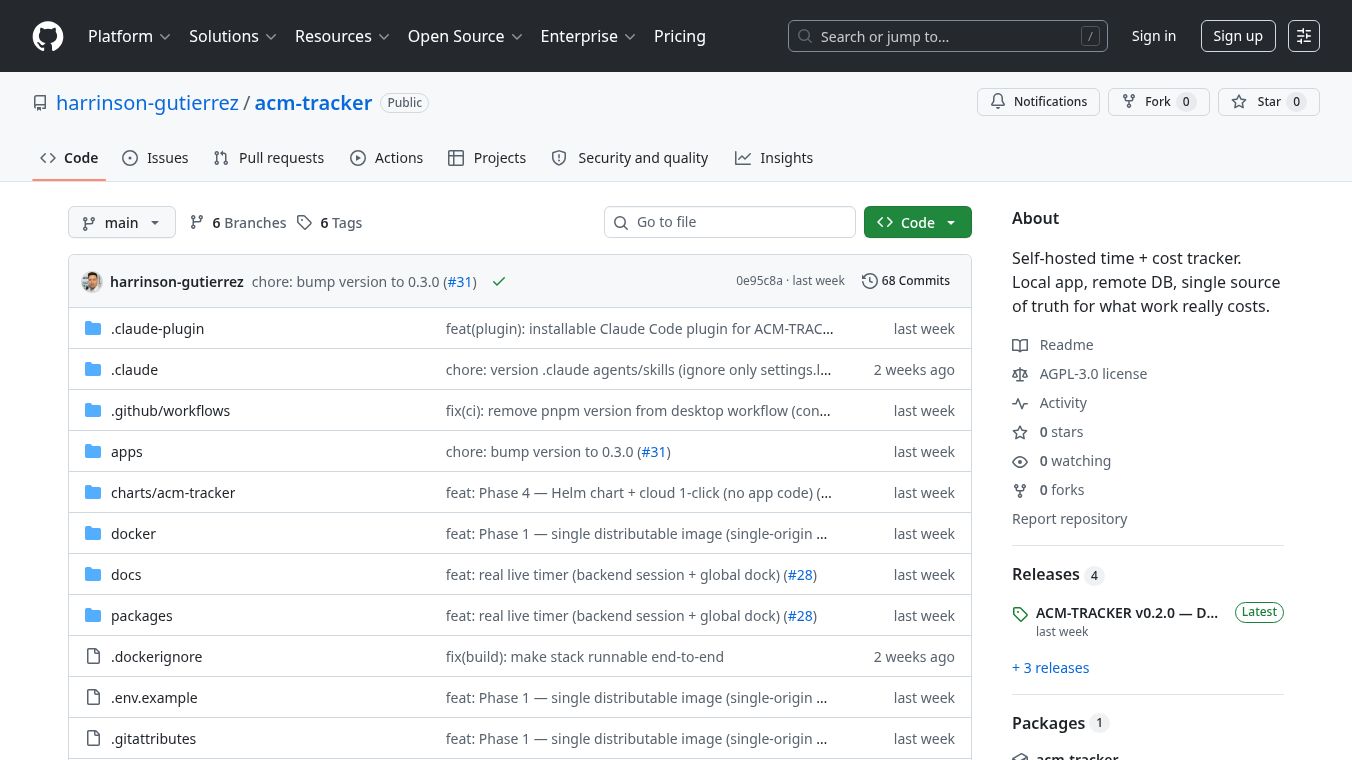





ACM-Tracker: A Comprehensive Self-Hosted Time and Cost Management Solution
Overview
ACM-Tracker is a self-hosted, open-source application designed to serve as the single source of truth for tracking both human time and AI costs. It replaces the traditional combination of Jira and Clockify with a unified tool that calculates real work costs by combining time multiplied by rate for human work and tokens multiplied by model price for AI usage. The application is built to be local-first with a remote database option, ensuring no per-seat licensing costs. The current version includes Version 1 and Version 2, which are functional and verified by End-to-End testing. The user interface follows a Flight Deck design and supports both English and Spanish.
Benefits
ACM-Tracker offers several key advantages for teams managing projects that involve both human labor and AI tools. The system calculates the true cost of work by aggregating human hours against member rates and AI usage against configured model prices. This dual origin tracking allows users to distinguish between human logging and automated agent reporting. Time entries are tagged by origin, such as manual, MCP, or timer, providing clear visibility into how work is being logged. An MCP server allows AI agents to report work, time, and token usage directly, and the system automatically calculates AI costs based on a configurable price table. The application is free to self-host under the AGPL-3.0 license, eliminating per-seat licensing fees. It supports multiple deployment strategies, including solo mode with SQLite, Docker Compose for teams, and cloud deployment options on platforms like Render and Railway. The user interface features a dark mode, technical grid, and a global Command Palette for easy navigation. The dashboard displays today's burn rate, team real costs, live MCP intake streams, and key performance indicators. The system includes visual breakdowns of human versus AI costs and supports exporting data in CSV format. The database schema is defined in PostgreSQL, with SQLite acting as a local mirror for single-user mode, ensuring data consistency and flexibility.
Use Cases
ACM-Tracker is ideal for teams and individuals who need to track both human effort and AI tool usage in a unified system. It is particularly useful for software development teams, consulting firms, and creative agencies that rely heavily on AI tools like Claude Code for their workflows. The application can be used in solo mode for individual developers who want a simple setup without Docker or PostgreSQL. For teams, the Docker Compose option connects a web app and API to a remote PostgreSQL database, making it suitable for collaborative environments. The cloud deployment options on Render and Railway allow users to deploy the application with one click, utilizing managed PostgreSQL and persistent disks. The Kubernetes Helm charts provide scalability for larger teams. The desktop app option runs the NestJS API as a sidecar process and stores data in the OS application data directory, offering a native experience. The MCP server integration allows AI agents to list and create projects and tasks, report work, check project costs, and view today's summary. The system is also useful for teams that need to track project budgets, margins, and real costs in real-time. The notification system supports outgoing alerts to channels like Slack, Email, WhatsApp, and Webhooks, keeping teams informed about important updates.
Pricing
ACM-Tracker is distributed under the GNU Affero General Public License v3.0, which means it is free to use, modify, and share for personal, team, or company use. There are no per-seat licensing costs. A commercial license is available for those who require a closed SaaS model or want to embed the software in a proprietary product without open-sourcing their code. The application supports self-hosting, which eliminates ongoing subscription fees. Cloud deployment options on platforms like Render and Railway may have associated costs depending on the provider's pricing structure, but the software itself remains free to use.
Vibes
ACM-Tracker has received positive feedback from users who appreciate its comprehensive approach to tracking both human and AI costs. The Flight Deck design and dark mode have been well-received for their technical and modern aesthetic. Users value the ability to integrate AI agents directly into their workflow, as it streamlines the process of reporting work and tracking token usage. The support for multiple deployment options, including solo mode and cloud deployment, has been praised for its flexibility. The community has noted the robustness of the End-to-End testing, with all 21 tests passing in the current version. The bilingual support for English and Spanish adds to its appeal for a global user base. Users have expressed interest in future features like real-time timers, enhanced budgeting tools, and PDF report generation, indicating a strong desire for continued development and improvement.
Additional Information
ACM-Tracker is built on a modern, modular technology stack that includes React 18 for the frontend, NestJS 10 for the backend, and Prisma 5 for database management. The application follows SOLID principles and Hexagonal Architecture, ensuring scalability and maintainability. The testing strategy includes unit tests, shared logic tests, and End-to-End web tests, with GitHub Actions workflows handling building, testing, and publishing installers. The monorepo structure is organized using pnpm workspaces, with separate directories for the API, web, desktop, and shared packages. The engineering team adheres to strict coding conventions, including zero-comment, function-focused code. The roadmap includes future enhancements such as a real-time timer, standard input/output MCP server, AWS Cognito authentication, real file upload storage, and production-grade CI pipelines. The application is actively developed and maintained, with a focus on continuous improvement and user feedback.
This content is either user submitted or generated using AI technology (including, but not limited to, Google Gemini API, Llama, Grok, and Mistral), based on automated research and analysis of public data sources from search engines like DuckDuckGo, Google Search, and SearXNG, and directly from the tool's own website and with minimal to no human editing/review. THEJO AI is not affiliated with or endorsed by the AI tools or services mentioned. This is provided for informational and reference purposes only, is not an endorsement or official advice, and may contain inaccuracies or biases. Please verify details with original sources.
 No Info
Comments
Please log in to post a comment.