




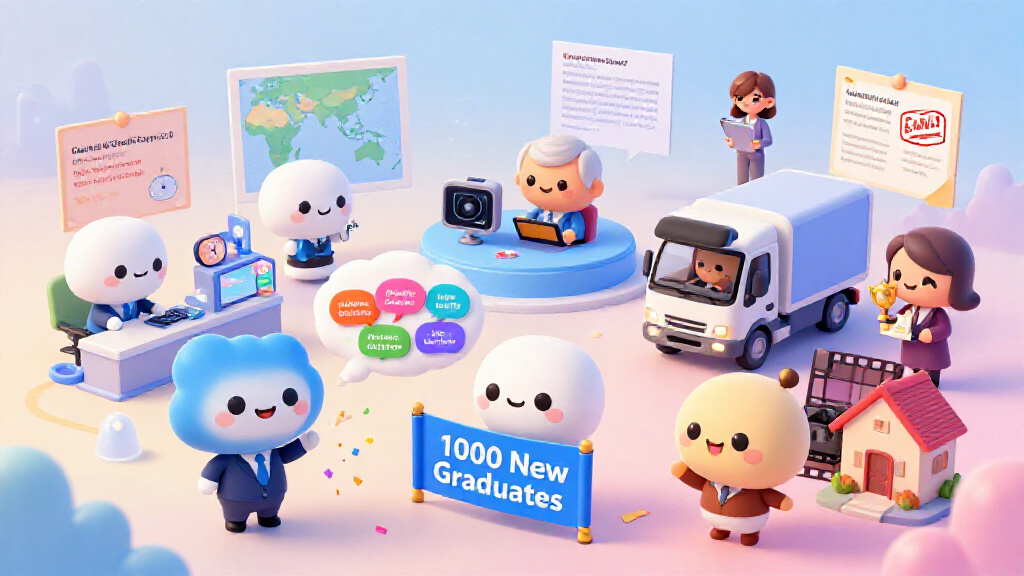
Several companies are making moves in the AI space this week, from new products and hiring sprees to ethical debates and academic programs. Salesforce announced it will hire 1,000 new graduates through a Builder Program focused on its AI agent system, Agentforce. The program fast-tracks recent grads into engineering, product, and sales roles, and CEO Marc Benioff noted that AI fluency will be key for job seekers. Meanwhile, Google rolled out five updates to its AI Mode and AI Overviews search features, adding suggestions for exploring new angles, links to news subscriptions, and more direct links within AI responses to help users find relevant websites and original content.
In the startup world, Factory’s Missions platform uses multi-agent AI systems to let AI agents work on software tasks for days at a time, addressing what founder Luke Alvoeiro calls the main bottleneck in software development: human attention, not intelligence. At UC Berkeley’s Haas School of Business, a new AI Entrepreneurship course is acting as a hands-on startup accelerator for MBA students, with mentors from Nvidia, Google, OpenAI, and Anthropic. The course accepted 27 teams from over 300 applicants and covers everything from identifying a problem to defining an exit strategy in 13 weeks.
On the global stage, sanctioned Chinese AI firm SenseTime is betting on cheaper models to compete, with its SenseNova U1 model costing ten times less than OpenAI’s ChatGPT Images 2.0. The company is expanding into Southeast Asia, the Middle East, and Brazil. In the trucking industry, Lytx announced new AI tools including Dynamic Triggers and Coach Assist at its Protect 2026 conference. The company also recognized a 70-year-old driver with over six million miles as Driver of the Year, who noted he easily accepted a driver-facing dash camera.
Ethical questions around AI continue to surface. Mercedes Kilmer defended the use of generative AI to recreate her father Val Kilmer’s likeness in the film As Deep as the Grave, saying it was about keeping his legacy alive. The film’s release later this year has sparked debate about bringing deceased celebrities back to life on screen. In real estate, AI-generated home listings are raising concerns about misleading photos, with California passing a law requiring disclosure when AI alters listing images. New research from Harvard Business Review warns that treating AI agents like employees can backfire, reducing accountability and increasing confusion about roles.
Key Takeaways
- Salesforce will hire 1,000 new graduates through a Builder Program focused on its AI agent system, Agentforce.
- Google added five updates to AI Mode and AI Overviews, including suggestions for new angles and more direct links to websites.
- Factory’s Missions platform uses multi-agent AI systems to let AI agents work on software tasks for days at a time.
- UC Berkeley’s Haas School of Business launched an AI Entrepreneurship course with mentors from Nvidia, Google, OpenAI, and Anthropic.
- SenseTime’s SenseNova U1 model costs ten times less than OpenAI’s ChatGPT Images 2.0, and the company is expanding into Southeast Asia, the Middle East, and Brazil.
- Lytx announced new AI tools for trucking fleets, including Dynamic Triggers and Coach Assist, at its Protect 2026 conference.
- Mercedes Kilmer defended the use of AI to recreate her father Val Kilmer’s likeness in the film As Deep as the Grave.
- California passed a law requiring disclosure when AI is used to alter real estate listing photos.
- Harvard Business Review research found that treating AI agents like employees can reduce accountability and increase confusion about roles.
Factory’s Missions platform uses AI agents to ship code for days
Luke Alvoeiro from Factory presented a vision for the future of software engineering at AI Engineer Europe. He argued that human attention, not intelligence, is the main bottleneck in software development. Factory’s Missions platform uses multi-agent AI systems to overcome this bottleneck. The platform allows AI agents to work continuously on software tasks for days at a time.
Sanctioned Chinese AI firm SenseTime bets on cheaper models to win
SenseTime, a Chinese AI company founded in Hong Kong in 2014, is focusing on cost efficiency to compete in the global AI race. Its latest model, SenseNova U1, combines language and vision processing into one system, making it faster and cheaper. Cofounder Lin Dahua said SenseNova U1 costs ten times less than OpenAI’s ChatGPT Images 2.0. SenseTime is expanding into markets like Southeast Asia, the Middle East, and Brazil. The company faces U.S. export and investment restrictions but believes providing good service at a competitive price is key to success.
Val Kilmer’s daughter defends his AI resurrection in new film
Mercedes Kilmer, daughter of the late actor Val Kilmer, defended the use of generative AI to recreate his likeness and voice in the film As Deep as the Grave. In an interview with The Hollywood Reporter, she said the AI was not about replacing her father but keeping his legacy alive. She praised the film’s director for doing something remarkable with the technology. The film’s use of AI has sparked debate about the ethics of bringing deceased celebrities back to life on screen. As Deep as the Grave is set for release later this year.
Berkeley Haas launches AI Entrepreneurship course as startup accelerator
The University of California Berkeley’s Haas School of Business launched a new AI Entrepreneurship course that acts as a hands-on startup accelerator for MBA students. The course, co-taught by Alex Zekoff and Professor Omri Even-Tov, accepted 27 teams from over 300 applicants. Students learn to build AI startups quickly and cheaply using agentic AI tools. The class features mentors from companies like Nvidia, Google, OpenAI, and Anthropic. Teams are graded on momentum each week and cover everything from identifying a problem to defining an exit strategy in 13 weeks.
Google adds five new ways to explore the web with AI Search
Google is rolling out five new updates to its AI Mode and AI Overviews search features. The updates help users find relevant websites, deep insights, and original content more easily. New features include suggestions for exploring new angles, links to news subscriptions, previews of advice from online discussions, and more links directly within AI responses. The changes aim to connect users with authentic voices and useful information across the web.
Salesforce to hire 1,000 AI native new graduates
Salesforce announced it will hire 1,000 new graduates through a new Builder Program focused on its AI agent system called Agentforce. The program fast-tracks recent grads into engineering, product, and sales roles. Salesforce has hired more than 10,000 professionals through its university recruitment program to date. CEO Marc Benioff said recent graduates have faced a tough job market but those with AI fluency will get a spot at the table. The company also launched an Emerging Talent Playbook to help other businesses hire AI skilled workers.
Lytx announces new AI tools for trucking at Protect 2026 conference
Lytx announced new products and features at its Protect 2026 user conference in San Diego. The new tools include Dynamic Triggers, Coach Assist, and 360 Visibility for trucking fleets. The company also recognized Gaylord Larsen, a 70 year old driver with over six million miles, as Driver of the Year. Larsen has seen the industry change from paper logbooks to electronic logging devices and digital dashboards. He said he easily accepted the addition of a driver facing dash camera in his truck.
AI generated home listings raise concerns about misleading photos
AI generated photos in real estate listings are making it harder for home buyers to tell what is real and what is fake. Some AI tools can change the structure of a home, not just add furniture, which misleads buyers when they visit in person. California has passed a law requiring disclosure when AI is used to alter listing photos and requiring original images to be shown alongside edited versions. New York officials have also issued warnings about deceptive AI advertising. Experts say more states could follow with similar rules.
Research shows treating AI agents like employees causes problems
New research from Harvard Business Review shows that treating AI agents like employees can backfire. In a large scale experiment, anthropomorphizing AI reduced individual accountability, increased unnecessary escalation, lowered review quality, and heightened employee uncertainty about their roles. The research found that the core challenge is not whether to deploy agentic AI, but how to redesign workflows, roles, and governance. The goal should be to let AI agents augment human capabilities without creating confusion about responsibilities.
Sources
- Missions: AI Agents That Ship for Days
- In the global AI race, a sanctioned Chinese firm says cheaper models can still win
- Val Kilmer’s Daughter Passionately Defends Heat Star’s AI Resurrection
- New AI Entrepreneurship course is a hands-on startup accelerator for MBA founders - Haas News
- 5 new ways to explore the web with generative AI in Search
- Salesforce says it will hire 1,000 ‘AI-native’ new grads
- New Lytx AI Tools: Dynamic Triggers, Coach Assist & 360 Visibility
- AI-generated home listings raise concerns about misleading real estate photos
- Research: Why You Shouldn’t Treat AI Agents Like Employees
Comments
Please log in to post a comment.