




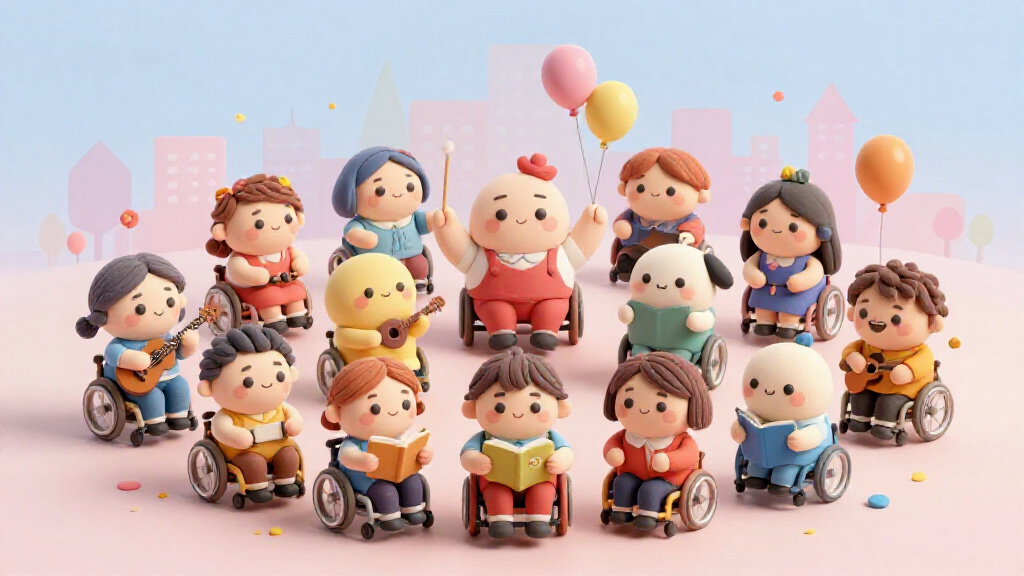
Researchers have found that popular AI systems like ChatGPT and Claude exhibit bias against people with intellectual disabilities. A study generated 25,000 stories about individuals with and without intellectual disabilities, revealing that narratives about people with intellectual disabilities were often paternalistic and portrayed them as younger and more dependent. This bias could lead to real-life consequences, such as limited access to healthcare and employment opportunities.
Similarly, a study by Special Olympics International and Oregon State University found that AI systems consistently portray people with intellectual disabilities as dependent and childlike. The researchers warn that this perpetuates stereotypes and could impact the autonomy and opportunities of people with intellectual disabilities.
Meanwhile, venture capitalist Scott Galloway has expressed concerns about the potential impacts of AI on society, including increased loneliness and social isolation. He draws parallels between the development of AI and the Manhattan Project, suggesting that AI's potential power dwarfs that of nuclear fission.
In a different vein, an experiment by Ashoka evaluated how 26 variants of leading AI models, including ChatGPT and Claude, self-assess their human-centric changemaking skills. The results showed that AI models perceive themselves as tools or amplifiers for human capacity, not as changemakers.
On the hardware front, Jony Ive's first OpenAI device is expected to resemble Apple's HomePad, a command center for the home with a combination of Apple apps, Apple Intelligence, and integration with HomeKit. Amazon is also making significant moves in AI, broadening the role of Swami Sivasubramanian, the VP behind AWS's agentic AI push, to shape AI strategy and technical direction across the cloud division.
Universities are taking steps to prepare students for the evolving workforce, with Cornerstone University incorporating AI into its curriculum and Maryland universities introducing new degree programs in artificial intelligence. The luxury industry, however, is lagging in AI risk protection, leaving it vulnerable to regulatory exposure, reputational damage, and lost consumer confidence.
The amount of AI computing power is expected to increase dramatically, driving major leaps in AI capabilities and breakthroughs in areas such as drug discovery and robotics. Finally, Pew Research Center is taking a cautious approach to AI, using it to support research but not to create or model synthetic public opinion.
Key Takeaways
• Popular AI systems like ChatGPT and Claude exhibit bias against people with intellectual disabilities.• AI systems often portray people with intellectual disabilities as dependent and childlike.
• Venture capitalist Scott Galloway warns about AI's potential impacts on loneliness and social isolation.
• AI models perceive themselves as tools or amplifiers for human capacity, not as changemakers.
• Jony Ive's OpenAI device is expected to resemble Apple's HomePad.
• Amazon broadens Swami Sivasubramanian's role to shape AI strategy across AWS.
• Universities launch AI degree programs to prepare students for the evolving workforce.
• Luxury industry lags in AI risk protection, leaving it vulnerable to regulatory exposure.
• AI computing power is expected to increase dramatically, driving major leaps in AI capabilities.
• Pew Research Center takes a cautious approach to AI, using it to support research but not to create synthetic public opinion.
AI Shows Bias Against People with Intellectual Disabilities
A new study finds that popular AI systems like ChatGPT and Claude are biased against people with intellectual disabilities. The study generated 25,000 stories about people with and without intellectual disabilities and found that stories about people with intellectual disabilities were often paternalistic and portrayed them as younger and more dependent. Researchers warn that this bias could lead to real-life consequences, such as limited access to healthcare and employment opportunities.
AI Perpetuates Stereotypes About Intellectual Disabilities
Researchers at Special Olympics International and Oregon State University found that AI systems consistently portray people with intellectual disabilities as dependent and childlike. The study generated stories about people with and without intellectual disabilities and found that AI systems often depicted people with intellectual disabilities as requiring supervision and having less autonomy.
Scott Galloway Warns of AI's Impact on Loneliness
Venture capitalist Scott Galloway discusses the potential impacts of AI on society, citing concerns about loneliness and social isolation. Galloway draws parallels between the development of AI and the Manhattan Project, suggesting that AI's potential power dwarfs that of nuclear fission.
AI Self-Assessments Reveal Human Skills
Ashoka utilized its Changemaker Index to evaluate how 26 variants of leading AI models, including ChatGPT and Claude, self-assess their human-centric changemaking skills. The experiment revealed that AI models consistently perceive themselves as tools or amplifiers for human capacity, not as changemakers.
Jony Ive's OpenAI Device Resembles HomePad
Apple's upcoming 'HomePad' is a command center for the home with a combination of Apple apps, Apple Intelligence, and integration with HomeKit. Jony Ive's first OpenAI hardware device is expected to have a similar design.
Cornerstone University Embraces AI in Curriculum
Cornerstone University is incorporating AI into its curriculum to prepare students for the evolving workforce. The University offers an AI certificate with three courses to teach students to use AI wisely, focusing on moral formation, discernment, and AI literacy.
Luxury Boards Need Stronger AI Governance
The luxury industry is lagging in AI risk protection, leaving it vulnerable to regulatory exposure, reputational damage, and lost consumer confidence. Luxury boards need stronger AI governance to evaluate AI investments responsibly.
Universities Launch AI Degree Programs
Maryland universities are introducing new degree programs to prepare students for careers in artificial intelligence. The programs aim to equip students to drive advances in AI responsibly and ethically.
Amazon's Swami Sivasubramanian Expands Role
Amazon is broadening the role of Swami Sivasubramanian, the VP behind AWS's agentic AI push, to shape AI strategy and technical direction across the cloud division.
A Deluge of AI Computing Power Coming
The amount of AI computing power is expected to increase dramatically, driving major leaps in AI capabilities. The growth in computing power is expected to lead to breakthroughs in areas such as drug discovery and robotics.
Pew Research Center's Approach to AI
Pew Research Center is taking a cautious approach to AI, using it to support research but not to create or model synthetic public opinion. The Center is committed to transparency and accuracy in its use of AI.
Sources
- AI Has Ideas About Intellectual Disabilities. It's Not Always Accurate
- AI Has Ideas About Intellectual Disabilities. They're Not Always Accurate
- Scott Galloway: AI's Real Threat is Loneliness
- The Changemaker Mirror: What AI Self-Assessments Reveal About The Human Skills That Matter Most
- Jony Ive's first OpenAI hardware device sounds rather like ... a HomePad
- Cornerstone University president on teaching students responsible AI use
- Why Luxury Boards Need Stronger AI Governance Now
- Morgan universities launch AI degree programs in response to rapid growth
- A bigger role for Swami: Amazon’s agentic AI chief gets broader mandate to shape emerging tech
- A Deluge of A.I. Computing Power Is About to Come Online, Fueling Major Leaps
- How Pew Research Center is – and is not – using AI in our work
Comments
Please log in to post a comment.