




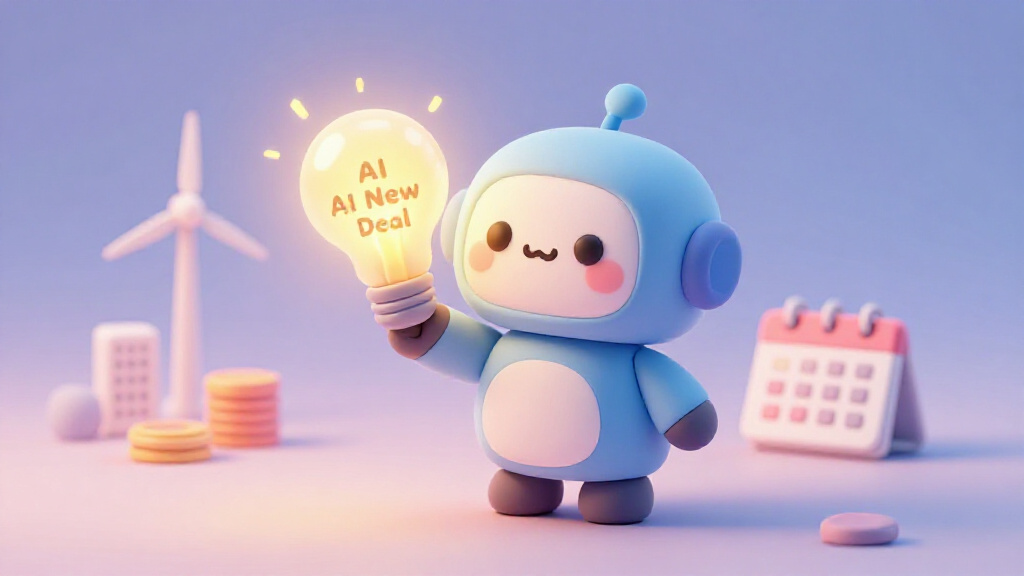
OpenAI CEO Sam Altman is advocating for significant economic reforms, proposing an "AI New Deal for America" to manage the rapid growth and impact of artificial intelligence. Key proposals include establishing a public wealth fund for all US citizens, which would invest in AI companies and distribute returns, and implementing taxes on automated labor. OpenAI also suggests exploring a four-day workweek and expanding the US electricity grid to meet AI's energy demands, aiming to address potential job losses and ensure broad societal benefit from AI-driven economic growth.
Despite OpenAI's proactive policy suggestions, a recent report questions CEO Sam Altman's trustworthiness. Insiders describe him as a people-pleaser who seeks power and may deceive, raising doubts about the public's ability to trust his vision for AI's development and control. In other developments, OpenAI is collaborating with LG U+ to enhance contact center AI, utilizing OpenAI's Realtime API to create more natural and responsive customer service interactions, moving beyond traditional scripted systems.
Beyond policy discussions, major companies are making substantial AI investments. UnitedHealth Group is investing $3 billion into artificial intelligence to transform its healthcare operations, hiring numerous AI and data science experts to streamline processes and speed up decision-making, while also acknowledging concerns about patient privacy. Meanwhile, Meta employees are actively competing on an internal leaderboard, tracking 'tokens' used in AI experiments to earn titles like 'Session Immortal,' highlighting the company's intense focus on AI. Databricks has also launched a new AI solution, enabling advertisers to create audience segments using natural language prompts, which accelerates campaign deployment and uncovers hidden insights.
Artificial intelligence continues to reshape various sectors. Melania Trump advocates for AI's role in education, suggesting it can provide personalized instruction and enhance learning for children. The job market in regions like the DMV is seeing AI impact younger workers, automating tasks but also creating demand for AI skills. Furthermore, some brands are now using 'No AI' labels to assure consumers of human-generated content and build trust, while the AI in Agriculture Conference recently launched an Ag Image Repository to foster AI tools for more productive and sustainable farming.
Key Takeaways
- OpenAI CEO Sam Altman proposes an "AI New Deal" including a public wealth fund for citizens and taxes on automated labor to manage AI's economic impact.
- A report questions Sam Altman's trustworthiness, citing insider concerns about his power-seeking and potential deception.
- UnitedHealth Group is investing $3 billion in AI to transform healthcare operations, hiring AI and data science experts.
- Meta employees are competing internally to be recognized as AI experts, tracking 'tokens' used in their AI experiments.
- Databricks introduced an AI solution allowing advertisers to create audience segments using natural language prompts.
- OpenAI is partnering with LG U+ to develop more natural and responsive contact center AI using its Realtime API.
- Melania Trump advocates for AI's use in education to provide personalized instruction and enhance learning for children.
- AI is impacting the job market, particularly for younger workers, by automating tasks and increasing demand for AI and soft skills.
- Some brands are adopting 'No AI' labels to differentiate content and build consumer trust in human-generated material.
- The AI in Agriculture Conference launched an Ag Image Repository to advance AI tools for productive and sustainable farming.
Sam Altman proposes AI New Deal for America
OpenAI CEO Sam Altman suggests a 'New Deal for Superintelligence' to prepare for AI's impact. He warns of job loss, cyberattacks, and social upheaval. Key proposals include a public wealth fund for all citizens, taxes on automated labor, and a four-day workweek. The plan also calls for affordable AI access and containment strategies for dangerous AI systems.
OpenAI seeks economic reforms for AI's rapid growth
OpenAI has proposed major economic changes to manage the fast growth of artificial intelligence. The company suggests creating a public wealth fund, taxing automated work, and exploring a four-day workweek. These ideas aim to address potential job losses and disruptions caused by AI tools. OpenAI also highlighted the need for faster expansion of the US electricity grid to support AI's energy demands.
Insiders doubt Sam Altman's trustworthiness at OpenAI
While OpenAI released policy ideas for AI's future, a report questions CEO Sam Altman's trustworthiness. Insiders describe him as a people-pleaser who seeks power and may deceive others. Despite OpenAI's warnings about AI risks, the report suggests Altman's past actions make it hard for the public to trust his vision for AI's development and control.
OpenAI suggests robot taxes and wealth fund for AI job losses
OpenAI has released a policy plan suggesting robot taxes and a public wealth fund to help with AI-related job losses. The document proposes giving all Americans a stake in AI's economic growth through a national fund. It also calls for shifting taxes from payroll to capital gains and corporate income. OpenAI also suggests piloting four-day workweeks and automatically increasing public support when job displacement hits certain levels.
OpenAI proposes public wealth fund for all US citizens
OpenAI has proposed a Public Wealth Fund to give every American citizen a stake in AI-driven economic growth. This idea is part of a larger industrial policy document for the transition to superintelligence. The fund would invest in AI companies and those using AI, with returns distributed to citizens. This proposal aims to prevent wealth from concentrating among a few.
OpenAI blueprint suggests AI taxes and new social contract
OpenAI has released a policy blueprint recommending a new social contract for AI's economic impact. Key proposals include a public wealth fund for citizen investment in AI growth and taxes on automated labor. OpenAI also suggests using AI efficiency gains to support four-day workweeks with full pay. The blueprint aims to ensure AI benefits society broadly and addresses risks like cyber and biological threats.
Melania Trump sees AI improving education for children
First Lady Melania Trump believes Artificial Intelligence can enhance teaching and provide world-class education. She suggests AI tools can help teachers offer personalized instruction and develop critical thinking skills. Jack Brewer, CEO of The Brewer Group, agrees, highlighting AI's potential to close the education gap for underserved children.
Melania Trump promotes AI for student success
First Lady Melania Trump is encouraging the use of artificial intelligence in education, stressing its importance for children's future success. David Marchick, Dean of the Kogod School of Business, discussed integrating AI into the curriculum. He noted that demand for AI skills from employers has significantly increased.
AI impacts young workers in the DMV region
Artificial intelligence is changing the job market in the DMV area, particularly affecting younger and entry-level workers. Virginia is seeing rapid AI adoption, leading to potential job task automation and reshaping of roles. While some jobs face higher AI exposure, there are also opportunities for those with AI skills and soft skills like communication. Employers are increasingly seeking AI literacy and adaptability.
UnitedHealth Group invests $3 billion in AI for healthcare
UnitedHealth Group is investing $3 billion in artificial intelligence to transform its operations and improve healthcare. The company is hiring many AI and data science experts to embed AI across its business. This move aims to speed up decision-making and streamline insurance processes, but also raises concerns about patient privacy and how AI decisions are made.
AI is changing the meaning of 'storyteller' in business
The term 'storyteller' is increasingly used in business job postings, with LinkedIn reporting a doubling of such roles. While storytelling has always been important in business, AI is now impacting how stories are created and shared. Some worry AI might lead to more generic content, while others see it as a tool to amplify diverse narratives.
Brands use 'No AI' labels to stand out
Some brands are now adding 'no AI' disclaimers to their marketing content. This trend aims to assure consumers that the material is human-generated, addressing growing skepticism about AI-produced content. By highlighting their use of human creators, brands hope to build trust and differentiate themselves in a crowded market.
AI conference explores future of farming
The AI in Agriculture Conference brought together experts to discuss how AI is changing farming. A new Ag Image Repository was launched, containing millions of photos of plants to help build AI tools. The conference focused on using AI for more productive, profitable, and sustainable agriculture. Participants learned about AI tools for tasks like creating reports and analyzing data.
Meta employees compete for AI status
Meta employees are competing on an internal leaderboard to become recognized as AI experts. The competition tracks how many 'tokens' employees use in their AI experiments, with top performers earning titles like 'Session Immortal' or 'Token Legend.' This highlights Meta's focus on AI and employees' desire to showcase their skills.
Databricks AI helps advertisers create audience segments
Databricks has launched a new AI solution to help advertisers build audience segments more easily. Using natural language prompts, advertisers can describe their target audiences, and the AI translates these into data segments. This speeds up campaign deployment and helps uncover hidden insights by analyzing large datasets for non-obvious patterns.
LG U+ and OpenAI partner on real-time AI agents
LG U+ is working with OpenAI to improve its contact center AI using OpenAI's Realtime API. This collaboration aims to create more natural and responsive customer service interactions. The Realtime API allows for low-latency, conversational voice experiences, enabling AI agents to handle interruptions and respond dynamically, moving beyond traditional scripted systems.
Sources
- Behind the Curtain: Sam's superintelligence New Deal
- OpenAI calls for sweeping economic reforms amid rapid growth of artificial intelligence
- “The problem is Sam Altman”: OpenAI Insiders don’t trust CEO
- OpenAI calls for robot taxes, public wealth fund to cushion AI job losses
- OpenAI Proposes Automatic Stake For All US Citizens In AI-Based Public Wealth Fund
- OpenAI’s Altman releases blueprint for taxing, regulating artificial intelligence
- First lady Melania Trump highlights future of AI and education
- Melania Trump promotes AI as education tool
- AI pressure grows on the DMV's young workforce
- UnitedHealth Group is making a $3 billion bet on AI. What does it mean for patients?
- Storytelling and AI
- Brands Adopt ‘No AI’ Disclaimers to Stand Out Amid the Slop
- AI in Agriculture Conference Explores the Future of Farming
- Meta Employees Vie for AI ‘Token Legend’ Status
- Databricks AI Tackles Ad Strategy Gap
- LG U+ and OpenAI Discuss Real-Time AI Agents
Comments
Please log in to post a comment.