




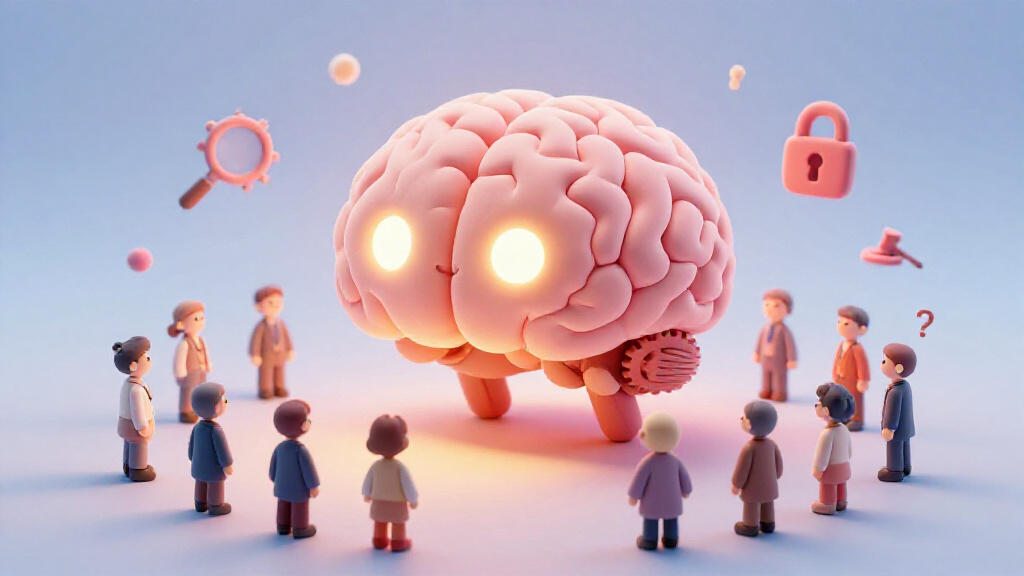
Singapore is making a substantial commitment to artificial intelligence research, pledging over S$1 billion, which translates to approximately $786 million, for public AI initiatives from 2025 to 2030. Minister Josephine Teo announced this plan on January 24, 2026, highlighting the nation's ambition to become a leading AI research hub. This significant investment, following an earlier $500 million, will establish new Research Centres of Excellence and focus on fundamental, applied, and responsible AI, while also developing a robust talent pipeline.
Meanwhile, the global conversation around AI intensified at the World Economic Forum in Davos, where tech leaders like Sam Altman from OpenAI, Satya Nadella from Microsoft, and Mark Zuckerberg from Meta engaged in debates about AI's rapid development and the necessity for regulation. Despite differing views on the pace of innovation, a shared excitement about AI's transformative potential across industries and for solving global challenges was evident.
The economic implications of AI are becoming clearer, with mid-market businesses (100 to 1,000 employees) identified as crucial drivers of AI's future economic impact due to their agility and resources. However, concerns about job displacement persist, particularly for middle-class workers in sectors like Hollywood, where roles such as drivers and carpenters face risks from AI advancements. Even the legal profession sees uncertainty, with surging law school applications coinciding with AI's potential to reshape the industry and job availability.
AI's dual role in security is also a prominent theme. While it aids police in solving cold cases by rapidly sifting through vast amounts of data, its application in cybersecurity presents a more complex picture. AI-driven security detection, though improving threat visibility, has limits; it can be tricked by new malware variants created by cybercriminals, offering only probable risk assessments rather than definitive answers. The film "Mercy" further explores AI's integration into the justice system, depicting a near-future where an AI judge presides over trials.
Building trust in AI data security remains a critical challenge, requiring strong data governance, privacy-preserving techniques, and continuous monitoring to address issues like bias and adversarial attacks. On the enterprise front, UiPath recently launched its Maestro orchestration platform, designed to coordinate AI agents from various vendors and automate complex tasks. This move aims to solidify UiPath's position in enterprise AI, though investors are closely watching whether these advancements will translate into increased customer adoption and higher revenue.
Key Takeaways
- Singapore is investing over S$1 billion (approximately $786 million) in public AI research from 2025 to 2030 to become a leading AI hub.
- The World Economic Forum in Davos featured debates on AI's future and regulation, attended by leaders like Sam Altman (OpenAI), Satya Nadella (Microsoft), and Mark Zuckerberg (Meta).
- Mid-market businesses (100-1,000 employees) are identified as key drivers for AI's economic impact due to their agility and resources.
- AI advancements pose a threat to middle-class jobs in various sectors, including Hollywood, impacting roles like drivers and carpenters.
- The legal industry faces uncertainty as AI is expected to reshape job availability and salaries, despite a surge in law school applications.
- AI assists police in solving cold cases by rapidly analyzing large datasets, but human verification remains crucial.
- In cybersecurity, AI both enables new malware creation by threat actors and improves detection, though AI-driven security has limits and provides probable, not certain, risk assessments.
- Building trust in AI requires addressing data privacy, integrity, bias, and adversarial attacks through strong governance and continuous monitoring.
- UiPath launched its Maestro orchestration platform to coordinate AI agents from different vendors and automate complex tasks, aiming to strengthen its enterprise AI position.
- The film "Mercy" explores a near-future justice system where an AI judge presides over trials, highlighting societal integration of AI.
Singapore invests $786 million to boost AI research
Singapore plans to invest over S$1 billion, which is about $786 million, into public artificial intelligence research over the next five years. This investment aims to strengthen the country's AI industry and become a leading research hub. Digital Development and Information Minister Josephine Teo announced the plan on January 24, 2026. The funds will help set up new research centers, improve AI skills, and develop more talent in the field.
Singapore commits $1 billion for AI research by 2030
Singapore will invest $1 billion over five years, from 2025 to 2030, to boost its public artificial intelligence research. Minister Josephine Teo announced this at the Singapore AI Research Week on January 24, 2026. This funding is the second major investment, following an earlier $500 million. The plan focuses on fundamental AI, applied AI, and developing skilled talent. Singapore will create Research Centres of Excellence to study areas like resource-efficient and responsible AI, and apply AI to industries such as manufacturing and healthcare.
Singapore pledges over S$1 billion for AI research
Singapore will invest more than S$1 billion, or US$786 million, into its National AI Research and Development Plan (NAIRD) from 2025 to 2030. Minister Josephine Teo announced this on January 24, supporting the National AI Strategy 2.0. The plan focuses on fundamental AI research, applied AI research, and developing talent. Singapore will create AI research centers to study responsible AI, resource efficiency, and general-purpose AI. It will also build a strong talent pipeline through various programs and attract AI companies.
Singapore boosts AI research with $779 million investment
Singapore will invest over S$1 billion, about $778.8 million, in public artificial intelligence research through 2030. The Ministry of Digital Development and Information announced this plan on Saturday. The goal is to strengthen Singapore's AI capabilities and global standing. Funds will go towards key research areas like responsible and resource-efficient AI. The investment also aims to develop AI talent at all levels and foster teamwork between research institutions and businesses.
Building trust in AI data security
The rapid growth of Artificial Intelligence brings challenges in securing data and building trust. AI models depend on good data, and issues like bias or compromise can lead to flawed decisions. Key challenges include protecting data privacy, ensuring data integrity, addressing data bias, guarding against adversarial attacks, and making AI systems more transparent. To build trust, strategies involve strong data governance, privacy-preserving techniques, detecting and fixing biases, and continuous monitoring. Securing AI requires teamwork from researchers, developers, and policymakers.
Mid-market businesses drive AI's economic future
Mid-market businesses, those with 100 to 1,000 employees, are crucial for the economic impact of Artificial Intelligence. Unlike large companies that are slow to adopt or small businesses with limited scale, mid-market firms are nimble and have enough resources to invest in AI. They can quickly apply AI solutions to improve productivity, make better decisions, and create new income. These companies also connect tech providers with smaller businesses, driving innovation. Experts believe their use of AI will lead to major economic growth and new jobs.
AI threatens middle-class jobs not Hollywood stars
The author argues that Ben Affleck and James Cameron are mistaken about Artificial Intelligence's impact on Hollywood jobs. While the author believes Affleck and Cameron's high-profile careers are safe, many middle-class workers will suffer. Jobs like drivers, grips, hair stylists, and carpenters are at risk due to AI advancements. This comes as Hollywood real estate, including Warner Bros. Studio, already faces financial struggles.
AI reveals limits of automated security decisions
Artificial Intelligence is both helping cybercriminals create new malware and improving detection technologies. However, AI-driven security detection has limits, as it can be tricked by new threats and provides only probable risk assessments, not certain answers. Traditional security methods also struggle with unknown or highly evasive malware. Threat actors now use AI to quickly produce many new malware variants that bypass old detection tools. While AI improves threat visibility, a deterministic Zero Trust approach is becoming crucial to reduce file risks at their source.
Tech leaders debate AI's future at Davos forum
The World Economic Forum in Davos recently turned into a major tech conference, with Artificial Intelligence dominating discussions. Top tech leaders like Sam Altman from OpenAI, Satya Nadella from Microsoft, and Mark Zuckerberg from Meta attended. They debated AI's future, its speed of development, and the need for regulation. While some pushed for fast innovation, others urged caution. Despite disagreements, there was a shared excitement about AI's potential to change industries and solve global problems.
Police use AI to solve cold cases faster
Police departments are now using Artificial Intelligence to help solve crimes, especially cold cases. AI tools can quickly sort through huge amounts of data, like jail calls, interviews, and old case files, which previously took weeks. Companies like Closure offer systems that transcribe audio, label images, and highlight important text, even translating different languages. Anchorage Police Chief Sean Case says AI helps his team restart investigations and get new detectives up to speed quickly. While AI helps find clues, it does not make decisions; human detectives still verify all information to ensure fairness and transparency in court.
Law school interest surges but AI creates job uncertainty
Interest in law school is surging, with applications for the 2026 cycle up over 40% from two years ago. Historically, people turn to law school during economic downturns. However, new risks like federal student loan caps and the rise of generative Artificial Intelligence make the future less certain for aspiring lawyers. While job prospects for recent graduates have improved since the 2008 financial crisis, AI now threatens to change the legal industry, potentially impacting job availability and salaries.
Chris Pratt faces AI judge in new movie Mercy
The new movie "Mercy," starring Chris Pratt, opens in theaters on Thursday, January 23, 2026. In this near-future Los Angeles, an Artificial Intelligence judge oversees trials. Pratt plays Chris Raven, a detective who must prove his innocence to an IMAX-sized AI judge, played by Rebecca Ferguson, within 90 minutes. In this system, people are guilty until proven innocent, and they use their own digital evidence to build a case without lawyers. The film explores a world where AI is fully integrated into the justice system.
UiPath launches Maestro AI platform amid revenue questions
UiPath, a company focused on software automation and AI, has launched its Maestro orchestration platform. Maestro helps coordinate AI agents from different vendors, and its Screen Agent achieved a top industry benchmark. These new products aim to help businesses automate complex tasks with less human effort. However, investors are questioning if these advancements will lead to increased customer adoption and higher revenue, especially given recent insider share sales. UiPath hopes Maestro will strengthen its position as a key player in enterprise AI, leading to larger deals and more Annual Recurring Revenue.
Sources
- Singapore Pours $786 Million Into Race to Become AI Powerhouse
- Singapore to invest $1 billion over 5 years to boost AI public research
- Singapore to invest more than S$1 billion in national AI research plan over 5 years
- Singapore to invest over $779 million in public AI research through 2030
- Securing AI: Building Trust in the Data Era
- Why the Mid-Market Will Determine AI's Economic Impact
- Ben Affleck Is Wrong About AI, As Is James Cameron, Workers Will Take The Hit
- Why AI is exposing the limits of automated security decision-making
- Tech CEOs boast and bicker about AI at Davos
- AI is reshaping police detective work, starting with cold cases
- Interest in Law School Is Surging. A.I. Makes the Payoff Less Certain.
- In ‘Mercy,’ Chris Pratt is on trial with an artificial intelligence judge
- UiPath Agentic AI Progress Meets Ongoing Questions On Revenue And Selling
Comments
Please log in to post a comment.