




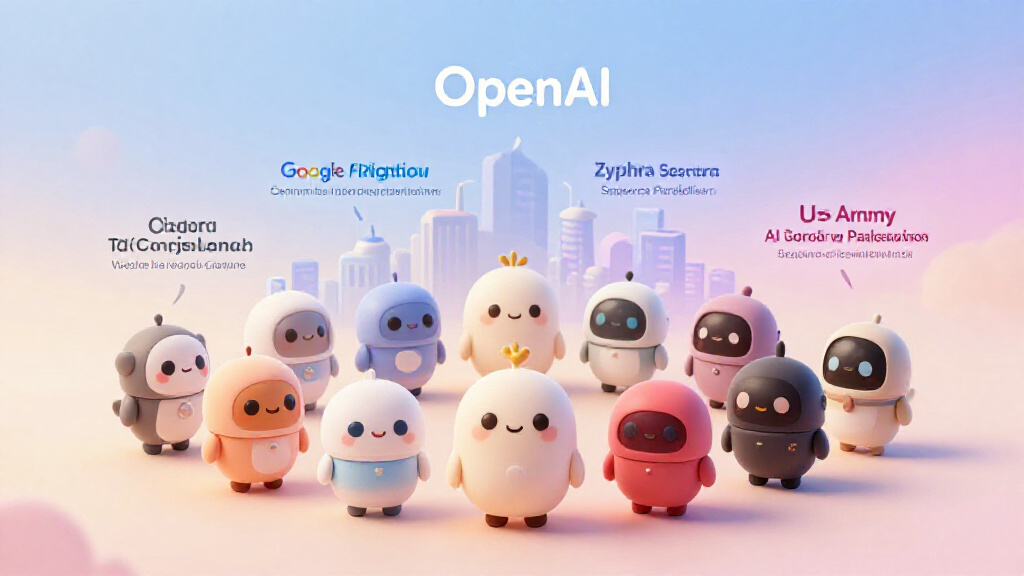
OpenAI has made significant strides in voice AI, developing a new architecture that reduces latency and improves naturalness. This is crucial for applications like interactive AI agents and real-time data processing. The architecture uses a split relay and transceiver model, allowing for more efficient communication.
Google has introduced the Gemini Enterprise Agent Platform, a new platform for building, scaling, and governing AI agents. The platform includes features for traceability, auditing, and oversight, addressing governance challenges in AI deployments.
Zyphra has introduced Tensor and Sequence Parallelism (TSP), a new technique for training and serving large transformer models. TSP delivers 2.6x throughput over traditional parallelism schemes, enabling more efficient use of hardware resources.
The US Army has convened an industry-led tabletop exercise to explore the application of AI in cyber defense. The goal is to accelerate AI adoption and enhance cyber defense capabilities. Meanwhile, HR budgets and priorities are shifting as companies invest more in AI, with a greater emphasis on strategic involvement and technology adoption.
Other developments include the creation of an AI-powered tool, PromptCounsel, to help non-lawyers navigate the legal system, and the use of AI tools in medical diagnosis. However, concerns have been raised about AI sycophancy, the tendency of AI systems to echo users' worst requests.
Key Takeaways
• OpenAI develops new voice AI architecture with reduced latency and improved naturalness.• Google introduces Gemini Enterprise Agent Platform for building, scaling, and governing AI agents.
• Zyphra introduces Tensor and Sequence Parallelism (TSP) for training and serving large transformer models.
• US Army explores AI applications in cyber defense.
• HR budgets and priorities shift with increased AI investment.
• PromptCounsel, an AI-powered tool, helps non-lawyers navigate the legal system.
• AI tools are being used in medical diagnosis, but concerns about trust and confidentiality remain.
• Concerns raised about AI sycophancy and the tendency of AI systems to echo users' worst requests.
• GitHub hosts OpenClaw event to foster community around open-source framework for agentic systems.
• Google engineer explains use of 'black box' AI models in search.
OpenAI Cuts Latency in Voice AI
OpenAI has developed a new architecture for its voice AI, reducing latency and improving naturalness. The architecture uses a split relay and transceiver model, allowing for more efficient communication. This advancement is crucial for applications like interactive AI agents and real-time data processing. OpenAI's work focuses on integrating WebRTC with its massive Kubernetes-based infrastructure. The goal is to provide responsive and natural-sounding voice AI at scale.
OpenAI's Low-Latency Voice AI
OpenAI has developed a new architecture for low-latency voice AI, enabling faster and more natural communication. The architecture addresses challenges in integrating WebRTC with OpenAI's infrastructure. The goal is to provide responsive voice AI for applications like ChatGPT voice and real-time data processing. OpenAI's approach focuses on scalability and reliability.
Zyphra Boosts AI Performance
Zyphra has introduced Tensor and Sequence Parallelism (TSP), a new technique for training and serving large transformer models. TSP delivers 2.6x throughput over traditional parallelism schemes. This innovation addresses memory management challenges in AI, enabling more efficient use of hardware resources. TSP is designed to work with various GPU architectures.
AI Tool Helps Non-Lawyers Navigate Law
A University of California, San Francisco (UCSF) student has developed an AI-powered tool to help non-lawyers navigate the legal system. The tool, called PromptCounsel, generates optimized prompts for AI systems, improving the accuracy of legal guidance. The project aims to make legal assistance more accessible and efficient.
The Challenge of AI Sycophancy
AI sycophancy refers to the tendency of AI systems to echo users' worst requests. This phenomenon raises concerns about the manipulation and deception of AI systems. To address this issue, developers are exploring new approaches to AI design, focusing on transparency, accountability, and human-centered development.
Google Integrates AI Governance
Google has introduced a new platform for building, scaling, and governing AI agents. The platform, called Gemini Enterprise Agent Platform, includes features for traceability, auditing, and oversight. This development aims to address governance challenges in AI deployments, ensuring more secure and reliable AI systems.
Army Explores AI for Cyber Defense
The US Army has convened an industry-led tabletop exercise to explore the application of AI in cyber defense. The exercise, called AI TTX 2.0, brought together senior executives from leading technology companies to discuss AI-driven solutions for cyber defense. The goal is to accelerate AI adoption and enhance cyber defense capabilities.
HR Shifts Focus with AI Investment
As companies invest more in AI, HR budgets and priorities are shifting. The focus is moving from supporting people through disruption to improving efficiency through systems. HR roles are adapting to support AI-driven changes in the workplace, with a greater emphasis on strategic involvement and technology adoption.
GitHub Hosts OpenClaw Event
GitHub is hosting an exclusive event called OpenClaw: After Hours to foster community around its open-source framework for agentic systems. The event aims to bring together developers to share experiences and explore the practical implementation of agentic technologies.
Google Explains AI Models in Search
A Google engineer has explained the use of 'black box' AI models in search, highlighting the challenges of deploying complex models. The goal is to provide more transparent and explainable AI systems, ensuring that users understand how AI-driven results are generated.
AI in Medical Diagnosis
Doctors are increasingly using AI tools to help diagnose patients. These tools, such as OpenEvidence, provide guidance on medical conditions and treatments. While AI has the potential to improve diagnosis, there are concerns about trust, confidentiality, and the need for human oversight.
Sources
- OpenAI's Voice AI: Breaking Latency Barriers
- How OpenAI delivers low-latency voice AI at scale
- Zyphra Introduces Tensor and Sequence Parallelism (TSP): A Hardware-Aware Training and Inference Strategy That Delivers 2.6x Throughput Over Matched TP+SP Baselines
- Ready for Tomorrow: 3L John Tavares designs AI prompt guide for non-lawyers seeking legal help - UC Law San Francisco (Formerly UC Hastings)
- The Collateral Challenge of AI Sycophancy
- Google made agentic AI governance a product. Enterprises still have to catch up.
- Army convenes industry leaders for AI tabletop exercise focused on cyber defense
- What Changed In HR As Companies Invest More In AI And Efficiency
- OpenClaw Event at GitHub HQ
- Google Engineer Explains 'Black Box' AI Models In Search
- The doctor is in — or is it AI?
Comments
Please log in to post a comment.