




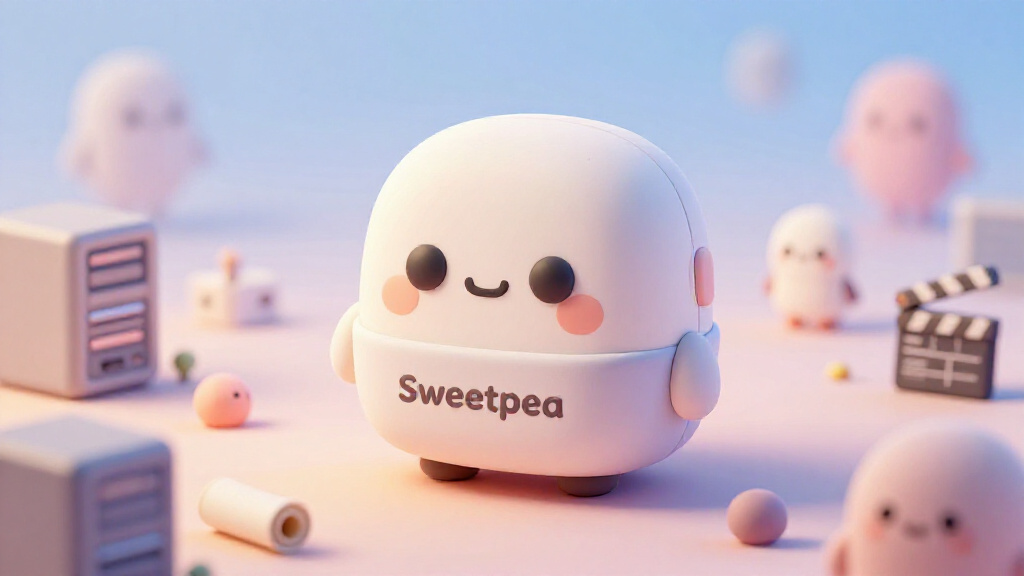
OpenAI is gearing up to launch its first AI-native hardware device in late 2026, with sales commencing in early 2027. This strategic move involves a collaboration between OpenAI co-founder Sam Altman and former Apple designer Jony Ive, who teamed up in May 2025. Reports suggest the company is developing multiple products, including an audio-focused wearable, an AI pen, and a voice-controlled tabletop device, possibly codenamed "Sweetpea" under the "Gumdrop" project. OpenAI is also leveraging Apple's supply partners, Luxshare and Goertek, for production in Vietnam, and actively hiring hardware talent from Apple. CEO Sam Altman envisions this portable device as a potential third essential alongside the MacBook Pro and iPhone.
Meanwhile, Nvidia, which has seen its market capitalization surge by over $4.1 trillion since 2023 due to its leading GPUs for AI data centers, faces several challenges in 2026. These include the risk of an AI bubble bursting, increased internal competition from hyperscalers developing their own chips, and US government restrictions on high-powered AI chip exports to China. In the automotive AI sector, Samsung Electronics is preparing to begin equipment test runs at its new semiconductor plant in Taylor, Texas, as early as March. This facility is set to produce Tesla's upcoming AI5 chip in the second half of 2026, with Samsung reportedly targeting a more advanced 2nm process for the chip.
Beyond hardware and chips, AI integration continues across various sectors. Google.org has committed $2 million in funding to the Sundance Institute to build an AI education ecosystem for film, aiming to empower creatives and define the future of filmmaking. Similarly, UC Berkeley engineering professors received funding to integrate AI into their undergraduate courses for the 2026-27 academic year, developing tools like the Gemini-based PupilBot. The surging demand for AI is also causing a global RAM shortage, with AI datacenters projected to consume 70% of all high-end DRAM production in 2026, leading to a 50% increase in memory prices by late 2025 and impacting consumer tech.
In enterprise applications, Cisco and OpenAI are transforming engineering workflows by integrating AI agents like Codex, which has reduced Cisco's build times by 20% and improved defect resolution significantly. Sales teams are also benefiting, with companies like Artisan AI launching Ava, an AI sales agent to automate B2B prospecting, and Gong AI helping reduce administrative burdens. Furthermore, AI is proving valuable in personal medical care, assisting patients in understanding conditions like Pulmonary Fibrosis by summarizing medication inserts and explaining medical terms, though it's emphasized that AI should complement professional advice, not replace it. Purdue University's AI Bytes workshops have also reached 1,000 attendees, fostering AI literacy among faculty and staff.
Key Takeaways
- OpenAI plans to launch its first AI-native hardware device in late 2026, with sales starting in early 2027, in collaboration with former Apple designer Jony Ive.
- OpenAI's hardware initiative includes an audio-focused wearable, an AI pen, and a voice-controlled tabletop device, utilizing Apple's supply partners like Luxshare and Goertek.
- Nvidia's market cap grew by over $4.1 trillion since 2023, but faces risks from an AI bubble, internal competition from hyperscalers, and US export restrictions to China.
- Samsung Electronics' new Taylor, Texas plant will produce Tesla's AI5 chip in the second half of 2026, targeting a 2nm process.
- Google.org provided $2 million in funding to the Sundance Institute to establish an AI education ecosystem for film creatives.
- An AI-driven RAM shortage is projected to see AI datacenters consume 70% of high-end DRAM production in 2026, causing memory prices to rise by 50% in late 2025.
- Cisco utilized OpenAI's Codex for enterprise engineering, reducing cross-repository build times by 20% and improving defect resolution 10-15 times.
- Artisan AI launched Ava, an AI sales agent designed to automate outbound B2B prospecting and manage early conversations across multiple channels.
- Purdue University's AI Bytes workshop sessions reached 1,000 attendees, enhancing AI literacy among faculty and staff since Fall 2024.
- UC Berkeley received funding to integrate AI into engineering courses for the 2026-27 academic year, including the development of Gemini-based tools like PupilBot.
OpenAI plans AI device launch in late 2026
OpenAI plans to launch its first AI-native hardware device in late 2026, with sales starting in early 2027. OpenAI co-founder Sam Altman and former Apple designer Jony Ive teamed up in May 2025 to create this device. It will be a compact smart wearable without a display, similar to the Humane AI Pin. OpenAI is working with Apple's supply partners Luxshare and Goertek to produce the device in Vietnam. Chris Lehane, OpenAI's chief global affairs officer, confirmed the timeline.
OpenAI may launch three AI devices soon
OpenAI is reportedly preparing to launch its first AI hardware devices later in 2026, with shipping expected in early 2027. Reports suggest the company is working with designer Jony Ive on three products: an audio-focused wearable, an AI pen, and a voice-controlled tabletop device. OpenAI's Chief Global Officer Chris Lehane confirmed the 2026 reveal timeline. While CEO Sam Altman previously denied wearable rumors, discussions continue.
OpenAI to unveil new AI device this year
OpenAI's Chief Global Affairs Officer Chris Lehane announced at the World Economic Forum that the company will unveil its highly anticipated AI device later in 2026. This device is a strategic move, with former Apple designer Jony Ive joining OpenAI in May 2025 to lead its design. OpenAI is also hiring hardware talent and manufacturing partners from Apple. CEO Sam Altman stated the portable device will have environmental awareness and could become a third essential device alongside the MacBook Pro and iPhone.
OpenAI plans audio-first hardware reveal this year
OpenAI policy leader Vera Nelson confirmed the company is working on its first hardware product, which could be revealed later in 2026. While a reveal is possible this year, general availability is expected in 2027. The device is likely to be audio-based, a strategy that aims to avoid competition with screen-based devices like smartphones and smartwatches. CEO Sam Altman and Jony Ive had prototypes by November 2026. This approach differs from past devices like the Humane AI Pin and Rabbit R1, which struggled to gain traction.
OpenAI confirms device unveiling later this year
OpenAI's chief global affairs officer, Chris Lehane, announced at the World Economic Forum that the company is on track to unveil its mysterious physical device later in 2026. Lehane did not provide specific details about the product, only calling it the "most likely" release schedule. Rumors from Smart Pikachu suggest it could be an audio product like an earbud or pen, possibly codenamed "Sweetpea" under the "Gumdrop" project. CEO Sam Altman and designer Jony Ive have previously hinted at the device.
Purdue AI workshops reach 1000 attendees
Purdue University's AI Bytes workshop sessions recently reached 1,000 attendances. These virtual workshops, held monthly since fall 2024, help faculty and staff learn about artificial intelligence. Dimitrios Peroulis, Purdue's senior vice president, noted the workshops are vital for innovating teaching and lowering barriers to AI adoption. Instructors like Alison Roth and John Race found the sessions helpful for improving AI literacy and understanding available resources. An October 2025 showcase allowed instructors to share how they use AI in courses, including tools like GenAI Studio and an AI Platform for Learning.
UC Berkeley integrates AI into engineering courses
UC Berkeley engineering professors received funding to integrate artificial intelligence into their undergraduate courses. This initiative, supported by the Center for Advancing Women in Technology and a campus program, aims to broaden student exposure to AI tools. Professors will develop their ideas during spring 2026 and summer, with implementation planned for the 2026-27 academic year. Projects include Huiwen Jia helping students use AI as a thinking partner, Thomas Schutzius and Claudio Hail developing an AI assistant for thermodynamics, and Daniel Pirutinsky creating PupilBot, a Gemini-based tool for learning by teaching.
AI demand causes global RAM shortage
An AI-driven RAM shortage is impacting more than just the PC market, with AI datacenters expected to consume 70% of all high-end DRAM production in 2026. Memory prices already increased by 50% in late 2025, and IDC predicts a 10% drop in PC shipments for 2026. This shortage affects all consumer tech, including phones and cars, because AI datacenters prioritize HBM memory made from the same DRAM chips. Despite major manufacturers like Samsung, Micron, and SK Hynix expanding production, experts like Avril Wu and MS Hwang believe global supply will not improve noticeably until 2028.
Five risks could challenge Nvidia's AI growth
Nvidia has seen massive growth, adding over $4.1 trillion to its market cap since 2023, driven by its leading GPUs for AI data centers. However, five key risks could challenge its success in 2026. These include the potential bursting of an AI bubble, as businesses are not yet optimizing AI investments. Internal competition from hyperscalers developing their own chips could reduce Nvidia's pricing power. Additionally, US government restrictions on high-powered AI chip exports to China, despite a green light for H200 GPUs, pose a significant threat to Nvidia's sales in the region.
Artisan AI launches Ava for automated sales
Artisan AI, a San Francisco startup, launched Ava, an AI sales agent designed to automate outbound B2B prospecting. Ava acts like a digital sales hire, identifying prospects, reaching out, and managing early conversations across multiple channels. Artisan plans to add autonomous outbound calling to Ava's capabilities. This tool helps sales organizations scale pipeline generation without increasing staff, allowing human reps to focus on relationship building and closing deals. Ava represents a shift towards AI-powered, full-funnel sales orchestration.
Cisco and OpenAI use AI for engineering
Cisco and OpenAI are transforming enterprise engineering by integrating AI agents, specifically Codex, into core development workflows. Cisco used Codex to define enterprise-grade AI for software engineering, applying it to large-scale projects with complex codebases and strict security needs. This collaboration helped shape Codex into an AI engineering teammate capable of operating at enterprise scale. Cisco engineers used Codex for critical tasks like optimizing cross-repository builds, reducing build times by 20% and saving 1,500 hours monthly. It also improved defect resolution by 10-15 times and shortened framework migrations from weeks to days.
AI helps sales teams reduce admin work
Generative AI is helping sales teams reduce administrative burdens, allowing associates to focus on core selling activities. Many sales professionals spend a significant portion of their time on non-sales tasks, which can lead to lost revenue. AI vendors like Gong AI, an AI-powered revenue intelligence platform, aim to automate these mundane tasks. Eilon Reshef, Gong's co-founder, expects AI to take over tasks like notetaking and email, and eventually even product demos. However, he advises that humans should always review AI-generated content before acting on it.
AI helps patients understand medical care
Artificial intelligence can play a valuable role in medicine, including for personal care like managing Pulmonary Fibrosis. The author uses AI to summarize medication inserts, which helps him discuss issues with his care team. While AI offers accurate and personalized information for patient medical questions, it is important to use it cautiously and remember that AI should complement, not replace, professional medical advice. AI can help patients understand symptoms, explain medical terms, and provide reminders, but users should phrase queries as specific questions for the best results.
Sundance Institute builds AI film education
The Sundance Institute, with $2 million in funding from Google.org, is building a community-led ecosystem for AI education in film. Collaborating with The Gotham and Film Independent, the initiative aims to empower creatives and define the future of filmmaking. Key efforts include establishing an AI Literacy Alliance, developing an AI training curriculum, and launching an AI Creators Fellowship for technical experimentation. This program builds on previous collaborations like Flow, which gave storytellers early access to AI tools, and the AI Shorts Program with Range Media Partners.
Samsung begins Tesla AI chip factory tests
Samsung Electronics is preparing to start key equipment test runs at its new semiconductor plant in Taylor, Texas, as early as March. This move paves the way for the production of Tesla's upcoming AI5 chip in the second half of 2026. The Taylor factory, Samsung's first wafer fabrication facility in the United States, is nearing completion with thousands of workers on site. The plant will use extreme ultraviolet lithography equipment for advanced chip manufacturing. Both Samsung and TSMC will reportedly produce versions of Tesla's AI5 chip, with Samsung targeting a more advanced 2nm process.
Sources
- OpenAI AI Hardware Launch: What to Expect in 2026 Debut
- OpenAI's first AI hardware could launch soon: Three devices reportedly in work
- OpenAI to Unveil Anticipated AI Device by Year-End, Significant Attraction
- OpenAI's audio-first hardware product could launch this year, and I'm excited
- OpenAI Says Its Physical Device Is ‘On Track’ for an Unveiling Later This Year
- Purdue’s AI Bytes workshops hit 1,000 attendances milestone
- UC Berkeley professors explore new ways to integrate AI in engineering courses
- AI-driven RAM shortages threaten more than just the PC market — datacenters expected to consume 70% of global memory in 2026
- 5 Tangible Risks That Can Upend Nvidia's Parabolic Climb in 2026
- Autonomous Sales Agents
- Cisco and OpenAI redefine enterprise engineering with AI agents
- How AI is Reducing the Administrative Burden in Sales
- Artificial intelligence has a role in medicine, and in my PF care
- Building a community-led future for AI in film with Sundance Institute
- Inside Samsung's Massive Tesla AI Chip Factory: Tests Begin
Comments
Please log in to post a comment.