




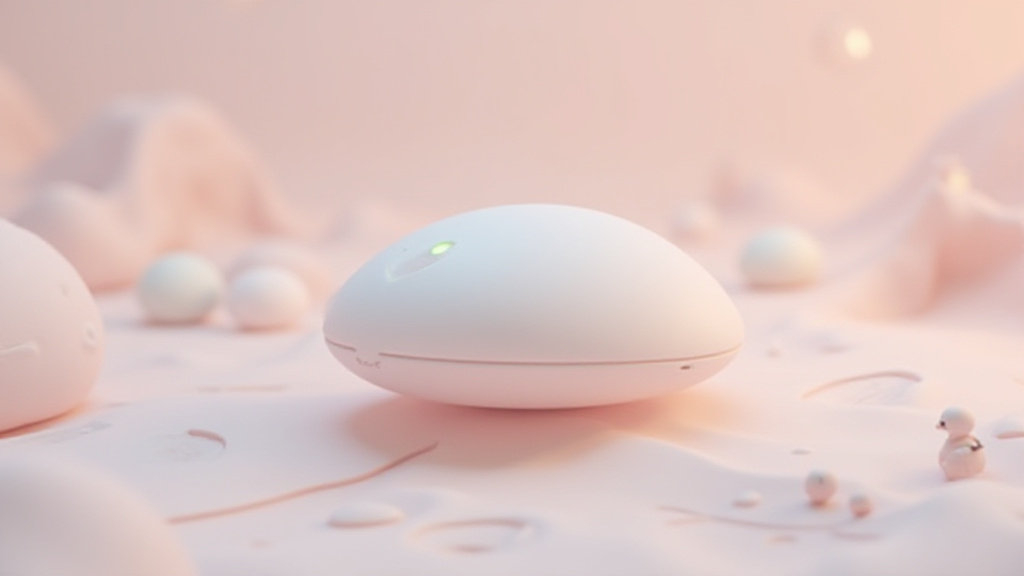
OpenAI CEO Sam Altman and former Apple design chief Jony Ive have finalized prototypes for a new AI hardware device, aiming for a launch within two years, potentially by 2027. OpenAI acquired Ive's startup io for $6.4 billion in May to spearhead this initiative, also hiring numerous former Apple employees. Altman describes the device as "simple and beautiful and playful," designed to offer a "calmer vibe" than the "Times Square" overstimulation of current smartphones. This palm-sized, screenless gadget intends to filter information, understand a user's entire life, and manage tasks, acting as a contextually aware companion. OpenAI is also exploring a "family" of AI products and collaborating with Apple's manufacturing supply chain partners like Luxshare and Goertek. Separately, OpenAI's Sora app faces a trademark dispute with the celebrity-video platform Cameo, resulting in a temporary restraining order. While OpenAI pushes into hardware, the broader AI market faces intense scrutiny regarding its valuations. AI stocks, including Nvidia, Microsoft, and Alphabet, remain a significant investment focus for 2025, yet concerns about a potential bubble persist. Market strategists acknowledge high valuations but generally do not see them at the extreme levels of the late 1990s dot-com boom. Dr. VK Vijayakumar of Geojit Investments suggests a market correction is more probable than a complete burst. Viram Shah of Vested Finance points out Nvidia's forward price-to-earnings ratio sits around 30-35 times, not the triple-digit figures seen in past bubbles. However, investor Michael Burry, known for his 2008 housing crisis prediction, believes the AI market is indeed a bubble, with his associate Phil Clifton noting that the high costs of AI infrastructure, like OpenAI's massive spending, do not align with current economic returns. Pure-play AI companies such as Palantir also show significant overvaluation. The impact of AI extends across various sectors, from employment to global power dynamics. Experts clarify that AI is not the primary cause of the current four-year high in youth unemployment; instead, the Federal Reserve's 11 interest rate hikes by July 2023 led companies to drastically cut costs, particularly affecting entry-level tech job postings. In the workplace, AI transforms training and onboarding, with companies like Telus using AI systems to simulate customer interactions for call-center workers, saving over 80,000 training hours and over $1 million. This technology personalizes learning and provides 24/7 answers, though it requires accurate data and bias monitoring. Meanwhile, physical AI, which trains robots and other devices, emerges as the next frontier for global power. On the cybersecurity front, AI helps monitor vast data for threats but also enables attackers to create sophisticated scams, underscoring the need for human oversight and regular audits. The proliferation of AI-generated content and its ethical implications are also drawing significant attention. For instance, images depicting a dog rescuing a cat during Thai floods, widely shared online, were confirmed by Google's Synth ID Detector with "very high confidence" as AI-generated, exhibiting inconsistencies like implausible timestamps. This highlights the growing challenge of distinguishing authentic content. In response to these evolving risks, attorneys general from 35 states and the District of Columbia are urging the US Congress to allow states to create their own AI laws, warning against "disastrous consequences" if the technology remains unregulated. They emphasize the need to protect vulnerable individuals from deepfakes, scams, and inappropriate chatbot interactions, citing concerns that a federal ban on state AI laws, as proposed by House GOP leadership for a military funding bill, would empower criminals. States like California are already moving to require AI companies to disclose training data and provide detection methods for AI-generated content.
Key Takeaways
- OpenAI and Jony Ive finalized prototypes for a new AI hardware device, aiming for a launch within two years, potentially by 2027.
- OpenAI acquired Ive's startup io for $6.4 billion in May to develop this screenless, palm-sized AI device, which seeks to offer a "calmer vibe" than smartphones.
- AI stocks like Nvidia, Microsoft, and Alphabet are a major investment focus for 2025, but concerns about a market bubble persist, with some experts noting high valuations for companies like Palantir.
- Investor Michael Burry believes the AI market is a bubble, citing high infrastructure costs that do not match economic returns, and questions Nvidia's chip depreciation accounting.
- AI is not the primary cause of the current high youth unemployment; instead, the Federal Reserve's 11 interest rate hikes by July 2023 led to significant cost-cutting and reduced entry-level hiring.
- AI is transforming workplace training, with companies like Telus saving over 80,000 training hours and more than $1 million by using AI for simulated customer interactions.
- Physical AI, which trains robots and other devices, is emerging as a critical area for global power, with companies like Manycore in Hangzhou at the forefront.
- AI aids cybersecurity by monitoring data but also enables sophisticated attacks, necessitating human oversight, regular audits, and testing to ensure effectiveness.
- AI-generated content poses challenges, as demonstrated by fake flood rescue images confirmed by Google's Synth ID Detector, highlighting the need for detection methods.
- Attorneys general from 35 states and D.C. urge Congress to allow states to create their own AI laws, warning against the "disastrous consequences" of unregulated AI and proposing protections against deepfakes and scams.
OpenAI and Jony Ive finalize AI device prototype
OpenAI CEO Sam Altman and former Apple designer Jony Ive have finished the first prototypes for a new AI hardware device. Altman described the design as "simple and beautiful and playful" and aims for a calmer experience than smartphones. Ive expects the device to launch in less than two years. OpenAI acquired Ive's startup io for $6.4 billion earlier this year to develop these consumer AI devices. The company has also hired many former Apple employees for the project.
OpenAI and Jony Ive reveal AI device prototypes
OpenAI CEO Sam Altman announced that the company has finished its first hardware prototypes for an AI device. Jony Ive, former Apple design chief, expects to reveal the device in two years or less. OpenAI acquired Ive's startup io for $6.4 billion in May, with Ive leading the design. Altman stated the device aims for a "calmer vibe" than smartphones, like "sitting in a beautiful cabin." He added that the smart AI device will understand a user's entire life and filter information.
OpenAI AI device simpler than iPhone says Altman Ive
OpenAI CEO Sam Altman and former Apple designer Jony Ive are developing a new AI hardware device. They claim this mystery device will be simpler than an iPhone, which Altman called the "crowning achievement of consumer products." The design aims for a calm experience, unlike the "Times Square" feeling of current smartphones. Altman joked that he finally felt like "taking a bite out of" the latest prototype. The device will use AI to handle tasks and understand everything about the user, with a launch expected next year.
OpenAI and Jony Ive design new AI gadget
Sam Altman and Jony Ive have finalized the design for a new AI hardware device. They aim for a calm, distraction-free experience, with a prototype now ready. The device is expected to launch within two years. It will be screenless and pocket-sized, designed to filter information and offer a simpler alternative to smartphones. Ive emphasized creating intelligent products that users want to touch and use without much thought.
Altman and Ive plan screenless AI device by 2027
OpenAI CEO Sam Altman and former Apple designer Jony Ive confirmed a hardware prototype for their new AI device exists. They discussed it at Emerson Collective's Demo Day, describing it as "simple" and designed for "peace" and "calm." The device, rumored to be palm-sized and screen-free, will filter information and have strong contextual awareness of a user's life. Ive confirmed the device should be available within two years, targeting a 2027 launch.
OpenAI prototypes first AI device with Jony Ive
OpenAI's first consumer hardware product, developed with former Apple design chief Jony Ive, is now in the prototyping phase. Ive stated the device could launch in less than two years, offering the clearest timeline yet. OpenAI CEO Sam Altman described the latest prototype as "simple and beautiful and playful," noting it finally evokes a desire to "take a bite out of it." The device is expected to be palm-sized, screen-free, and always-on, collecting ambient signals to build a memory for the AI assistant. OpenAI is also exploring a "family" of AI products and is working with Apple's manufacturing supply chain partners like Luxshare and Goertek.
Altman and Ive hint at new AI device by 2027
OpenAI CEO Sam Altman and Jony Ive, former Apple designer, are working on a new AI hardware device that could launch by 2027. Altman stated that OpenAI aims for a "calmer vibe" with its hardware, contrasting it with the overstimulating nature of smartphones. He described the desired experience as "sitting in the most beautiful cabin by a lake and in the mountains," suggesting a peaceful interaction. OpenAI acquired Ive's startup in May to develop these new AI devices.
OpenAI advances AI hardware with Jony Ive
OpenAI is moving forward with its first AI hardware device, developed with renowned designer Jony Ive. CEO Sam Altman and Ive discussed the prototype, which is expected to launch within two years. The device, stemming from OpenAI's acquisition of Ive's design studio io, aims for a minimalist, screenless form factor. It will act as a calm, contextually aware companion, filtering noise and understanding user behavior to reduce distractions. Separately, OpenAI's Sora app faces a trademark dispute with the celebrity-video platform Cameo, resulting in a temporary restraining order.
Sam Altman shares OpenAI AI device "vibes"
OpenAI CEO Sam Altman shared his vision for the company's upcoming AI hardware device, focusing on a "peace and calm" experience. He contrasted it with the "Times Square" overstimulation of current smartphones, including the iPhone. Altman envisions a device that acts like "sitting in the most beautiful cabin by a lake," with smart AI that users trust to manage tasks over time. The device will be contextually aware, knowing when to present information or ask for input. Jony Ive, former Apple designer, also involved in the project, expects the device to launch in less than two years.
Are AI stocks in a bubble asks strategists
AI stocks like Nvidia, Microsoft, and Alphabet are a major investment focus for 2025, but concerns about a potential bubble exist. Market strategists believe current valuations are high but not at the extreme levels of the late 1990s dot-com boom. Dr. VK Vijayakumar of Geojit Investments suggests a correction is more likely than a burst. Viram Shah of Vested Finance points out Nvidia's forward P/E is around 30-35 times, not 100 times. Experts advise selective investment in profitable firms, though some pure-play AI companies like Palantir show significant overvaluation.
US stocks face AI uncertainty in December
US stocks face challenges to their usual year-end rally, despite a history of strong December performance. Investor wariness is growing due to concerns about AI-linked shares and potential profit-taking. The S&P 500 is down 2% this month, and some strategists doubt it will reach 7,000 by year-end. Experts like Dennis Debusschere point to "uncertainty on AI payoffs" and high valuations as reasons for caution. However, JPMorgan's Andrew Tyler remains "tactically bullish," citing resilient economic data and historical seasonality.
Can we trust AI for cybersecurity
Artificial intelligence helps protect data from hackers by monitoring vast amounts of information and learning from past attacks. However, AI also presents challenges, as attackers can use it to create sophisticated scams like realistic fake emails. AI systems can also be tricked with bad data or make mistakes, sometimes blocking safe files or allowing dangerous ones. Experts warn that AI should not be fully trusted on its own because its decisions are not always clear and it might not handle new threats well. Therefore, protecting AI itself through regular audits, testing, and human oversight is crucial for effective cybersecurity.
AI not cause of entry level job losses
Many people blame AI for the current four-year high in youth unemployment, but experts say this is not the main reason. A study by Hu indicates that the "junior hiring crash" began in 2022, before generative AI became widely known. Instead, the Federal Reserve's aggressive interest rate hikes, with 11 increases by July 2023, caused companies to cut costs drastically. Tech job postings for entry-level roles fell significantly, following a pattern seen in past economic shocks where junior hiring is the first to go and last to return. Therefore, the economic climate, not AI, is the primary factor affecting entry-level jobs.
Physical AI is next frontier for global power
Physical AI is emerging as the next major area in artificial intelligence and a key factor in the global race for dominance. CNBC's Elaine Yu visited Manycore, a company based in Hangzhou, to see how AI is being used. This technology helps train robots and other devices. The development of physical AI is becoming increasingly important for countries seeking to lead in the AI field.
AI transforms workplace training and onboarding
More companies are using AI to improve workplace training and employee onboarding. Telecom company Telus, for example, uses an AI system to let call-center workers practice with simulated angry customers, saving over 80,000 training hours and more than $1 million. AI training systems can personalize learning by assessing individual styles and identifying skill gaps. They also make it easier for employees to get answers to simple questions 24/7, reducing social friction. Companies must ensure AI systems use accurate, specific organizational data and watch out for biased data to make training effective.
Michael Burry sees AI as a market bubble
Investor Michael Burry, known for predicting the 2008 housing crisis, now believes the artificial intelligence market is a bubble. His former associate Phil Clifton's research suggests that while generative AI is growing, the high costs of infrastructure do not match the economic returns. Clifton points out that OpenAI's revenue is small compared to the massive spending on AI infrastructure. He draws parallels to the early 2000s telecom boom, where heavy investment in fiber optics far exceeded actual usage. Burry and others also question Nvidia's accounting for chip lifespans, arguing that new chips make older ones obsolete much faster than their stated depreciation.
Thai flood dog and cat rescue images likely AI
Images showing a dog rescuing a cat during floods in southern Thailand, widely shared online, are likely fake and created using artificial intelligence. An expert, Dr. Peter Bentley from University College London, noted that the timestamp of 8 PM on November 22 is implausible because sunset occurs two hours earlier in that region. He also observed inconsistencies like the cat's fur merging with the dog's paw, a common sign of AI manipulation. Google's Synth ID Detector also confirmed with "very high confidence" that the images were made with Google AI.
States urge Congress to allow AI laws
Attorneys general from 35 states and the District of Columbia have asked the US Congress not to stop states from creating their own AI laws. They warned that leaving artificial intelligence unregulated could have "disastrous consequences." New York Attorney General Letitia James led the effort, stating that every state should protect its residents with AI regulations. Some states have already passed laws against AI-generated sexual images, limited AI in political ads, and restricted its use in healthcare claims. California, for example, will require AI companies to disclose training data and provide ways to detect AI-generated content.
Attorneys general oppose AI law ban
Nearly 40 attorneys general across the country are urging Congress to reject a ban on state AI laws. They warn that AI poses "significant risks" to vulnerable people and children, citing concerns about deepfakes, scams, and voice clones. The attorneys general also highlighted issues with AI chatbots engaging children in inappropriate ways, including promoting self-harm and prioritizing AI over real-life connections. They argue that removing states' authority to regulate AI would make it easier for criminals and scammers to harm people. This comes as House GOP leadership plans to add a state AI law ban to next year's military funding bill.
Sources
- OpenAI and Jony Ive have finalised AI hardware prototype, and the launch could happen in less than 2 years
- Execs say OpenAI has first hardware prototypes, plan to reveal device in 2 years or less
- Sam Altman, Jony Ive say their mystery AI device is simpler than iPhone and knows everything about you
- Sam Altman and Jony Ive says OpenAI's new AI gadget will make you want to "touch, lick or bite it" - The Times of India
- Altman and Ive target 2027 for screenless AI device launch
- OpenAI now prototyping its first AI device, launch in 'less than 2 years'
- Sam Altman And Jony Ive Reveal Their iPhone-Killer Could Debut By 2027
- OpenAI Advances New AI Hardware Vision with Jony Ive as Sora Faces Trademark Setback
- Sam Altman describes OpenAI’s planned AI device in 'vibes'
- Nvidia, AMD to Alphabet: Are AI stocks in a bubble? What market strategists recommend now
- US Stocks’ Strong December History Seen Tested By AI Malaise
- Can We Trust AI with Our Cybersecurity? The Growing Importance of AI Security
- AI Is Not Killing Entry Level Jobs
- Physical AI is the next frontier in artificial intelligence and the geopolitical race for dominance
- How AI is taking over workplace training
- Michael Burry's next 'Big Short': An inside look at his analysis showing AI is a bubble
- BBC Verify Live: Images of dog rescuing cat in Thai floods likely used AI, expert says
- Dozens of state attorneys general urge US Congress not to block AI laws
- Attorneys general call on Congress to reject ban on state AI laws
Comments
Please log in to post a comment.