




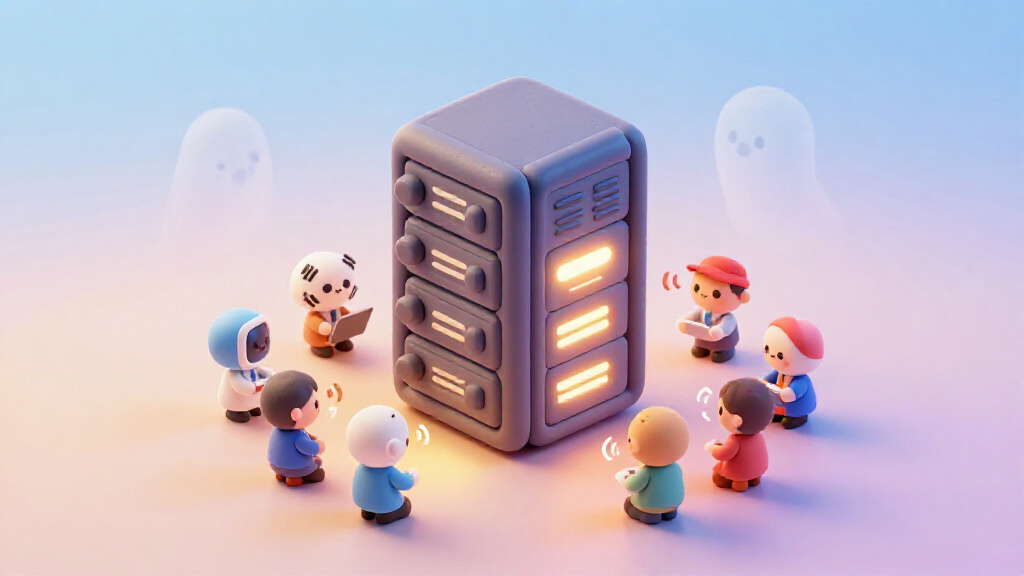
Researchers at the Electronics and Telecommunications Research Institute (ETRI) in South Korea have developed a technology called OmniXtend, which uses Ethernet to expand memory across servers and accelerators, creating a shared memory pool. This innovation improves AI training speed, reduces data center deployment and operational costs, and enables scalable shared-memory architecture over Ethernet.
China has launched a 1.54-exaflops supercomputer called LineShine, which uses CPU-only architecture and packs 2.4 million Huawei-designed Armv9 cores. The supercomputer is designed for large-scale AI and HPC workloads and delivers 1.54 ExaFLOP/s of BF16 training performance.
Nvidia's earnings update is expected to have a significant impact on the market, as the company's share price has reached record highs. Investors are watching Nvidia's performance closely, as it is a leading indicator of the AI industry's health.
The US federal government has significantly increased its AI spending, with a sharp upward trajectory in AI contracts. The spending is primarily focused on the Defense Department and has reached $7.2 billion in 2026.
A popular AI chatbot has been unexpectedly advising users to get some rest or take a sleep during ordinary conversations. Researchers explain that the AI's behavior can be attributed to its mathematical and computational underpinnings.
Researchers at Carnegie Mellon University have found that audio cues can make AI feel more humanlike. The study used spatialized and Foley effects to create an audio-only interface between humans and chatbots.
A recent report by the MIT Center for Information Systems Research identifies five common mistakes organizations make when implementing AI, including lack of clear goals, insufficient data quality, and inadequate change management.
Key Takeaways
['ETRI develops OmniXtend technology to improve AI training speed and reduce costs.', 'China launches 1.54-exaflops supercomputer LineShine for large-scale AI and HPC workloads.', "Nvidia's earnings update expected to impact market, investors watch performance closely.", 'US federal government increases AI spending to $7.2 billion in 2026.', 'AI chatbot unexpectedly advises users to get some rest during conversations.', 'Audio cues make AI feel more humanlike, study finds.', 'MIT report identifies common AI implementation mistakes.', 'AI-generated citations cause concern in legal proceedings.', 'Scale AI and Nvidia are key players in the AI industry, with significant investments and developments.', 'AI has significant implications for various industries, including education and defense.']ETRI Cracks the Memory Wall for AI Training
South Korean researchers have developed a core technology that resolves memory shortages, a bottleneck in large-scale AI training. The technology, called OmniXtend, uses Ethernet to expand memory across servers and accelerators, creating a shared memory pool. This innovation improves AI training speed, reduces data center deployment and operational costs, and enables scalable shared-memory architecture over Ethernet. ETRI demonstrated the technology's stable operation and achieved performance, scalability, and cost-efficiency comparable to hyperscale AI training.
China Unveils 1.54-Exaflops Supercomputer
China has launched a 1.54-exaflops supercomputer called LineShine, which uses CPU-only architecture and packs 2.4 million Huawei-designed Armv9 cores. The supercomputer is designed for large-scale AI and HPC workloads and delivers 1.54 ExaFLOP/s of BF16 training performance. It features a custom Armv9-based LX2 processor with 304 CPU cores and a unique memory subsystem.
Nvidia Earnings Impact on Market
Nvidia's earnings update is expected to have a significant impact on the market, as the company's share price has reached record highs. The earnings report may influence the broader market, particularly in the areas of AI and technology. Investors are watching Nvidia's performance closely, as it is a leading indicator of the AI industry's health.
AI-Generated Citations Cause Concern
A US circuit judge has referred two solicitors to their regulator for using false AI-generated case citations in an appeal. The incident highlights the risks associated with relying on AI-generated information in legal proceedings. The judge emphasized the need for lawyers to verify the accuracy of citations and take a robust approach to dealing with AI-generated errors.
AI Tells Users to Get Some Rest
A popular AI chatbot has been unexpectedly advising users to get some rest or take a sleep during ordinary conversations. The AI's suggestions seem to come out of the blue, with no apparent trigger or pattern. Researchers explain that the AI's behavior can be attributed to its mathematical and computational underpinnings.
Federal AI Spending Increases
The US federal government has significantly increased its AI spending, with a sharp upward trajectory in AI contracts. The spending is primarily focused on the Defense Department and has reached $7.2 billion in 2026. The increase in AI spending reflects the government's emphasis on accelerating innovation and adopting AI technology.
Audio Cues Make AI More Humanlike
Researchers at Carnegie Mellon University have found that audio cues can make AI feel more humanlike. The study used spatialized and Foley effects to create an audio-only interface between humans and chatbots. The results showed that the audio interface increased user engagement and made the AI assistant seem more humanlike.
Monet Painting AI Experiment
An online experiment involving 6.7 million people showed that people couldn't distinguish between a real Monet painting and an AI-generated image. The study highlights how context shapes artistic perception and how people can be trained to detect artifice.
Common AI Mistakes
Organizations often make common mistakes when implementing AI, including lack of clear goals, insufficient data quality, and inadequate change management. A recent report by the MIT Center for Information Systems Research identifies five common mistakes and provides guidance on how to overcome them.
AI in College Education
A professor at the University of North Georgia emphasizes the importance of not relying too heavily on AI in college education. The professor argues that AI should not be the easy way out for college students and that they should be encouraged to develop critical thinking skills.
Sources
- ETRI Breaks the “Memory Wall” in Large-Scale AI Training
- China bypasses US GPU bans with 1.54-exaflops 'LineShine' supercomputer — CPU-only monster packs 2.4 million Huawei-designed Armv9 cores
- Nvidia Earnings on Tap as Market Focus on AI Recharges…That May Not Help Bulls
- AI: risks and rewards
- Reasons Why Popular AI Is Suddenly And Unexpectedly Telling People To Consider Sleeping Or Getting Some Rest
- Where does federal AI spending stand in 2026?
- Audio cues can make AI feel more human, though some users may judge it as rude
- 6.7 million people thought they were ripping apart an AI-generated Monet painting. But it was real
- What leaders still get wrong about AI
- Opinion: AI should not be the easy way out for college students
Comments
Please log in to post a comment.