




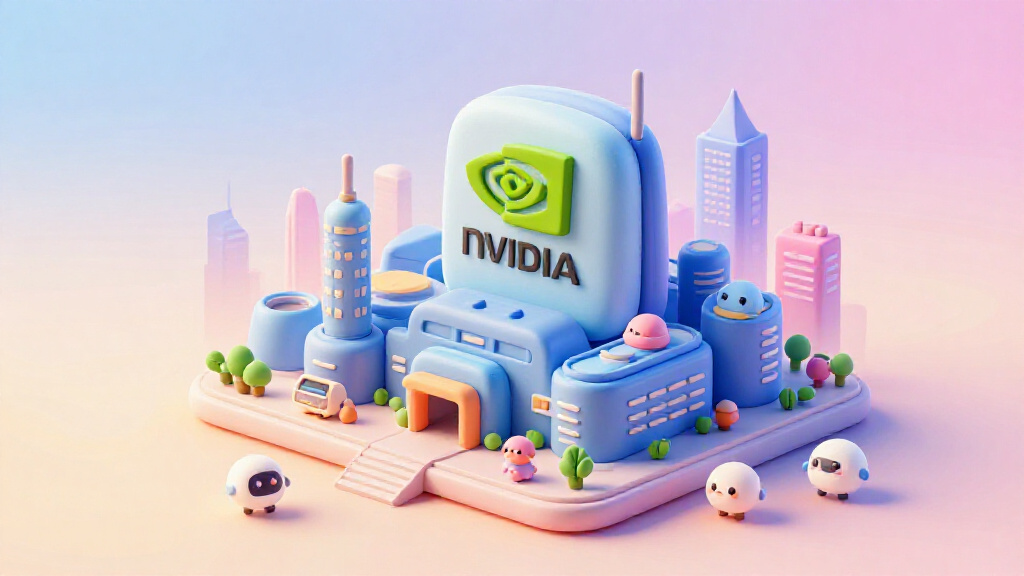
Nvidia is shifting its business strategy from selling individual chips to selling entire artificial intelligence factories, which could unlock a larger opportunity for the company. This shift includes offering a comprehensive ecosystem of GPUs, CPUs, networking hardware, software platforms, and integrated systems designed specifically for AI workloads.
The US government is exploring the possibility of acquiring equity stakes in AI firms like OpenAI and Anthropic, which are preparing for public listings. This move aims to ensure that these companies remain under US control.
The S&P 500 is increasingly driven by AI-related companies, with the top 10 stocks accounting for over 50% of its total return over the past year. Companies like Nvidia, Alphabet, and Microsoft are leading the charge.
Meta has released two AI models: Llama 5 as an open-weights model and Muse Spark as a closed proprietary system. Llama 5 rivals OpenAI's GPT-5 on some benchmarks and supports large context windows.
SurgePays has partnered with BrandRap to build an AI decisioning engine aimed at driving higher revenue per subscriber. The engine will automate the process of routing consumers to eligible products and predict conversion probability across multiple verticals.
Anthropic's recent $65 billion raise has raised questions about the profitability of AI investments, with some companies scrutinizing their AI spending and others canceling their AI subscriptions.
Nvidia has made strategic investments in Lumentum, Coherent, and Marvell Technology to maintain control over the broader AI hardware market and ensure access to key components.
Nvidia has also acquired Kumo AI for $400 million to improve its offerings in areas like computer vision and natural language processing.
Opera reported strong Q1 2026 revenue and adjusted EBITDA, raised its full-year outlook, and expanded shareholder returns through a $300 million buyback program and a recurring dividend.
Key Takeaways
['Nvidia is shifting from selling individual chips to selling entire AI factories, including a comprehensive ecosystem of hardware and software.', 'US officials are exploring equity stakes in AI firms like OpenAI and Anthropic to ensure US control.', 'The S&P 500 is increasingly driven by AI-related companies, with Nvidia, Alphabet, and Microsoft leading the charge.', "Meta released Llama 5 as an open-weights model and Muse Spark as a closed proprietary system, with Llama 5 rivaling OpenAI's GPT-5.", 'SurgePays partnered with BrandRap to build an AI decisioning engine for driving revenue per subscriber.', "Anthropic's $65 billion raise raises questions about AI investment profitability.", 'Nvidia invested in Lumentum, Coherent, and Marvell Technology to maintain AI hardware market control.', 'Nvidia acquired Kumo AI for $400 million to improve computer vision and natural language processing.', 'Opera reported strong Q1 2026 revenue and expanded shareholder returns.', 'Microsoft and Google are key players in the AI market, with significant influence on the S&P 500.']Nvidia shifts focus from chips to AI factories
Nvidia is changing its business strategy from selling individual chips to selling entire artificial intelligence factories. This shift could unlock a larger opportunity for the company. Nvidia's ecosystem, which includes GPUs, CPUs, networking hardware, software platforms, and integrated systems, is designed specifically for AI workloads. The company's software platform, CUDA, allows developers to optimize their applications for Nvidia hardware. This ecosystem gives Nvidia a competitive advantage and makes it harder for competitors to replace Nvidia's products.
Nvidia wants to sell AI factories, not chips
Nvidia is transforming from a component supplier into a company that helps build the infrastructure of the AI economy. The company's ambitions extend beyond chips, and it wants customers to buy entire AI factories. Nvidia's ecosystem includes GPUs, CPUs, networking hardware, software platforms, and integrated systems. This ecosystem gives Nvidia a competitive advantage and makes it harder for competitors to replace Nvidia's products.
US officials weigh government stakes in AI firms
US officials are discussing the possibility of acquiring equity stakes in artificial intelligence firms. The talks focused on companies voluntarily transferring shares to the federal government. This comes as OpenAI and Anthropic prepare for public listings. The goal is to ensure that these companies remain under US control.
AI dominance reshapes S&P 500
The S&P 500 is becoming a collection of individual winners, driven by the growing influence of artificial intelligence-related companies. The top 10 stocks in the index account for more than 50% of its total return over the past year. AI-related companies such as NVIDIA, Alphabet, and Microsoft are driving the index's returns.
Meta splits AI strategy with Llama 5 open and Muse Spark closed
Meta released two AI models on April 8, 2026: Llama 5 as an open-weights model and Muse Spark as a closed proprietary system. Llama 5 reaches near-parity with OpenAI's GPT-5 on some benchmarks and supports context windows up to five million tokens. Muse Spark became the engine behind Meta's AI assistant across its app ecosystem.
SurgePays partners with BrandRap for AI decisioning engine
SurgePays signed a master services agreement with BrandRap to build an artificial intelligence decisioning engine. The engine aims to drive higher revenue per subscriber by automating the process of routing consumers to eligible products. The engine will score eligibility and predict conversion probability across multiple verticals.
The conundrum of investing in AI today
Companies are scrutinizing their AI investments, which may not be paying off as expected. Anthropic's $65 billion raise has raised questions about the profitability of AI investments. Corporate America is questioning the return on investment of AI, with some companies canceling their AI subscriptions.
Nvidia's hidden trade in AI hardware
Nvidia has made strategic investments in Lumentum, Coherent, and Marvell Technology in recent months. These investments enable Nvidia to maintain control over the broader AI hardware market. Nvidia's investments in these companies ensure it has access to a supply of optical networking components.
Nvidia acquires Kumo AI for $400 million
Nvidia acquired Kumo AI, a company specializing in artificial intelligence and machine learning, for $400 million. The founders of Kumo AI will now work at Nvidia. The acquisition aims to improve Nvidia's offerings in areas such as computer vision and natural language processing.
Opera's AI integration and capital returns
Opera reported Q1 2026 revenue and adjusted EBITDA above guidance. The company raised its full-year outlook and expanded shareholder returns through a $300 million buyback program and a recurring dividend. Opera introduced Browser Connector and MCP to deepen AI integration in its browsers.
Sources
- Nvidia Wants to Sell AI Factories, Not Chips
- Nvidia Wants to Sell AI Factories, Not Chips
- US Officials Weigh Government Stakes in AI Firms
- AI Dominance Is Turning the S&P 500 into a Collection of Individual Winners, Says Evercore
- Mark Zuckerberg's Dual-Track AI: Llama 5 Open, Muse Spark Closed
- SurgePays Signs Master Services Agreement with BrandRap to Build Artificial Intelligence Decisioning Engine to Drive Higher Revenue Per Subscriber
- The Conundrum of Investing in AI Today
- The Hidden Nvidia Trade Nobody on Wall Street Is Talking About
- Nvidia Acquires Kumo AI for $400 Million. What That Means for NVDA Stock.
- Stronger AI Integration And Capital Returns Might Change The Case For Investing In Opera (OPRA)
Comments
Please log in to post a comment.