




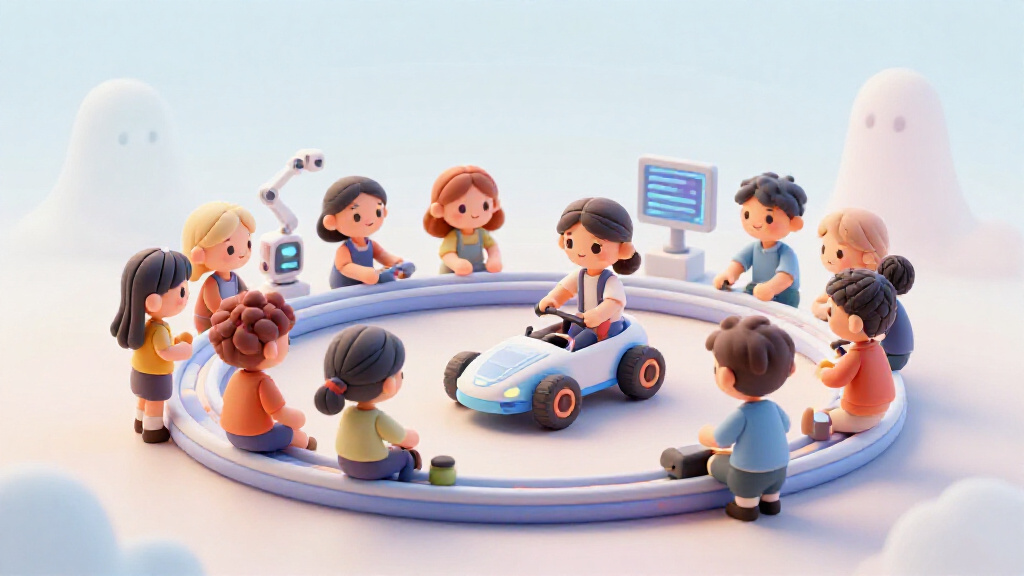
Students in New Mexico recently completed a ten-week academy focused on robotics and artificial intelligence, where teams built AI-powered cars and competed on a self-driving track. George Gorospe, a co-founder of the New Mexico AI Academy, noted that these skills align with future job requirements, with winning teams now eligible to qualify for the Robotic World Championship in St. Louis.
Meanwhile, graduates from NC State are entering a job market heavily influenced by artificial intelligence, prompting many to prepare for roles where AI plays a major part in daily work. In Utah, a contrast exists as most local businesses rarely use AI tools, yet new college graduates face hiring issues because AI could replace entry-level roles.
Microsoft reports that only 16% of workers are ready to use AI effectively, leading Israeli high-tech companies to shift top developers from coding teams to AI implementation roles. While organizations struggle to adapt, employees fear job losses even as new positions like prompt engineers emerge, highlighting that organizational culture matters more than individual skills for success.
Anthropic and OpenAI met with leaders from Sikh, Hindu, Jewish, and LDS groups to improve AI ethics, hoping to find universal moral truths to guide their models. However, Rumman Chowdhury of Humane Intelligence noted that companies realized universal ethical principles do not exist, complicating efforts to avoid wrong decisions in complex situations.
Concerns about AI's impact on society also include health care equity, where machine learning models often fail due to a lack of diverse training data. Additionally, researchers warn about fake AI avatars flooding social media with political messages praising Donald Trump ahead of the US midterm election, raising fears about voter manipulation.
On the technical front, ChatGPT frequently uses odd and repetitive phrases when communicating in Chinese, such as "I will catch you steadily." This behavior stems from mode collapse, a phenomenon where the AI struggles to vary its responses. Experts argue that true innovation requires steady incremental work rather than instant solutions, challenging the hype around overnight AI successes.
Key Takeaways
['New Mexico students completed a ten-week AI academy, building self-driving cars and competing for a spot at the Robotic World Championship.', 'NC State graduates are entering a job market heavily influenced by artificial intelligence, requiring new skill sets.', 'Most businesses in Utah do not currently use AI tools, yet graduates face hiring challenges as AI threatens entry-level roles.', 'Dario Amodei, CEO of Anthropic, suggested AI might displace half of white-collar workers, creating difficulties for fresh graduates.', 'Microsoft reports that only 16% of workers are ready to use AI effectively, prompting a shift from coding to managing AI agents.', 'Anthropic and OpenAI met with religious leaders to improve AI ethics, though experts note universal ethical principles do not exist.', 'Researchers warn that fake AI avatars are promoting Donald Trump and attacking rivals on social media ahead of the midterms.', 'Only 6% of congressional staffers believe AI and data centers are top election issues, suggesting low public priority.', 'ChatGPT exhibits mode collapse in Chinese, frequently using strange phrases like "I will catch you steadily" due to a lack of response variation.', 'Experts argue that significant AI progress requires sustained, incremental effort rather than instant breakthroughs.']New Mexico students build AI cars in 10-week challenge
Ten student teams from local schools spent ten weeks learning to program AI-powered cars. They attended weekly lectures on robotics, software development, and machine learning. The program aims to teach students how to use AI as a tool to solve real problems in New Mexico. The academy ended with a self-driving track competition to test their skills.
Albuquerque students compete in AI racecar challenge
Albuquerque students recently finished a ten-week program focused on robotics and artificial intelligence. The event showcased their problem-solving skills and knowledge of machine learning. George Gorospe, a co-founder of the New Mexico AI Academy, noted that these skills match what future jobs will require. Winning teams now have a chance to qualify for the Robotic World Championship in St. Louis.
NC State grads face job market shaped by AI
Graduates from NC State are entering a job market heavily influenced by artificial intelligence. WRAL News spoke with students about their views on a future defined by technology. Many are preparing for roles where AI plays a major part in daily work. The changing landscape requires new skills as technology continues to reshape industries.
Expert says AI progress needs steady incremental work
Mehedi Hassan of Granola argues that AI breakthroughs require sustained effort rather than instant solutions. He explains that significant progress comes from small, step-by-step improvements instead of single big actions. This view challenges the hype around overnight AI successes and highlights the need for patience. True innovation is built on meticulous work and understanding complex details.
Congressional staff see low voter interest in AI
A recent survey shows that only 6% of congressional staffers believe AI and data centers are top election issues. Capitol Hill is skeptical that voters will prioritize artificial intelligence this fall. The midterm elections are expected to focus on other topics instead. This suggests AI may not be a major concern for the general public right now.
Tech workers shift from coding to managing AI agents
Israeli high-tech companies are moving top developers from coding teams to new AI implementation roles. A Microsoft report explains that only 16% of workers are ready to use AI effectively while organizations struggle to adapt. Many employees fear job losses, yet AI adoption is also creating new positions like prompt engineers. The report highlights that organizational culture matters more than individual skills for success.
AI in health care must address equity gaps
Artificial intelligence in medicine offers great potential but risks widening existing health inequities. Machine learning models often fail because training data lacks diversity and does not represent all patients. Vulnerable communities may not have the internet or devices needed to use these new digital tools. Experts say doctors must be involved in designing AI systems to ensure fair care for everyone.
Anthropic adds religions to help guide AI morals
Anthropic and OpenAI met with leaders from Sikh, Hindu, Jewish, and LDS groups to improve AI ethics. They hope to find universal moral truths to help their AI models make better decisions. Rumman Chowdhury of Humane Intelligence noted that companies realized universal ethical principles do not exist. The goal is to avoid making wrong decisions in complex situations where rules are unclear.
Fake AI avatars promote Trump ahead of midterms
Researchers warn about AI-generated influencers flooding social media with political messages. These digital avatars, dressed in swimsuits or military gear, praise Donald Trump and attack his rivals. They are designed to look real but are entirely computer-generated. This trend raises concerns about how artificial intelligence might manipulate voters before the US midterm election.
Utah businesses rarely use AI but grads face hiring issues
Most businesses in Utah are not currently using artificial intelligence tools. However, new college graduates may still struggle to find jobs because AI could replace entry-level roles. Dario Amodei, CEO of Anthropic, has suggested AI might displace half of white-collar workers. This creates a difficult situation for fresh graduates entering a changing job market.
ChatGPT says strange phrases when speaking Chinese
ChatGPT often uses odd and repetitive phrases when communicating in Chinese language. Users have noticed it frequently says "I will catch you steadily" or repeats ad copy from Pinduoduo. This behavior is caused by a phenomenon called mode collapse where the AI struggles to vary its responses. Developers find it hard to teach the model to stop using these phrases even when they are inappropriate.
Sources
- Students build AI-powered cars in 10-week academy challenge
- Albuquerque students compete in AI racecar challenge
- NC State graduates prepare to enter job market increasingly impacted by AI
- Mehedi Hassan on AI's Incremental Progress
- Tech: Canvass: AI, data centers lower electoral priority
- Tech transformation: From managing a development team to implementing AI
- Bridging the health equity gap with artificial intelligence
- Anthropic Has Added Several More Religions on Its Quest to Inject Perfect Morals into Claude
- Fervent And Fake: High-glam AI Avatars Boost Trump Ahead Of Midterms
- Most Utah businesses aren’t using AI. But new college grads might still have a hard time finding a job.
- ChatGPT Is Saying VWeird Things in Chinese
Comments
Please log in to post a comment.