




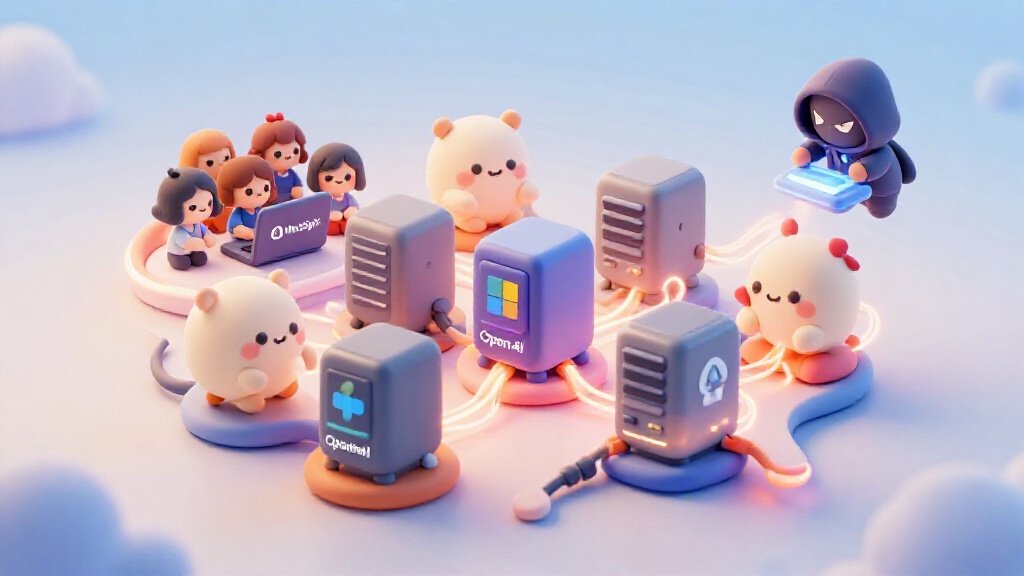
AI data centers are placing immense strain on the US power grid, consuming roughly 70 billion kilowatt-hours of electricity annually, equivalent to the usage of 6.4 million homes. This surge in demand, driven by companies like Microsoft, OpenAI, and Anthropic, risks causing cascading power outages similar to a 2019 incident in Virginia. Experts warn that current infrastructure cannot handle this load, citing permitting delays and supply chain issues as major hurdles to necessary grid modernization.
Security concerns are mounting alongside infrastructure challenges. Hackers recently won $523,000 at the Pwn2Own Berlin 2026 competition by exploiting zero-day vulnerabilities in AI platforms, including OpenAI Codex, LiteLLM, and Anthropic Claude Code. Researchers also discovered flaws in Microsoft Edge, highlighting the urgent need to secure these rapidly evolving systems before malicious actors can weaponize them.
Legal and ethical debates are also intensifying across various sectors. A federal lawsuit in Nevada, Killinger v. Jager/City of Reno, questions the reliability of facial recognition in policing after a man was wrongly detained. Meanwhile, Drake's new albums have sparked industry-wide discussions about AI's role in music creation, complicating copyright disputes with companies like Suno and Udio.
Despite these challenges, innovation continues. Four student-founded AI companies from Cornell Tech, including MindSight and CyberGuard, recently secured $100,000 investments each to solve real-world problems in mental health and security. Simultaneously, the industry is shifting focus from training models to inference, with organizations investing heavily in deploying AI for chatbots and supply chain optimization to improve efficiency.
Key Takeaways
['AI data centers consume 70 billion kilowatt-hours of electricity yearly, straining the US power grid and risking cascading outages.', 'Permitting delays and supply chain issues are slowing the infrastructure development needed to support growing AI energy demands.', 'Hackers exploited vulnerabilities in OpenAI Codex, LiteLLM, and Anthropic Claude Code during the Pwn2Own Berlin 2026 competition.', 'A federal lawsuit in Nevada challenges the use of facial recognition technology after a citizen was wrongly detained.', "Drake's recent albums have ignited a debate regarding AI usage in music production and copyright integrity.", 'Four student AI startups from Cornell Tech, including MindSight and CyberGuard, won $100,000 investments each.', 'Agentic AI poses a significant cybersecurity threat due to excessive access to sensitive corporate data and systems.', 'The industry is shifting focus from model training to inference to optimize real-world decision-making and customer experiences.', 'McKinsey reports that agricultural traders must adopt AI to manage volatility caused by unpredictable weather and shifting policies.', 'Experts recommend integrating resilience into AI development workflows to protect against data theft and model manipulation.']AI Data Centers Risk Causing Cascading Power Outages
AI data centers use as much electricity as tens of thousands of homes, putting a strain on power grids. This heavy demand creates a risk of cascading power outages that can affect many people at once. A 2019 incident in Virginia showed how a single data center failure can disrupt the entire grid. Experts warn that current grids are not built to handle this growing load. To fix this, we need better grid modernization and more efficient data center technologies.
US Power Grid Struggles to Meet AI Data Center Demand
The US power grid is struggling to keep up with the rapid growth of AI data centers. A report from the National Renewable Energy Laboratory shows that permitting delays and supply chain issues are slowing down infrastructure development. These data centers use about 70 billion kilowatt-hours of electricity yearly, which equals the usage of 6.4 million homes. This high energy use also contributes to 1% of global greenhouse gas emissions. Experts suggest using renewable energy and building more efficient centers to solve this problem.
Anthropic Product Lead Discusses Claude Code Limits
Cat Wu, the product lead for Claude Code at Anthropic, discussed the future of the tool in a recent interview. She explained that the company does not have a long-term roadmap for Claude Code right now. Instead, they are betting that improvements in model capabilities will make a fixed plan unnecessary. The conversation also covered usage limits and the concept of a lean harness for developers. This approach allows the tool to evolve quickly based on new signals from the user base.
Four Student AI Companies Win Cornell Tech Awards
Four student-founded AI companies won the Cornell Tech Startup Awards on May 14. The winners received $100,000 investments each for their innovative projects. The companies are MindSight for mental health, SupplyChainAI for logistics, CyberGuard for security, and LearnAI for education. These teams were chosen from over 100 applicants for solving real-world problems with AI. Winners will also get mentorship and resources from the Cornell Tech network.
AI Security Gap: Need for Model and Data Resilience
Companies are facing new risks as they rush to build and deploy AI systems quickly. A major blind spot in AI security is the lack of resilience for proprietary models and training data. Attackers can query models to steal sensitive information like customer files or sales forecasts without breaking into databases. Recovering from such a breach is expensive and time-consuming, often costing millions to retrain models. Experts recommend integrating resilience into development workflows and creating a new practice called ResOps to manage these risks.
Drake New Albums Spark Debate Over AI in Music
Drake's new albums 'Iceman,' 'Habibti,' and 'Maid of Honour' have started a debate about AI in music creation. While Drake has not confirmed using AI, online speculation suggests his albums show signs of AI-assisted tools. The music industry is already dealing with legal challenges from companies like Suno and Udio over copyright issues. Millions of AI-assisted tracks are now on streaming platforms, raising questions about transparency. Artists and labels are struggling to define the line between human creativity and machine-generated content.
Pwn2Own Berlin Hackers Win $523,000 and Target AI
Hackers won $523,000 on the first day of the Pwn2Own Berlin 2026 competition. Researchers found 24 zero-day vulnerabilities across major software and AI products. Orange Tsai of DEVCORE Research Team won $175,000 for escaping the Microsoft Edge sandbox. Several teams also exploited AI platforms like LiteLLM, OpenAI Codex, and LM Studio. The competition aims to find flaws before malicious actors can use them. Day two will test more targets including Microsoft SharePoint and Anthropic Claude Code.
Nevada Lawsuit Questions AI Use in Police Work
A federal lawsuit in Nevada highlights the risks of using facial recognition in policing. Jason Killinger was wrongly detained after the software misidentified him as a banned person at the Peppermill Resort. Police released him after fingerprints proved his innocence, but he filed a lawsuit alleging false arrest. The case, Killinger v. Jager/City of Reno, claims officers relied too much on the technology without proper checks. This incident raises concerns about AI bias and accuracy in law enforcement.
McKinsey Says Ag Merchants Need AI for Trading
McKinsey reports that agricultural traders must restructure their operations to use AI and agility. Traditional trading models are failing due to unpredictable weather, shifting policies, and price volatility. Companies need to move from regional decision-making to a unified global approach. Agentic AI systems can help coordinate decisions and optimize value chains across the entire business. However, poor data quality remains a major bottleneck that must be fixed for these tools to work effectively.
Agentic AI Becomes Major Cybersecurity Threat
New research warns that Agentic AI poses a significant threat to cybersecurity. Many companies give these AI tools excessive access to sensitive data and internal systems. This creates a risk that compromised AI could access confidential information or execute unauthorized actions. Incident response teams struggle to detect these threats because AI operates at high speeds and volumes. Experts urge businesses to adopt a least privilege model and establish stronger governance frameworks to protect against these risks.
Inference Becomes the New Focus for AI Companies
Companies are shifting their focus from training AI models to using them for inference. Inference is the process of using trained models to make predictions or decisions for real-world tasks. This shift is driven by the need for accurate decision-making and new business opportunities. Organizations are investing heavily in deploying inference models for chatbots, virtual assistants, and supply chain optimization. Successfully using inference models will help companies improve efficiency and customer experiences.
Sources
- How AI data centers create cascading power outages
- AI data centers have U.S. power grid struggling to keep up
- Claude Code's product lead talks usage limits, transparency, and the "lean harness"
- Four student-founded AI companies win Cornell Tech Startup Awards
- The blind spot in AI security: Resilience for model and training data
- Drake's New Albums Spark AI Music Debate
- Pwn2Own Berlin 2026, Day One: $523,000 paid out, AI products fall
- Facial recognition lawsuit raises questions about AI use in policing
- McKinsey: Agricultural Merchants Must Restructure Trading with AI and Agility
- Research terms Agentic AI as a major Cyber Threat
- Inference is the new AI gold rush
Comments
Please log in to post a comment.