




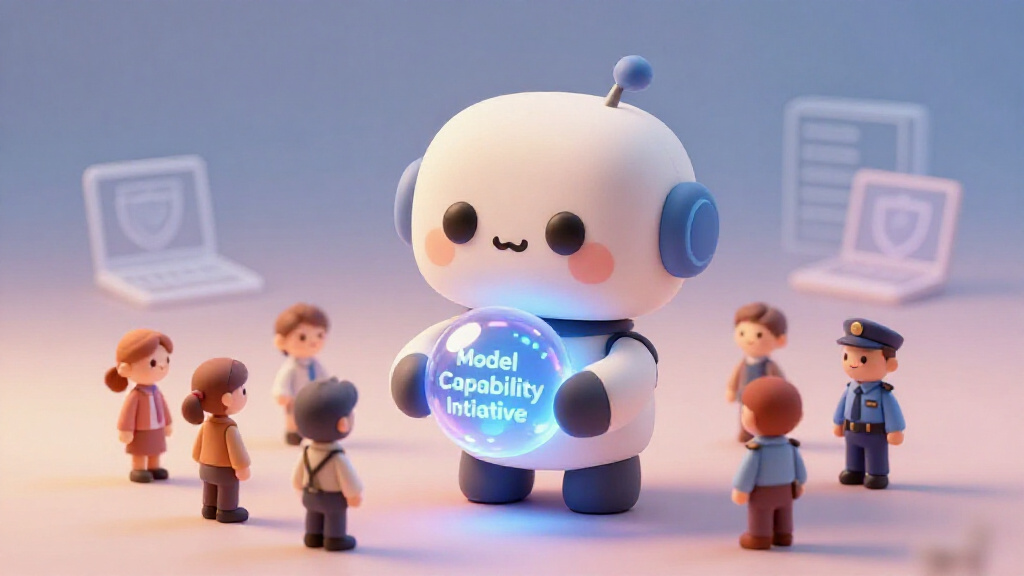
Meta is rolling out the Model Capability Initiative, a new internal tool that tracks mouse movements, clicks, and keystrokes on U.S. employee laptops. This software captures occasional screenshots of work-related apps to train autonomous AI agents under the Agent Transformation Accelerator program. The data is strictly for model training and will not influence performance reviews, though the move has sparked internal backlash regarding privacy and opt-out mechanisms.
While Meta races to build workplace AI, competitors like OpenAI and Anthropic are also advancing their capabilities. Anthropic recently released its Mythos model to over 40 organizations for security testing, but CISA remains excluded due to the model's high vulnerability discovery potential. Meanwhile, a scammer used Gemini to create an AI influencer named Emily Hart, successfully targeting conservative audiences before the account was banned for fraud.
AI adoption is reshaping various industries. Product managers report "smiling exhaustion" as tools like Claude boost productivity while increasing pressure. In real estate, AI still lacks the empathy needed for high-stakes transactions, potentially costing clients significant sums. Universities like the University of Washington are integrating automation into administrative systems, though faculty express concern over the lack of specific details on implementation.
Security and procurement are becoming critical gatekeepers. The U.S. Justice Department is prioritizing access to sensitive data when vetting AI vendors. New Charter Technologies is expanding its partnership with ICG to deliver Microsoft-based cloud and security solutions for small businesses. Organizations are urged to conduct thorough risk assessments before adopting chatbots, balancing potential benefits against unknown threats.
Key Takeaways
['Meta is installing the Model Capability Initiative to track employee mouse movements and keystrokes for AI training.', 'The collected data will feed into the Agent Transformation Accelerator but is not used for performance reviews.', "Meta's internal rollout has triggered employee backlash over privacy concerns and lack of opt-out options.", 'Anthropic released its Mythos model to 40+ organizations for security testing but excluded CISA.', 'A scammer used Gemini to create an AI influencer named Emily Hart to target conservative audiences.', "AI is causing product managers to experience 'smiling exhaustion' due to increased productivity and stress.", 'AI remains unreliable for real estate transactions due to a lack of human empathy and local judgment.', 'The U.S. Justice Department is using procurement to gatekeep AI companies based on data security risks.', 'The University of Washington is integrating AI into administrative systems, sparking faculty concerns.', 'New Charter Technologies is partnering with ICG to enhance Microsoft-based cloud and security services.']Meta installs tracking software on employee laptops for AI training
Meta is installing new tracking software on U.S. employee computers to capture mouse movements, clicks, and keystrokes for training its artificial intelligence models. The tool, called Model Capability Initiative, runs on work-related apps and websites and takes occasional screenshots of employee screens. Meta says this data will help its AI agents learn how humans interact with computers, such as using dropdown menus and keyboard shortcuts. The company stated the data will not be used for performance reviews and that safeguards protect sensitive content.
Meta captures employee screen activity to train autonomous AI agents
Meta announced it will use internal data collection to improve its AI for Work efforts, now rebranded as the Agent Transformation Accelerator. CTO Andrew Bosworth explained that the goal is for AI agents to primarily do the work while humans direct and review them. A spokesperson confirmed that data from the Model Capability Initiative tool will feed into these efforts. Meta emphasized that the collected information will only be used for model training and not for any other purpose.
Meta monitors employee computer usage to refine AI training data
Meta workers in the U.S. will have their computer usage monitored to enable the company to fine-tune its AI training capabilities. The company says the data collected will not be used for performance evaluations. Such monitoring is illegal in some countries such as Italy. Meta is installing new tracking software on U.S.-based employees' computers to capture mouse movements, clicks and keystrokes for use in training its artificial intelligence models.
Meta launches internal tool to track employee screen activity
Meta is installing new tracking software on US-based employees' computers to capture mouse movements, clicks and keystrokes for use in training its artificial-intelligence models. The tool will run on a list of work-related apps and websites and will also take occasional snapshots of the content on employees' screens for context. Meta spokesperson Andy Stone said the data collected would not be used for performance assessments or any other purpose besides model training.
Reuters reports Meta tracks employee mouse and keyboard activity
Meta will begin tracking the mouse movements, clicks, and keystrokes of its US employees to generate high-quality training data for future AI agents. The news organization cites internal memos posted by the Meta Superintelligence Labs team in reporting on the new Model Capability Initiative employee-tracking software. That software will operate on specific work-related apps and websites and also make use of periodic screenshots to provide context for the AI training.
Meta tracks employee screens and keystrokes to build AI tools
Meta is racing to build AI agents capable of performing white-collar tasks on their own amid competition from OpenAI and Anthropic. The company added that safeguards are in place to protect sensitive content and that the data will not be used for any other purpose. The move comes as the industry hunts for training data to use in the workplace itself. Meta has rapidly accelerated its AI spending with CEO Mark Zuckerberg committing up to $135 billion in capital expenditure for 2026.
Meta uses internal tool to capture employee mouse and keystrokes
Meta is installing new tracking software on U.S.-based employees' computers to capture mouse movements, clicks and keystrokes for use in training its artificial-intelligence models. The tool, called Model Capability Initiative, will run on a list of work-related apps and websites and will also take occasional snapshots of the content on employees' screens for context. Meta spokesperson Andy Stone acknowledged that the MCI data would be among those inputs for the Agent Transformation Accelerator initiative.
Meta tracks employee clicks and keystrokes to train AI models
Meta is installing new tracking software on U.S.-based employees' computers to capture mouse movements, clicks and keystrokes for use in training its artificial-intelligence models. The tool will run on a list of work-related apps and websites and will also take occasional snapshots of the content on employees' screens for context. The data-gathering announcement comes a day after Meta CTO Andrew Bosworth told employees about increased internal data collection efforts.
Meta deploys keystroke tracking tool for AI training purposes
Meta has installed a new internal tool to capture mouse movements, clicks, keystrokes and occasional screen snapshots from US employees to train its AI agents. The program, named Model Capability Initiative as part of a broader Agent Transformation Accelerator effort, is restricted to work apps. The rollout has triggered strong internal backlash over privacy and consent, with employees asking how to opt out.
Meta's new AI tool tracks staff activity and sparks concern
Meta is installing new software on its US employees' computers that will track their keystrokes and mouse movements to train its AI, and it's sparking backlash within the company. Business Insider obtained the full internal announcement about the launch of the new AI training program. The post says that the software helps AI models improve how humans actually use computers, such as using keyboard shortcuts and choosing from dropdown menus.
Meta deploys internal tool to capture employee mouse movements
Meta is deploying a new internal tool, the Model Capability Initiative, on US employees' work computers to capture mouse movements, clicks, keystrokes and periodic screenshots for training AI agents. The program is part of a broader Agent Transformation Accelerator push to build autonomous workplace agents. The rollout has prompted internal backlash over privacy and opt-out options, and it raises compliance questions for jurisdictions with strict workplace privacy laws.
Meta plans to turn employee clicks into AI training data
Meta has apparently decided to drop all pretenses that workers are not effectively training their own replacements when they work with AI tools. Per the memo seen by Reuters, the surveillance tool is called Model Capability Initiative, and it will record the screens of employees as they go about their work. The company will reportedly increase its internal data collection efforts as part of its AI for Work program, which has been renamed the Agent Transformation Accelerator.
Scammer uses AI-generated MAGA influencer to target men
A 22-year-old Indian medical student tricked scores of Trump supporters by creating an AI-generated influencer named Emily Hart. Sam created the account using Gemini to generate content that targeted conservative audiences with pro-Christian and pro-Second Amendment messages. The account gained over 10,000 followers on Instagram and monetized through Fanvue within a month. The account was eventually banned for fraudulent activity.
Scammer dupes MAGA men with AI-generated influencer model
A cash-strapped med student has revealed how he made thousands of dollars by duping super dumb MAGA men with an AI-generated model. In January, Sam created Emily Hart, a conservative twenty-something inspired by Jennifer Lawrence and Sydney Sweeney who loves The Bible, fishing, and beer. He claimed that the service even said such niche audiences are often loyal and have disposable income. The account was eventually banned for fraudulent activity.
AI transforms and stresses product management roles
AI is simultaneously energizing and exhausting product managers, accelerating idea-to-prototype cycles while increasing relentless pace and stress. Former Meta VP of product Nikhyl Singhal describes a phenomenon he calls smiling exhaustion. PMs gain tangible productivity from tools like Claude and other generative models, yet feel constant alertness and fear of falling behind or becoming roadkill. This dynamic is reshaping day to day PM work and expectations.
AI procurement becomes a national security gatekeeper
The United States is already deciding which AI companies are trusted inside its national security systems through procurement. The Justice Department's Data Security Program centers national security risk on access to sensitive data, not just ownership. The General Services Administration has proposed an AI contract clause requiring disclosure, traceability, human oversight, and limits tied to American AI systems. Recent litigation involving a leading AI firm shows how quickly procurement decisions can begin to resemble exclusion.
AI remains a subpar replacement for real estate agents
AI can speed up tasks, but it still lacks human judgment, local heuristics, and empathy. A Florida sale where limited guidance may have cost $75,000 to $225,000 illustrates the difference between a tool and a trusted advisor. The column cites the T.A.P. framework to quantify agent value and emphasizes that moving is often considered one of the top five stressors in life. Human empathy is essential to help clients close difficult chapters with dignity.
Determining AI risk calculus is crucial for chatbot adoption
When adopting AI, organizations must do an AI risk assessment that combines with a full-on cost-benefit analysis. Public and private institutions are rushing to make use of the latest chatbots, but some skip putting together a cost-benefit analysis before proceeding. The Taubman Center for State and Local Government at the Harvard Kennedy School recently described a helpful advisory report on AI risk frameworks. Known risks and potential unknown risks must be considered before adoption.
UW to leverage AI and automation in administrative overhaul
The University of Washington is shifting toward integrating automation and artificial intelligence into administrative systems under the new Operational Excellence agenda. Officials acknowledged that specifics regarding how these technologies will be used are not yet available. The lack of detail has sparked some concern from faculty, including Emily Bender, a linguistics professor. The university recognizes that change can be unsettling and disrupts existing ways of working.
New Charter Technologies expands with ICG for AI and security
New Charter Technologies is partnering with ICG to advance AI, security, and cloud capabilities for SMB clients. ICG has evolved into a modern managed services provider delivering cloud-first solutions and security-focused services. The company operates with a fully recurring revenue model and a strong emphasis on Microsoft-based technologies including Azure and Microsoft 365. The partnership is designed to enhance, not disrupt, the client experience.
CISA lacks access to Anthropic's Mythos AI model
The Cybersecurity and Infrastructure Security Agency does not have access to Anthropic's powerful new AI model, Mythos. Anthropic decided against a public release of Mythos due to its unprecedented ability to quickly discover and exploit security vulnerabilities. Instead, Anthropic provided it to more than 40 companies and organizations who are now testing it and working to shore up their systems. CISA is not on that list.
Freshman engages with AI policy in D.C. seminar
Business analytics major and Honors College freshman Rocio Pena shares her journey from applying to join the FIU in DC Future of Artificial Intelligence fly-in seminar to engaging with leaders in the nation's capital. She attended a three-day visit where she met students from different majors and backgrounds. The FIU in DC team guided them through webinars and curated articles on AI ethics, governance, and innovation. The experience felt less like competition and more like a shared space of learning.
Sources
- Meta To Install Tracking Software On Employee Laptops To Train Its AI: Report
- Exclusive-Meta to start capturing employee mouse movements, keystrokes for AI training data
- Exclusive: Meta to Start Capturing Employee Mouse Movements, Keystrokes for AI Training Data
- Meta to start capturing employee mouse movements, keystrokes for AI training data
- Report: Meta will train AI agents by tracking employees' mouse, keyboard use
- Meta will start tracking employees’ screens and keystrokes to train AI tools
- Exclusive: Meta to start capturing employee mouse movements, keystrokes for AI training data
- Meta to start capturing employee mouse movements, keystrokes for AI training data
- Meta Deploys Keystroke Tracking for AI Training
- Meta's new AI tool tracks staff activity, sparks concern
- Meta Collects Employee Mouse Movements for AI Training
- Meta Plans to Turn Its Employees' Clicks and Keystrokes into AI Training Data
- This Scammer Used an AI-Generated MAGA Girl to Grift ‘Super Dumb’ Men
- Scammer Dupes ‘Dumb’ MAGA Men With AI Model
- AI Transforms and Stresses Product Management Roles
- AI Procurement Is Quietly Becoming a National Security Gatekeeper
- Why AI is still a subpar real estate agent replacement
- Determining AI Risk Calculus Is A Crucial Formula For Successfully Adopting Modern-Day Chatbots And LLMs
- UW to leverage AI and automation in administrative overhaul, but details remain unclear
- New Charter Technologies Expands with ICG to Advance AI, Security, and Cloud Capabilities for SMB Clients
- Scoop: CISA lacks access to Anthropic's Mythos
- Freshman engages with AI policy in D.C.
Comments
Please log in to post a comment.