




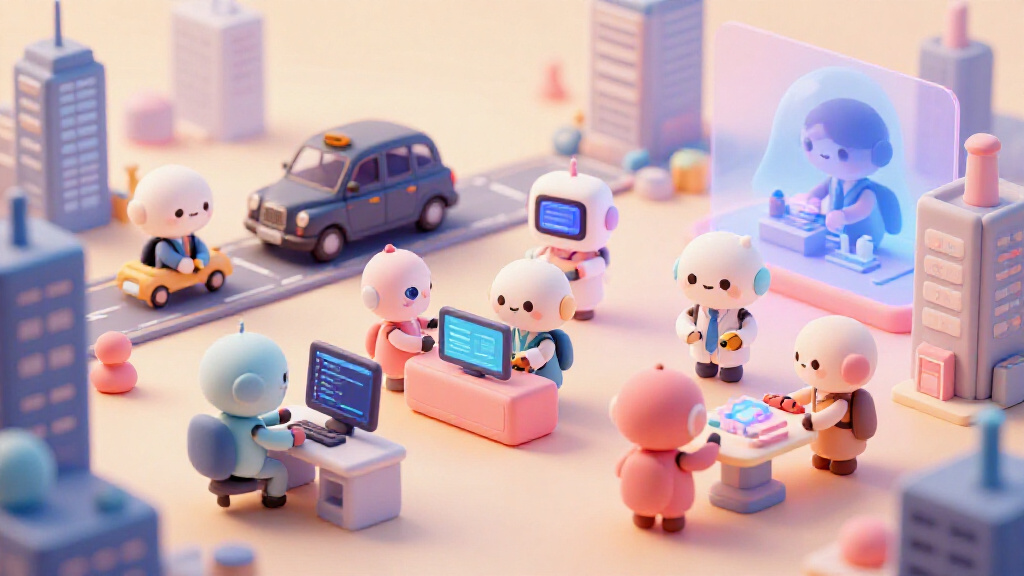
Artificial intelligence is transforming various industries, from cybersecurity to retail. In cybersecurity, AI-powered systems can analyze vast codebases, identify vulnerabilities, and automate attacks, making cyber operations more efficient. However, this shift raises concerns about the potential for AI-driven cyber attacks and the need for collaborative approaches to digital governance.
AI is also being used to improve forecasting, assortment management, and customer experience in the sporting goods industry, as seen in Intersport Deutschland eG's approach. The company is exploring the potential of AI to enhance physical retail experiences and provide personalized services to customers.
In the transportation industry, London black cab drivers are hesitant to adopt autonomous taxis, citing concerns about job displacement and safety. Several companies are testing robotaxis in London, but drivers are skeptical about the technology's ability to navigate the city's complex streets.
China is leading in the development of open-weight AI models, which can be fine-tuned for specific applications. This raises concerns about privacy, censorship, and the potential for AI systems to reflect Chinese government priorities. The US is falling behind in open-weight AI, with companies like Meta and OpenAI focusing on closed models.
AI is also being used in air battle management training, with the Australian Defence Science, Technology and Research Summit featuring a project on AI-enabled air battle management training. The project involves developing AI agents that can act as realistic role players in training exercises, allowing air battle managers to practice decision-making in high-pressure situations.
Key Takeaways
['AI-powered systems can analyze vast codebases, identify vulnerabilities, and automate attacks in cybersecurity.', 'Intersport Deutschland eG uses AI to improve forecasting, assortment management, and customer experience.', 'London black cab drivers are hesitant to adopt autonomous taxis due to concerns about job displacement and safety.', 'China leads in the development of open-weight AI models, raising concerns about privacy and censorship.', 'The US is falling behind in open-weight AI, with Meta and OpenAI focusing on closed models.', 'AI is being used in air battle management training to enhance the effectiveness of training exercises.', 'Schaeffler joins the Innovation Park Artificial Intelligence (IPAI) to collaborate on AI research and development.', 'Mesa Public Library offers free access to LinkedIn Learning, providing over 1,000 courses on AI and other topics.', 'AI-powered assistants and vending machines are being used to boost perfume sales.', 'The impact of automation on jobs varies across industries, and strategies are needed to support workers displaced by automation.']AI Reshapes Cybersecurity: New Threats and Opportunities
The integration of artificial intelligence (AI) in cybersecurity is changing the landscape of digital threats and defense strategies. AI-powered systems can analyze vast codebases, identify vulnerabilities, and automate attacks, making cyber operations more efficient but also more accessible to malicious actors. This shift raises concerns about the potential for AI-driven cyber attacks and the need for collaborative approaches to digital governance. Experts emphasize the importance of shared standards, coordinated defenses, and information sharing to build resilience against cyber threats. The future of cybersecurity will depend on balancing security concerns with the need for open collaboration and innovation.
5 Benefits and Risks of AI in Cybersecurity
Artificial intelligence is transforming cybersecurity by automating threat detection, incident response, and vulnerability management. AI can analyze vast amounts of data to identify patterns and anomalies, enabling faster and more accurate threat detection. However, AI also introduces new risks, such as the potential for biased algorithms and the need for skilled workers to develop and manage AI systems. Organizations must balance the benefits of AI with the risks and develop strategies to mitigate them. AI can also help bridge the cybersecurity talent gap by automating routine tasks and enabling human specialists to focus on strategic work.
London Cabbies Resist Autonomous Taxis
London black cab drivers are hesitant to adopt autonomous taxis, citing concerns about job displacement and safety. The city's taxi industry is regulated, with drivers required to memorize thousands of streets to obtain their license. Several companies are testing robotaxis in London, but drivers are skeptical about the technology's ability to navigate the city's complex streets. The introduction of autonomous taxis could revolutionize the transportation industry, but it also raises concerns about job displacement and the need for workers to adapt to new technologies.
Intersport CFO on AI Strategy and Physical Retail
Intersport Deutschland eG CFO Thomas Storck discusses the company's approach to AI and its role in transforming the sporting goods industry. AI is being used to improve forecasting, assortment management, and customer experience. Storck emphasizes the importance of integrating AI across the value chain and empowering employees to apply AI in their work. The company is also exploring the potential of AI to enhance physical retail experiences and provide personalized services to customers.
China Leads in Open-Weight AI Models
China is leading in the development of open-weight AI models, which can be fine-tuned for specific applications. This raises concerns about privacy, censorship, and the potential for AI systems to reflect Chinese government priorities. The US is falling behind in open-weight AI, with companies like Meta and OpenAI focusing on closed models. Experts warn that the US must invest in open-weight models to maintain its leadership in AI and ensure that AI systems align with democratic values.
ADSTAR Summit to Showcase AI-Enabled Air Battle Management Training
The Australian Defence Science, Technology and Research Summit (ADSTAR) will feature a project on AI-enabled air battle management training. The project involves developing AI agents that can act as realistic role players in training exercises, allowing air battle managers to practice decision-making in high-pressure situations. The AI system was developed in partnership with Macquarie University and simulation company PLEXSYS. The project aims to enhance the effectiveness of air battle management training and improve the preparedness of Royal Australian Air Force personnel.
Schaeffler Joins AI Innovation Platform
Schaeffler, a motion technology company, has joined the Innovation Park Artificial Intelligence (IPAI) to collaborate on AI research and development. IPAI is a platform that brings together industry, academia, and research institutions to develop AI solutions. Schaeffler plans to integrate AI into its product development and manufacturing processes to improve efficiency and innovation. The company aims to leverage IPAI's expertise and resources to accelerate its AI adoption and create new business opportunities.
Mesa Public Library Offers Free AI Courses
The Mesa Public Library is offering free access to LinkedIn Learning, which provides over 1,000 courses on AI and other topics. The library is also hosting in-person events and workshops on AI, including an introduction to AI for beginners and a discussion on the current state of AI. The initiative aims to provide free access to quality training for anyone interested in learning about AI, regardless of their background or skill level.
Misty Vending Machines and AI Assistants Boost Perfume Sales
Perfume sales are being boosted by innovative marketing channels, including vending machines and AI-powered assistants. Fragrance Spot, a perfume vending machine system, has been installed in several locations in Tokyo, allowing users to try perfumes from luxury brands like Dior and Chanel. An AI-powered assistant system, Kaorium, provides recommendations to users on perfume choices based on their preferences. The use of AI and vending machines is helping to make perfume shopping more accessible and convenient.
The Impact of Automation on Jobs
The introduction of automation and AI has raised concerns about job displacement and the future of work. While some predict that automation will lead to widespread job loss, others argue that it will create new opportunities for workers and enhance productivity. The impact of automation on jobs will vary across industries and sectors, and it is essential to develop strategies to support workers who may be displaced by automation. Employers and policymakers must work together to ensure that workers have the skills and training needed to thrive in an AI-driven economy.
'The Comeback' Creator on AI and Creativity
Michael Patrick King, creator of 'The Comeback,' discusses the impact of AI on creativity and the entertainment industry. King warns that AI may be a threat to human creativity, potentially leading to an extinction event for writers and other creative professionals. The use of AI in entertainment raises questions about authorship, ownership, and the role of human creators in the digital age. King's insights highlight the need for a nuanced discussion about the intersection of AI, creativity, and human ingenuity.
Sources
- Cybersecurity Will Swallow Digital Policy in the AI Age
- 5 Benefits And Risks Of Using AI For Cybersecurity
- London cabbies not ready to hand over their keys to AI-powered, autonomous taxis
- Intersport CFO on AI strategy and physical retail
- China Is Beating America in One Key Type of AI
- ADSTAR Summit highlights AI for air battle manager training
- Schaeffler Joins AI Innovation Platform
- Mesa offers courses to learn about AI
- Misty vending machines, AI assistants push perfume sales | The Asahi Shimbun Asia & Japan Watch
- From Henry Ford to Artificial Intelligence: Does Modernization Kill Jobs – or Create Them? | The Saturday Evening Post
- 'The Comeback' creator Michael Patrick King warns AI may be creativity's extinction event
Comments
Please log in to post a comment.