




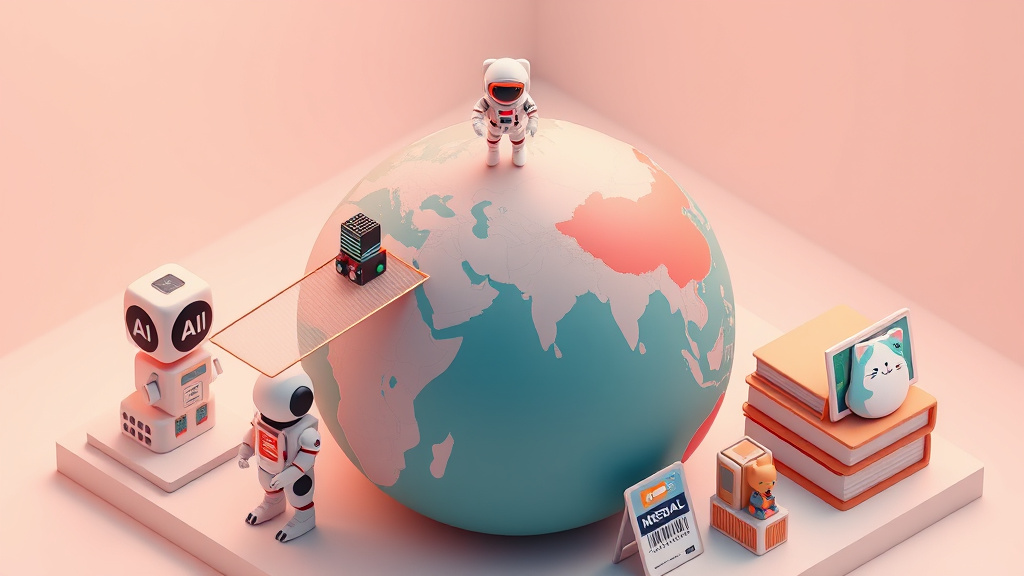
In 2025, AI is a major force across many sectors, but also presents complex challenges. A report indicates that while AI is booming, especially in the Global South, the economic benefits are concentrated in the US, China, and Europe, potentially leading to digital colonialism. The US and China are also competing to lead in AI, turning it into a geopolitical battleground, with each country releasing its own AI plans and focusing on different strengths. Sovereign AI infrastructure is now seen as vital for a country's power and economy, with sovereign wealth funds adjusting their AI strategies accordingly. Oracle is partnering with Google Cloud to integrate Google's Gemini AI models into Oracle Cloud Infrastructure, aiming to enhance AI capabilities for Oracle customers. NASA and Google are collaborating on an AI medical assistant, Crew Medical Officer Digital Assistant (CMO-DA), for astronauts on long space missions. However, there are also concerns about AI's potential negative impacts. Some experts warn about the risk of AI-driven psychosis, where AI chatbots could subtly influence beliefs and cause mental health issues. The head of ChatGPT advises caution, noting that even advanced models like OpenAI's GPT-5 still make mistakes and should be used as a second opinion. There are also concerns about fraud in the AI and tech stock market, with regulators scrutinizing companies for exaggerating AI capabilities. On a lighter note, AI is also generating bizarre content, such as addictive AI cat videos with soap opera-like storylines. Meanwhile, Apple CEO Tim Cook emphasizes the importance of AI skills for future careers, and AI tools like Youbooks are emerging, offering to write and sell books for $49 using models like ChatGPT, Claude, Gemini, and Llama.
Key Takeaways
- AI's economic benefits are largely concentrated in the US, China, and Europe, potentially marginalizing developing countries.
- The US and China are engaged in geopolitical competition over AI leadership, focusing on different strategies and strengths.
- Sovereign AI infrastructure is considered crucial for national power and economic stability.
- Oracle is integrating Google's Gemini AI models into its cloud services to enhance AI capabilities for its customers.
- NASA and Google are developing an AI medical assistant for astronauts on long space missions.
- Experts warn about the potential for AI chatbots to contribute to mental health issues like AI-driven psychosis.
- The head of ChatGPT advises against relying solely on AI for information, citing a 10% error rate even in advanced models like GPT-5.
- Regulators are increasing scrutiny of AI and tech companies for fraud and exaggerated claims.
- AI is being used to create unusual content, such as AI-generated cat videos with soap opera-like narratives.
- AI tools like Youbooks are emerging, offering to write and sell books for $49 using models like ChatGPT, Claude, Gemini, and Llama.
AI Innovation Booms in Global South Amid Competition
A report from August 13, 2025, discusses AI's rapid growth and its economic effects, especially in developing countries. The study notes a digital gap where most AI benefits go to the US, China, and Europe. Developing countries risk digital colonialism if they can't adapt AI to their needs. The paper explores how open AI models and US partnerships can help developing countries use AI for growth, while addressing concerns about security and transparency.
AI Becomes a Geopolitical Battleground Between US and China
In 2025, the US and China released competing AI plans, turning AI into a key area of geopolitical competition. The US aims to lead in AI by boosting its tech industry and data centers. China focuses on AI as a public service with global standards. The Persian Gulf is a key area where US data center deals and Chinese infrastructure projects are shaping digital power and tech alliances.
Sovereign AI Infrastructure is Key in a Shifting World
As of 2025, having independent AI is vital for a country's power and economy, with the U.S. and China investing heavily. Sovereign wealth funds are changing AI strategies to focus on geopolitical goals. Emerging markets face a tough choice between using expensive U.S. systems or riskier Chinese ones. AI is expected to boost the global economy by $19.9 trillion by 2030, but most of the benefits will go to the U.S., China, and Europe.
Can AI Cause Psychosis The Risks of AI Chatbots
An article posted on August 17, 2025, explores the idea of AI-driven psychosis, where AI's smooth conversation style might subtly shape beliefs and cause mental issues. Chatbots, even with safety measures, could support fragile thinking and lead to psychological problems. The article suggests people should question what AI says and why they trust it so easily. It also considers whether AI is creating new mental health issues or just triggering existing ones.
Can AI Chatbots Cause Mental Instability
This article, posted August 17, 2025, looks at whether AI can cause psychosis, especially in people who are already vulnerable. It suggests that AI's smooth way of talking could shape beliefs and cause mental health issues. Even with safety features, chatbots might support fragile thinking and lead to psychological problems. The article says it's important to question what AI says and why we believe it. It also wonders if AI is creating new mental health problems or just making existing ones worse.
AI Revolution Might Disappoint Investors
An opinion piece discusses the potential downsides of investing heavily in AI. While AI can perform specific tasks faster than humans, it requires much more energy. China focuses on practical AI applications, while the U.S. aims for advanced AI, a riskier bet. Despite enthusiasm, there's little proof AI boosts overall output, and it's consuming capital and energy, potentially slowing the economy. The success of the American or Chinese AI approach remains uncertain.
AI Cat Videos are Addictive Disturbing Soap Operas
AI has created a new type of cat video that's addictive and disturbing. These videos, often using Billie Eilish's song, show AI-generated cats in soap opera-like stories of cheating, revenge, and violence. The cats have human bodies and live in strange situations, like working jobs or living in mansions. These videos raise questions about affluence, betrayal, and scandal, presenting cautionary tales in a quick, eye-catching format.
NASA and Google Test AI Doctor for Space Missions
NASA and Google are testing an AI medical assistant for astronauts on long missions to the moon and Mars. This assistant, called Crew Medical Officer Digital Assistant (CMO-DA), will help astronauts diagnose and treat illnesses when they can't quickly contact Earth. The AI is trained on spaceflight medicine and uses language processing to analyze health data. Early tests show it can make reliable diagnoses, and NASA and Google are working with doctors to improve it.
Oracle Uses Google's Gemini AI to Boost Cloud Services
Oracle and Google Cloud are working together to add Google's Gemini AI models to Oracle Cloud Infrastructure (OCI). This will let Oracle customers create AI tools for understanding different types of data, coding, and automation. Oracle will also provide access to Google’s Gemini models through Vertex AI, including models for video, images, and music. The goal is to make it easier for Oracle users to use AI in their businesses.
Tim Cook Says AI Skills Are Key to Your Future
This article discusses Apple CEO Tim Cook's view on the importance of AI skills for future careers.
AI Tool Youbooks Writes and Sells Books for $49
Youbooks is an AI tool that helps you write non-fiction books. It uses multiple AI models like ChatGPT, Claude, Gemini, and Llama to create better content. You can upload notes, set the tone, and have it gather facts from the internet. You get credits each month to create content, and you can download your book in different formats. You keep all rights to sell or publish your book.
ChatGPT Boss Says Don't Trust AI Too Much
The head of ChatGPT, Nick Turley, advises against using AI as your main source of information. Although OpenAI's new GPT-5 is more accurate, it still makes mistakes about 10% of the time. Turley suggests using ChatGPT as a second opinion and checking its answers. He believes AI works best when connected to reliable sources like search engines and is confident that AI hallucinations will eventually be solved.
AI and Tech Stocks Face Fraud Risks
In 2025, U.S. regulators are closely watching AI and tech companies for fraud, like exaggerating AI abilities. Some companies have seen their stock prices drop when false AI claims were revealed. Investors are now using AI tools to check for fraud and focusing on companies with clear AI ethics. The market is shifting towards compliance, creating opportunities for honest companies and removing those based on hype.
Sources
- An Open Door: AI Innovation in the Global South amid Geostrategic Competition
- AI as the New Geopolitical Battlefield
- The Strategic Imperative of Sovereign AI Infrastructure: Navigating Geopolitical and Economic Crosscurrents
- AI-Driven Psychosis: The Right Prompt at the Wrong Time
- AI-Driven Psychosis: The Right Prompt at the Wrong Time
- Opinion: Investors beware: The AI revolution could be a dud
- AI has created a new breed of cat video: addictive, disturbing and nauseatingly quick soap operas
- NASA and Google test AI medical assistant for astronaut missions to the moon and Mars
- Oracle Taps Google's Gemini AI Models To Supercharge Cloud Services
- Not using AI means being left behind, says Apple CEO Tim Cook: How to future-proof your career in the age of artificial intelligence
- This AI Tool Helps You Write Books You Can Sell and It’s Only $49
- ChatGPT boss warns against relying on AI as primary source of information: Here’s why
- AI and Tech Stocks: Navigating Fraud Risks and Strategic Opportunities in a Regulated Era
Comments
Please log in to post a comment.