




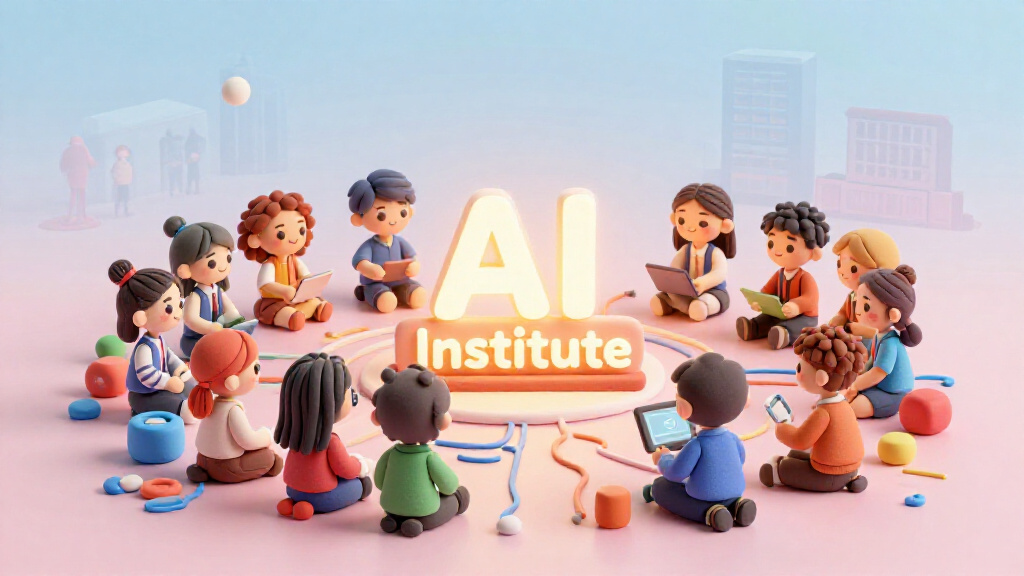
North Carolina Central University has launched the Institute for Artificial Intelligence and Emerging Research, becoming the first Historically Black College and University to open a dedicated AI research center. The institute was partially funded by a $1 million grant from Google and an equipment investment from Lenovo.
The university is taking a proactive approach to AI education, requiring first-year students to take an introductory AI course and offering a new AI minor in the fall. Faculty also have access to seed grant funding for AI research.
Meanwhile, concerns over AI's environmental impact and data centers are growing. Over 70% of Americans oppose AI data centers, with nearly 40 people arrested this year in backlash to the AI factory buildout. Residents are fighting back against data center projects, citing concerns over energy consumption and environmental impact.
As AI technology advances, experts are calling for new trust models to establish accountability and verify identity. AI agents are evolving from information assistants to autonomous actors capable of browsing websites, logging into accounts, and completing transactions.
In other developments, researchers at the Korea Institute of Science and Technology have developed a new learning technique for neuromorphic AI, making it more accurate and efficient. Doctronic has launched a pilot program in Utah to test the use of AI in prescription refill management.
Schools are also grappling with the integration of AI in education. Nebraska schools are navigating the role of AI in classrooms, including concerns over AI grading tools and the need for education on AI usage. Roanoke City Public Schools plans to use AI tools to track student usage and ensure that AI is used responsibly.
Key Takeaways
• North Carolina Central University launched the Institute for Artificial Intelligence and Emerging Research with a $1 million grant from Google. • The university requires first-year students to take an introductory AI course and offers a new AI minor. • Over 70% of Americans oppose AI data centers due to environmental concerns. • Experts call for new trust models as AI agents become more autonomous. • Researchers developed a new learning technique for neuromorphic AI. • Doctronic launched a pilot program for AI-powered prescription refill management. • Nebraska schools are navigating AI integration in education. • Roanoke City Public Schools will use AI tools to track student usage. • Investors' expectations of AI may be unrealistic, according to Moody's. • AI is transforming the scientific process, but its approach may need to change.NC Central opens AI institute for all
North Carolina Central University has launched an artificial intelligence institute, the first of its kind at a Historically Black College and University. The institute aims to guide students on the responsible use of AI and provide training spaces for research and development. The university requires first-year students to take an introductory AI course and offers a new AI minor in the fall. Faculty also have access to seed grant funding for AI research.
NCCU launches AI Research Institute
North Carolina Central University has opened the Institute for Artificial Intelligence and Emerging Research, becoming the first HBCU to launch a dedicated AI research center. The institute features several AI research and training spaces, including an AI Literacy Studio, Machine Learning and Data Science Studio, and Robotics and Emerging Tech Lab. The project was funded in part by a $1 million grant from Google and an equipment investment from Lenovo.
Most Americans oppose AI data centers
Over 70% of Americans oppose AI data centers, with protests intensifying across the US. Nearly 40 people have been arrested this year in backlash to the AI factory buildout. Residents are fighting back against data center projects, citing concerns over energy consumption and environmental impact.
AI agents need new trust models
As AI agents become more autonomous, organizations need to rethink how they establish trust, verify identity, and assign accountability. AI agents are evolving from information assistants to autonomous actors capable of browsing websites, logging into accounts, and completing transactions.
Self-driving cars face hurdles
Self-driving car adoption faces significant hurdles, primarily due to liability and regulatory debates. Despite some autonomous vehicles demonstrating improved safety records, the industry is struggling to overcome challenges. Experts suggest a shift in AI design philosophy, focusing on human-AI partnerships rather than full autonomy.
KIST unveils low-power AI training method
Researchers at the Korea Institute of Science and Technology have developed a new learning technique for neuromorphic AI, making it more accurate and efficient. The method, called A²SG, improves the training of spiking neural networks, reducing energy consumption and enabling real-time processing.
Doctronic's AI prescription refill pilot
Doctronic has launched a pilot program in Utah to test the use of AI in prescription refill management. The program aims to improve patient outcomes and reduce healthcare costs by using machine learning algorithms to analyze patient data and detect potential issues.
Nebraska schools grapple with AI
Nebraska schools are navigating the integration of artificial intelligence in education. Parents, teachers, and students are grappling with the role of AI in classrooms, including concerns over AI grading tools and the need for education on AI usage.
The future of AI in science
AI is transforming the scientific process, but the approach of relying on large datasets may not be the most effective way to accelerate science. Instead, AI agents could play a crucial role in driving discovery by mimicking the human process of research.
Investors' AI expectations
Investors' expectations of AI may be unrealistic, according to Moody's. While AI could live up to the hype, it may still leave investors disappointed if it fails to meet lofty expectations.
AI in the classroom
As AI becomes more prevalent in education, schools are working to implement it in a way that is safe and secure. Roanoke City Public Schools plans to use AI tools to track student usage and ensure that AI is used responsibly.
Sources
- 'AI is for everyone:' NC Central opens artificial intelligence institute
- NCCU launches first AI Research Institute at an HBCU
- Over 70% of Americans oppose AI data centers; US protests intensify as more arrests are being made — almost 40 arrested this year in backlash to AI factory buildout
- AI Agents Demand New Trust Models for Digital Transactions
- Where Are The Self-Driving Cars?
- KIST unveils neuromorphic AI training method for an era of low-power intelligence
- Inside Doctronic’s AI prescription refill pilot program in Utah
- AI in Nebraska education: Parents, teachers and students grapple with artificial intelligence in schools
- AI for science needs reasoning, not just data
- AI could live up to the hype and still leave investors disappointed: Moody's
- Artificial intelligence in the classroom: what could it look like?
Comments
Please log in to post a comment.