




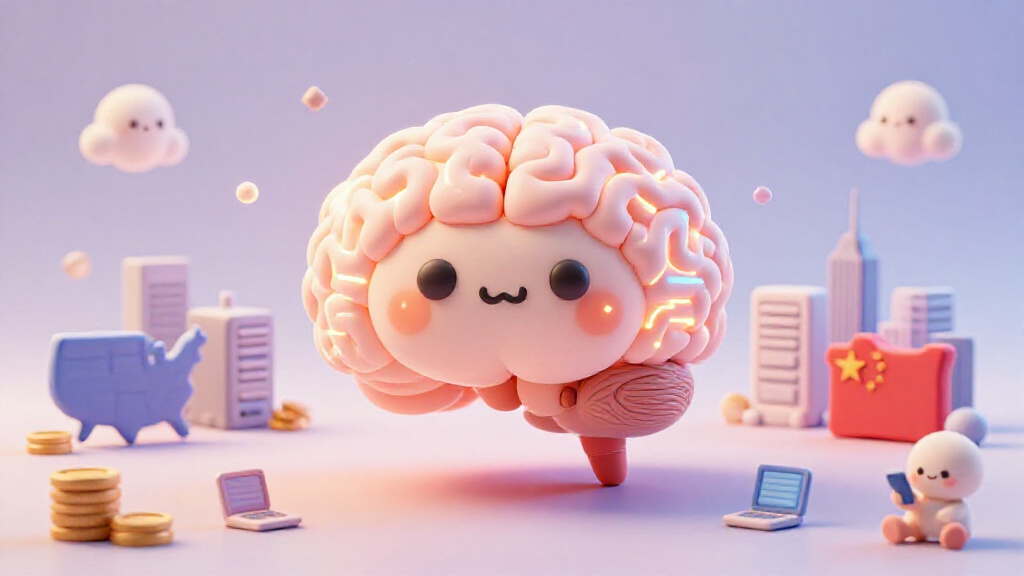
The global race for artificial intelligence leadership intensifies, with China and the United States at the forefront. Chinese cities like Hangzhou and Shanghai are pouring hundreds of millions into AI companies, adopting a state-led investment model. In contrast, the US government relies on private companies and capital markets to drive innovation. This competition is crucial for both nations' economic and technological futures, with the US targeting advanced artificial general intelligence and China focusing on immediate benefits from current AI models.China is making significant strides, aiming to boost AI innovation by 2026 and become a top AI power by 2027, fueled by its talent pool. Companies such as DeepSeek have already released powerful AI models that offer strong performance at a lower cost than many US rivals. This robust AI spending by major tech companies contributed to strong market gains in 2025, with the S&P 500 rising 17.9 percent, the Dow 14.9 percent, and the Nasdaq 21.2 percent, even amidst global challenges.Major tech players continue to integrate AI into their offerings. Google Slides, for instance, received a significant AI upgrade with Gemini, powered by Nano Banana Pro, enabling users to create custom images, infographics, and improve layouts directly within presentations. Meanwhile, Anthropic champions an efficient approach to AI development, focusing on maximizing capability per dollar spent. Co-founder Daniela Amodei highlights their success in building powerful models with fewer resources, contrasting with rivals like OpenAI, which has committed trillions to computing power.The surge in AI demand in 2025 has created a massive need for HBM memory chips, vital for AI data centers. Micron's CEO, Sanjay Mehrotra, anticipates tight supplies beyond 2026, with Micron and SK hynix already selling out their 2026 HBM chips. China's CXMT plans to raise $4.2 billion to boost its own memory production. Beyond hardware, AI is influencing daily life, from concerns about AI-driven pricing raising consumer costs, as noted by Consumer Reports, to Hollywood schools like Harvard-Westlake and Sierra Canyon teaching responsible AI use with tools like ChatGPT, moving past initial cheating worries. Even a new app called 'Death Clock' uses AI to predict life expectancy, while church leaders express caution about AI-generated music from artists like Solomon Ray, preferring human emotion in worship songs.
Key Takeaways
- China and the US are in a major AI leadership competition, with China investing hundreds of millions and aiming to be the top AI power by 2027.
- Chinese AI firms like DeepSeek are releasing powerful, cost-effective models, supported by government initiatives and a growing talent pool.
- Significant AI spending by major tech companies contributed to strong market gains in 2025, with the S&P 500 up 17.9%, Dow 14.9%, and Nasdaq 21.2%.
- Google Slides received an AI upgrade with Gemini, powered by Nano Banana Pro, enabling features like custom image generation and layout improvements.
- Anthropic focuses on an efficient AI development strategy, creating powerful models with fewer resources, contrasting with OpenAI's commitment of trillions to computing power.
- The rise of AI in 2025 created massive demand for HBM memory chips, leading to tight supplies beyond 2026, with Micron and SK hynix selling out 2026 stock.
- China's largest memory maker, CXMT, plans to raise $4.2 billion to boost its production and develop new memory technologies.
- AI-driven pricing experiments can lead to higher consumer costs for goods like groceries, prompting some companies like Instacart to stop using these methods.
- Los Angeles private schools, including Harvard-Westlake, are teaching students responsible AI use, including with ChatGPT, moving beyond initial concerns about cheating.
- Church leaders express caution regarding AI-generated music, preferring human emotion and soul in worship songs, despite the emergence of artists like Solomon Ray.
China and US Compete for AI Leadership
China and the United States are in a major competition to lead in artificial intelligence. Chinese cities like Hangzhou and Shanghai are investing hundreds of millions of dollars to boost AI companies, following a state-led approach. In contrast, the US government lets private companies and capital markets drive innovation. This race is seen as vital for both countries' economic and technological futures. The US aims for advanced artificial general intelligence, while China focuses on immediate benefits from current AI models.
China and US Compete for AI Leadership
China and the United States are in a major competition to lead in artificial intelligence. Chinese cities like Hangzhou and Shanghai are investing hundreds of millions of dollars to boost AI companies, following a state-led approach. In contrast, the US government lets private companies and capital markets drive innovation. This race is seen as vital for both countries' economic and technological futures. The US aims for advanced artificial general intelligence, while China focuses on immediate benefits from current AI models.
China Aims for AI Leadership by 2027
China is making big moves to boost its artificial intelligence innovation in 2026, making AI a key part of its economic plans. Companies like DeepSeek have already released powerful AI models that perform well and cost less than US rivals. Experts believe Chinese AI firms will keep growing due to government support, more funding, wider use of AI, and a growing pool of skilled workers. One startup co-founder even predicts China will become the world's top AI power by 2027, thanks to its many talented people.
2025 Markets Soared Despite Tariffs and AI Worries
The year 2025 brought strong market gains across stocks and bonds, even with global challenges and questions about AI growth. The S&P 500 rose by 17.9 percent, the Dow by 14.9 percent, and the Nasdaq by 21.2 percent. Bonds also bounced back, with the Bloomberg U.S. Aggregate Index returning 7.3 percent. Huge spending on AI by major tech companies helped drive the market's strong performance. Markets quickly recovered from issues like tariffs and a government shutdown, reaching new highs by summer.
2025 Markets Soared Despite Tariffs and AI Worries
The year 2025 brought strong market gains across stocks and bonds, even with global challenges and questions about AI growth. The S&P 500 rose by 17.9 percent, the Dow by 14.9 percent, and the Nasdaq by 21.2 percent. Bonds also bounced back, with the Bloomberg U.S. Aggregate Index returning 7.3 percent. Huge spending on AI by major tech companies helped drive the market's strong performance. Markets quickly recovered from issues like tariffs and a government shutdown, reaching new highs by summer.
Hollywood Schools Teach AI Beyond Cheating Concerns
Top private schools in Los Angeles, which educate children of Hollywood figures, are changing how they approach artificial intelligence. While many initially worried about students using AI to cheat, schools now focus on teaching students how to use the technology responsibly. Schools like Harvard-Westlake and Sierra Canyon still have AI-free zones for important assignments. However, they also encourage students to use AI for tasks like discussing books with ChatGPT or making quizzes. Some students worry about relying too much on AI, while others feel pressured to use it to keep up.
AI Pricing Can Raise Consumer Costs Says Report
Artificial intelligence driven pricing experiments can lead to higher costs for consumers, especially for groceries and other goods. Justin Brookman, a director at Consumer Reports, explains that these AI systems create different prices, often making things more expensive. Some companies, such as Instacart, have already stopped using these AI pricing methods. This issue highlights how new technology can affect everyday shopping expenses.
Google Slides Gets Smart AI Upgrade with Gemini
Google Slides now has a powerful new AI upgrade called Gemini, powered by Nano Banana Pro. This tool works directly within your existing presentations to make them look more professional. Gemini helps users create custom images, generate infographics from data, and improve slide layouts. It can also edit images by removing, replacing, or expanding backgrounds without needing other design tools. This upgrade helps users transform their slides into polished presentations quickly and easily.
New App Uses AI to Predict Life Expectancy
A new app called 'Death Clock' uses artificial intelligence to predict how long a person might live. The app looks at a user's medical history and their lifestyle choices to calculate a life expectancy. NBC News reporter Steven Romo shared details about how this unique app works. This technology aims to give users an estimate of their remaining years.
AI Drives Huge Demand for Memory Chips
The rise of artificial intelligence in 2025 has created a massive demand for special memory chips called HBM, used in AI data centers. Micron's CEO, Sanjay Mehrotra, expects memory supplies to remain tight beyond 2026, with Micron only able to meet about half of customer needs. Both Micron and SK hynix have already sold all their HBM chips for 2026. To meet this demand, Micron is looking into buying a factory from Taiwan's PSMC. Meanwhile, China's largest memory maker, CXMT, plans to raise 4.2 billion dollars to boost its own production and develop new memory technologies.
Anthropic Succeeds in AI with Efficient Approach
Anthropic, an artificial intelligence company, believes in doing more with less, focusing on efficiency rather than just massive spending. Co-founder Daniela Amodei states that future AI success will come from getting the most capability for each dollar spent, not just from the biggest training efforts. Unlike rivals like OpenAI, which has committed trillions to computing power, Anthropic has consistently created powerful models with fewer resources. The company achieves this by using high-quality training data and making its models cheaper to run. Anthropic still expects its computing needs to grow but questions the industry's rush to commit huge sums.
Church Leaders Urge Caution for AI Music
As AI-generated music artists like Solomon Ray and Breaking Rust gain popularity, church leaders are advising caution. Worship pastors like Jon Huff and Kevin Uhrich express concern that AI music lacks human emotion and soul, preferring songs written by people with real-life experiences. While they agree AI can help with music production or ideas, they believe it should not be the main source for worship songs. Church leaders emphasize the need for careful thought and prayer when choosing music for services, ensuring it comes from a place of human heart and witness.
Sources
- The Race for Global Domination in AI
- The Race for Global Domination in AI
- China takes confident strides to develop more AI innovation in 2026
- 2025 Recap: Strong Performance Despite Tariffs And AI Concerns
- 2025 Recap: Strong Performance Despite Tariffs And AI Concerns
- Beyond Cheating: AI at Hollywood’s Top Private Schools
- How AI-driven pricing inflates consumer costs: Consumer Reports
- AI Tool of the Week: Google Slides gets a powerful upgrade.
- 'Death clock' app uses AI to predict how long user might live
- Two Events Illustrate How AI is Rewriting the Memory Book
- Anthropic's 'do more with less' bet has kept it at the AI frontier, Daniela Amodei tells CNBC
- As AI Music Climbs The Charts, Church Leaders Urge Caution And Discernment
Comments
Please log in to post a comment.