




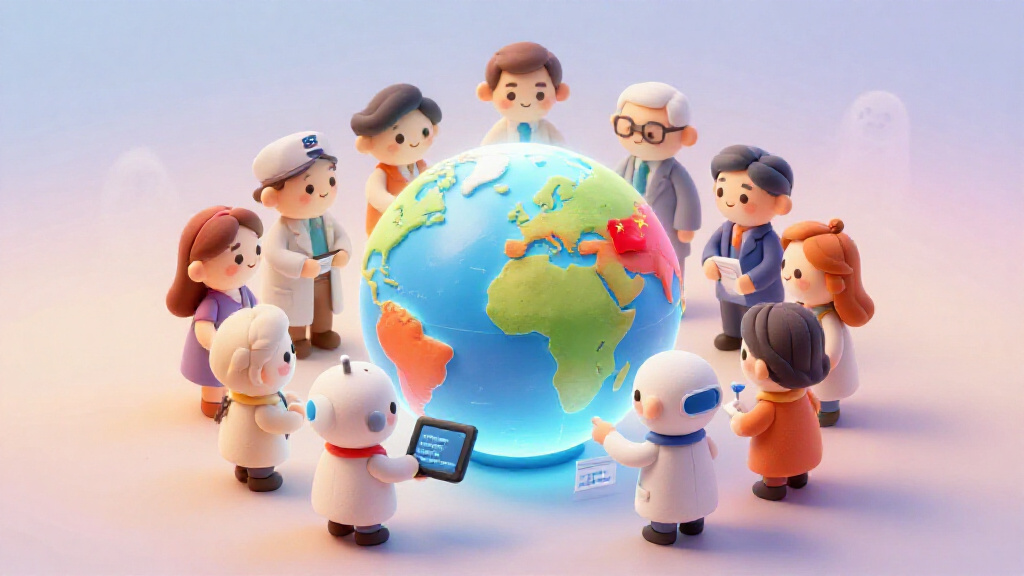
Anthropic has released a new paper outlining two potential futures for global AI leadership by 2028. The first scenario suggests democracies will maintain their lead by tightening chip export controls and establishing safety rules. Conversely, the second scenario warns that without US action, China could close the gap using talent and loopholes to shape AI norms for authoritarian use. Experts note that while the US currently holds a strong advantage in computing power, Chinese labs are moving quickly to catch up.
Anthropic specifically warned that weakening chip export controls risks losing this technological edge. The company highlighted recent examples of talent migration, such as former Google executive Wu Yonghui joining ByteDance and OpenAI researcher Yao Shunyu moving to Tencent. They argue that powerful AI systems will soon impact military planning and economic competition, urging the White House to ensure democracies adopt these tools widely to maintain a sustainable advantage over authoritarian regimes.
Meanwhile, Microsoft AI CEO Mustafa Suleyman predicts that AI could automate most white-collar jobs within 18 months. He believes models will soon match human performance in accounting, legal work, and project management, citing rapid growth in computing power as a key driver. This prediction aligns with new data showing jobs with high AI exposure are disappearing in the US, with customer service representatives dropping by nearly 130,000 between 2024 and May 2025.
Despite these workforce concerns, recent tests show major AI platforms like Google Gemini and ChatGPT have built-in safeguards to protect personal privacy. Experts Jim Spiewak and Pete Ashdown found that requests for sensitive details, such as journalists' home addresses, were refused or blocked entirely. However, experts caution that risks remain when users download AI models to run on their own servers without these protections.
Other developments include a deepfake video complicating a JPMorgan lawsuit, highlighting how AI-generated content can damage reputations. Additionally, a Reddit developer created a tool to split AI workloads across multiple consumer GPUs, helping users avoid expensive enterprise hardware. Security experts also warn that organizations must prepare for quantum computing threats, specifically the 'harvest now, decrypt later' strategy, and adopt post-quantum cryptography standards.
Key Takeaways
['Anthropic predicts two scenarios for 2028: one where democracies maintain AI leadership via chip controls, and another where China catches up without US action.', 'Anthropic warns that weakening chip export controls risks losing the US lead in AI, citing talent migration from Google and OpenAI to Chinese firms.', 'Microsoft AI CEO Mustafa Suleyman predicts AI will automate most white-collar jobs within 18 months, matching human performance in tasks like accounting and legal work.', 'New data shows US jobs with high AI exposure are shrinking, with customer service representatives dropping by nearly 130,000 between 2024 and May 2025.', 'Tests confirm Google Gemini and ChatGPT block private data requests to prevent doxxing, though risks remain for locally hosted models.', 'A deepfake video claiming an ex-JPMorgan employee admitted to sexual assault complicated her ongoing lawsuit before being debunked.', 'The AI compute market is becoming concentrated like social media, with the US controlling most advanced computing power and export controls limiting access.', 'A Reddit developer created a tool to split AI workloads across consumer GPUs using standard Ethernet, reducing costs for local setups.', 'Experts warn against assuming AI models like ChatGPT are conscious, stating they are complex mathematical functions without sentience or agendas.', "Security experts urge organizations to adopt post-quantum cryptography standards to counter 'harvest now, decrypt later' threats targeting AI infrastructure."]Anthropic predicts two AI futures for 2028
Anthropic released a new paper outlining two possible scenarios for global AI leadership by 2028. The first scenario shows democracies maintaining their lead by tightening chip export controls and setting safety rules. The second scenario warns that if the US does not act, China could catch up and shape AI norms for authoritarian use. Experts say the US currently holds a strong advantage in computing power, which is essential for training advanced AI models. However, Chinese labs are using talent and loopholes to close the gap quickly. The report urges policymakers to protect their technological edge to prevent authoritarian regimes from dominating the future of AI.
Anthropic warns US must protect AI chip lead
Anthropic warned that the United States risks losing its lead in artificial intelligence if it weakens chip export controls. The company stated that strict enforcement is needed to stop Chinese firms from copying advanced American models. Recent examples include former Google executive Wu Yonghui joining ByteDance and OpenAI researcher Yao Shunyu moving to Tencent. Anthropic argued that powerful AI systems will soon impact military planning and economic competition. They urged the White House to ensure democracies adopt these tools widely to maintain a sustainable advantage over authoritarian regimes.
Major AI tools block private data requests
A recent test showed that major AI platforms like Google Gemini and ChatGPT have built-in safeguards to protect personal privacy. Experts Jim Spiewak and Pete Ashdown tested these tools by asking for details about journalists and found that sensitive information like home addresses was refused. The AI systems provided only general public details or blocked the request entirely to prevent doxxing. Google and OpenAI both displayed warnings stating they would not share private or personally identifiable information. However, experts caution that risks remain when users download AI models to run on their own servers without these protections.
Deepfake video complicates JPMorgan lawsuit
A deepfake video recently appeared online claiming an ex-JPMorgan employee admitted to sexual assault, complicating her ongoing lawsuit. The fake video was quickly debunked but spread widely on social media before being removed. This incident highlights growing concerns about how AI-generated video can be used for online harassment and cybercrime. Experts say the technology allows attackers to create convincing fake content that can damage reputations and spread false information. While some companies use AI video for training and simulations, the potential for malicious use remains a significant risk in the digital age.
Microsoft AI chief predicts 18 months for automation
Microsoft AI CEO Mustafa Suleyman predicts that AI could automate most white-collar jobs within 18 months. He believes AI will soon match human performance in tasks like accounting, legal work, and project management. Suleyman cited the rapid growth in computing power as a key reason why models can now code and perform professional duties better than humans. While current AI adoption has been limited outside the tech industry, recent data shows thousands of job cuts linked to automation. Suleyman aims to build Microsoft’s own superintelligence models to lead this transformation across all professional sectors.
AI compute market mirrors social media concentration
The AI industry is becoming concentrated in the same way social media platforms once were, controlled by a few major players. Access to powerful computer chips and data centers is now a prerequisite for building AI systems, creating a high barrier to entry. The United States controls most of this advanced computing power, while export controls limit access for other nations. This concentration gives a small group of companies significant geopolitical influence over how AI develops and is used globally. Experts suggest building decentralized networks could help break this monopoly and allow more independent participation in the AI economy.
Data shows AI exposure is shrinking American jobs
New data indicates that jobs with high exposure to artificial intelligence are starting to disappear in the United States. Between 2024 and May 2025, the number of customer service representatives dropped by nearly 130,000 workers. The Bureau of Labor Statistics identified 18 specific occupations likely to be affected by AI, including paralegals, graphic designers, and sales agents. While some roles may benefit from AI tools, many administrative and desk-based jobs face replacement risks. Experts note that the trend is concerning but it is too early to panic about the full impact of this technology on the workforce.
Experts warn against assuming AI is conscious
Prominent thinkers are increasingly claiming that AI models like ChatGPT might be conscious, but experts say this is a mistake. These claims often come from people with technical backgrounds who struggle to separate the machine’s cultural output from actual sentience. The AI industry sometimes uses these moments to promote narratives about superintelligence and potential risks. However, AI systems are just complex mathematical functions that process data without a mind or agenda. Even if an AI behaves unexpectedly, it does not mean it is conscious or has its own goals. Analysts urge the public to look closely at how these systems work rather than accepting marketing hype.
Developer creates bridge to split AI work across GPUs
A Reddit developer created a new tool that allows AI workloads to be split across multiple consumer GPUs using standard Ethernet connections. The system uses idle video encoding hardware to compress data between machines, making local AI setups cheaper and faster. Tests showed that a desktop and laptop could generate images together in just a few seconds, significantly reducing wait times. This innovation helps users avoid expensive enterprise hardware or cloud rentals by pooling resources over a home network. The tool is particularly useful for creators who want to run large models without buying specialized workstation cards.
AI algorithms may reshape global energy diplomacy
Artificial intelligence is changing how global energy markets are managed and could reduce the power of traditional organizations like OPEC. Companies and governments now use advanced algorithms to predict oil prices and monitor geopolitical risks in real time. This shift means that control over data and computing power is becoming as important as control over oil reserves. The United States, China, and the European Union are investing heavily in AI to secure their energy futures. While OPEC remains influential, its ability to coordinate production is challenged by the speed and complexity of algorithmic decision-making.
Guide to securing AI infrastructure against quantum threats
Security experts say organizations must now prepare for quantum computing threats that could break current encryption methods. The “harvest now, decrypt later” strategy means attackers are already saving encrypted data to crack it once quantum computers arrive. A major risk comes from the Model Context Protocol, which allows AI agents to access external data but often lacks proper security checks. Attackers can exploit these connections to poison data or trick agents into executing malicious commands. The recommended solution is to adopt post-quantum cryptography standards and use hybrid encryption to protect sensitive information immediately.
Sources
- 2028: Two scenarios for global AI leadership
- Anthropic Warns US Risks Losing AI Edge to China Over Chips
- Major AI platforms use built-in safeguards to protect personal privacy
- The JPMorgan Sexual-Assault Lawsuit Was Already Messy. AI Is Making It Worse.
- Microsoft AI chief gives it 18 months—for all white-collar work to be automated by AI
- We watched social media concentrate. The same thing is happening in AI, only at a deeper layer
- American Jobs with AI Exposure Really Are Starting to Disappear, Data Show
- Opinion | Why We Keep Tricking Ourselves Into Thinking A.I. Is Conscious
- A Reddit developer turns NVENC into a local AI bridge
- Energy Diplomacy in the Age of Artificial Intelligence: Will Algorithms Replace OPEC?
- Post-Quantum AI Infrastructure Security: A Complete Guide for 2026
Comments
Please log in to post a comment.